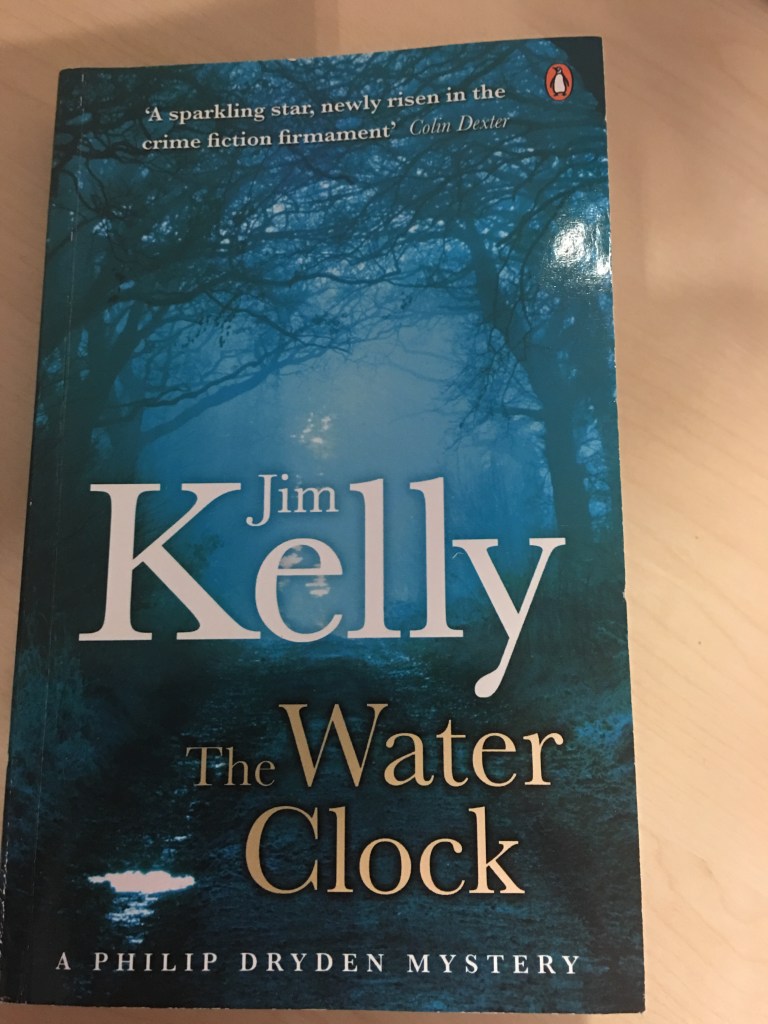
There are two books where the Old Vicarage is mentioned; The Water Clock and Tales of the Fens. I have been told there is a reference in a third. I’ll get a copy soon and validate it.
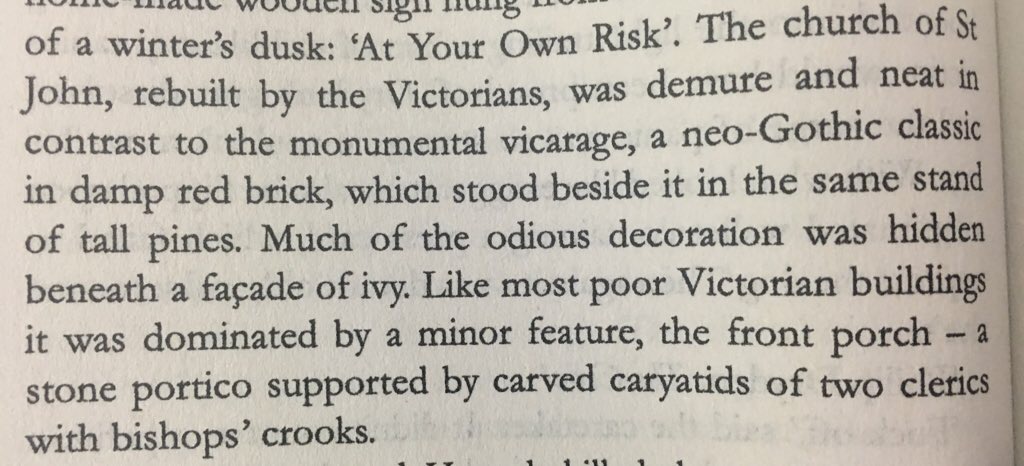
The description above has artistic license. The tall pines are poplar. There are two or three, Douglas fir left. The fir/pine copse was replaced after the Second World War. As the book is set much later, it is fun to speculate the author new of the replanting. We were informed that he used to visit the church, when it became a private dwelling.
The ivy was definitely a feature and has now been removed to help save the house. It was very invasive on the roof.
The stone portico with the bishops, as far we are aware, never existed. It would have been fantastic if it had. I was nearly tempted to build one.
The last element is the neo gothic look of the house. The house was built ten years after the red house and has several influences towards this more simpler arts and craft movement; such as the red brick arches. Brick is substantially cheaper. The house was built to a tight church budget. Monumental as the book states, but a rather simple finish no carved bishops alas.
 The Old Vicarage B&B, Little Ouse
Leave a comment