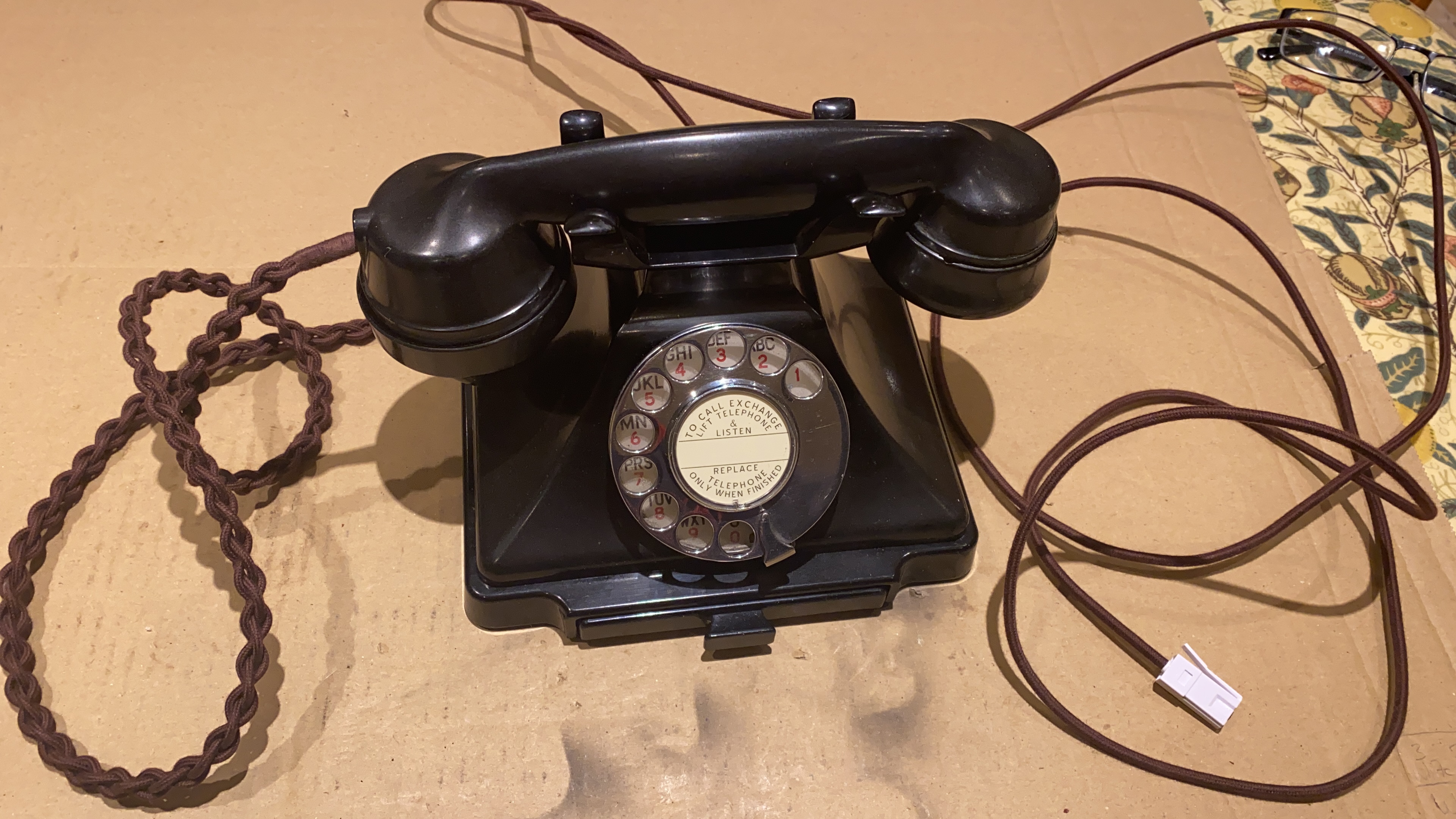
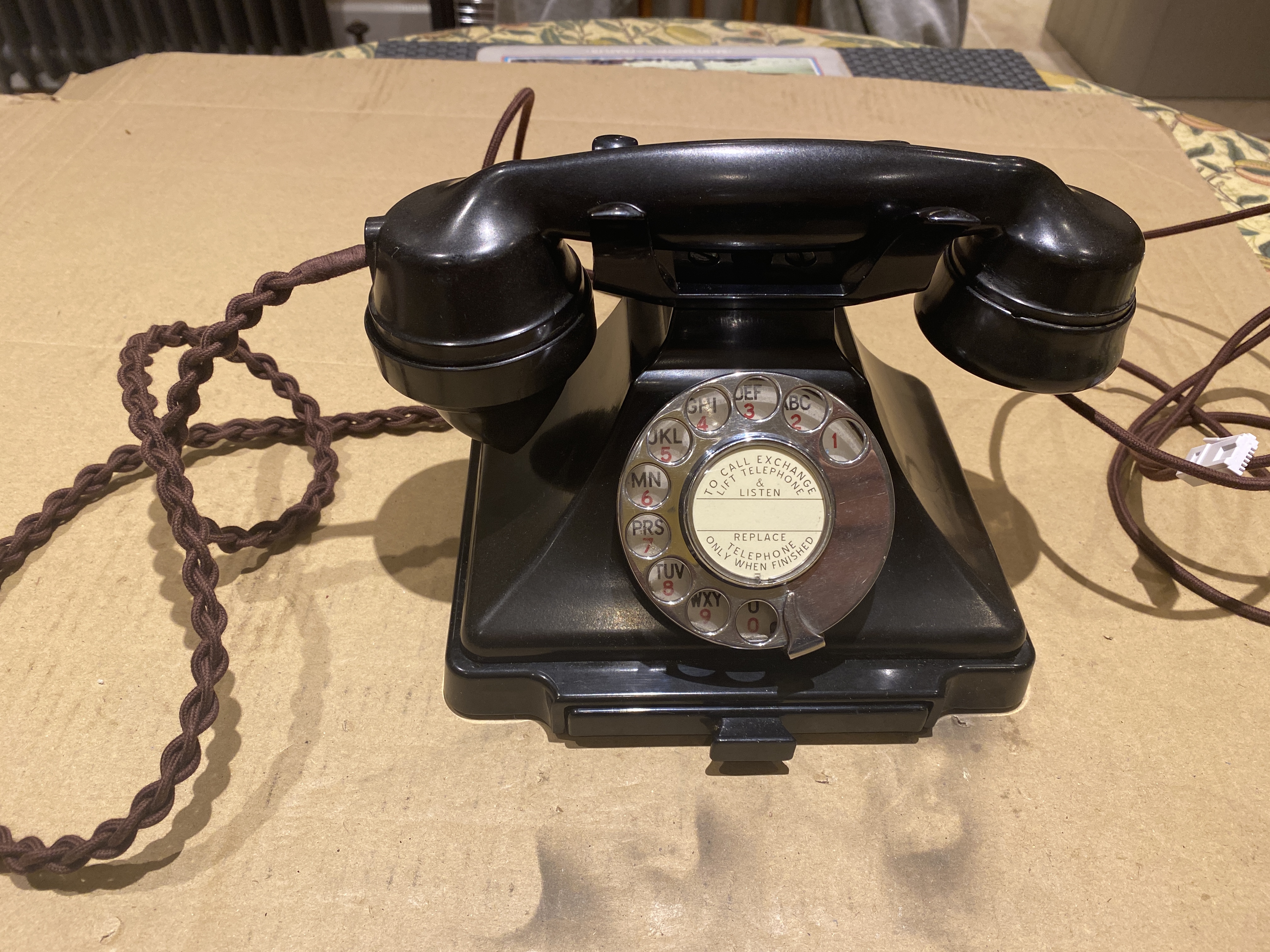
I was given this phone a few years ago as a project. The phone has had a hard life, cracks in the casing and encased in dirt. I first gave it a preliminary clean, wiping it over with a damp cloth to ascertain if it was worth the effort to refurbish. My thoughts on this – The phone will never win any awards, but can be made serviceable. As this was my first refurbishment of a phone of this type, a Google search was performed for guidance on how to check its components and identify companies that supply modern replacement parts.
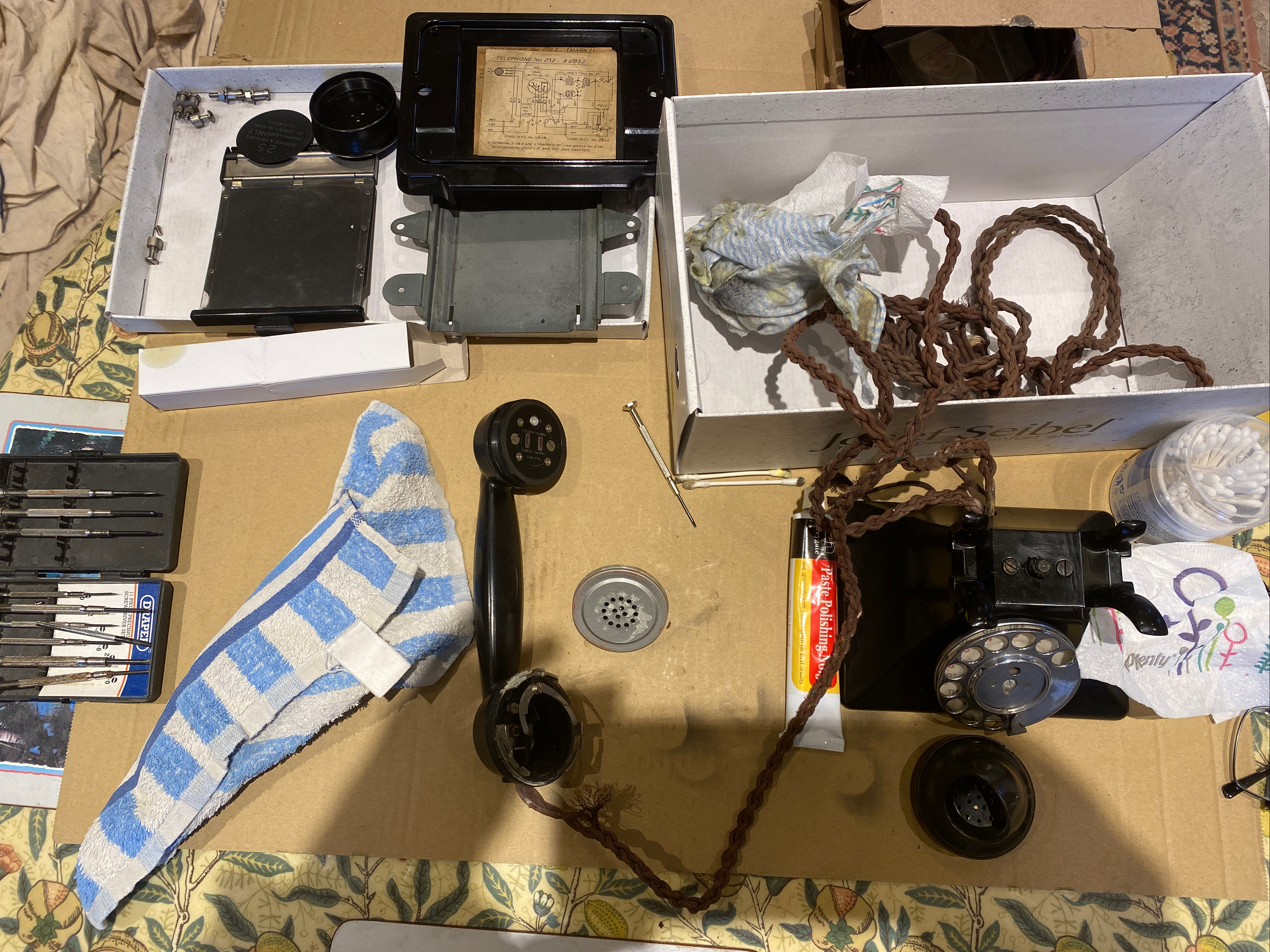
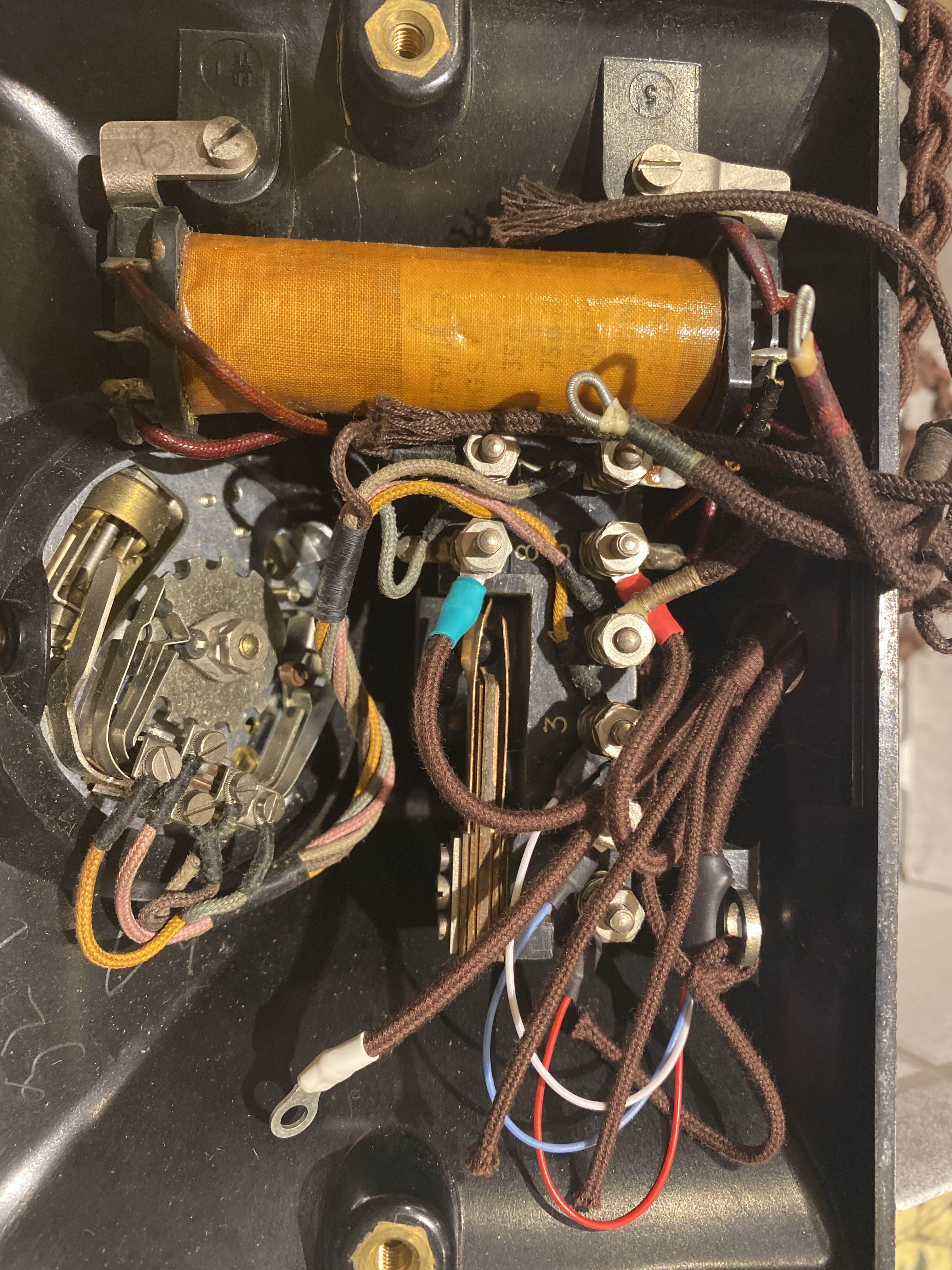
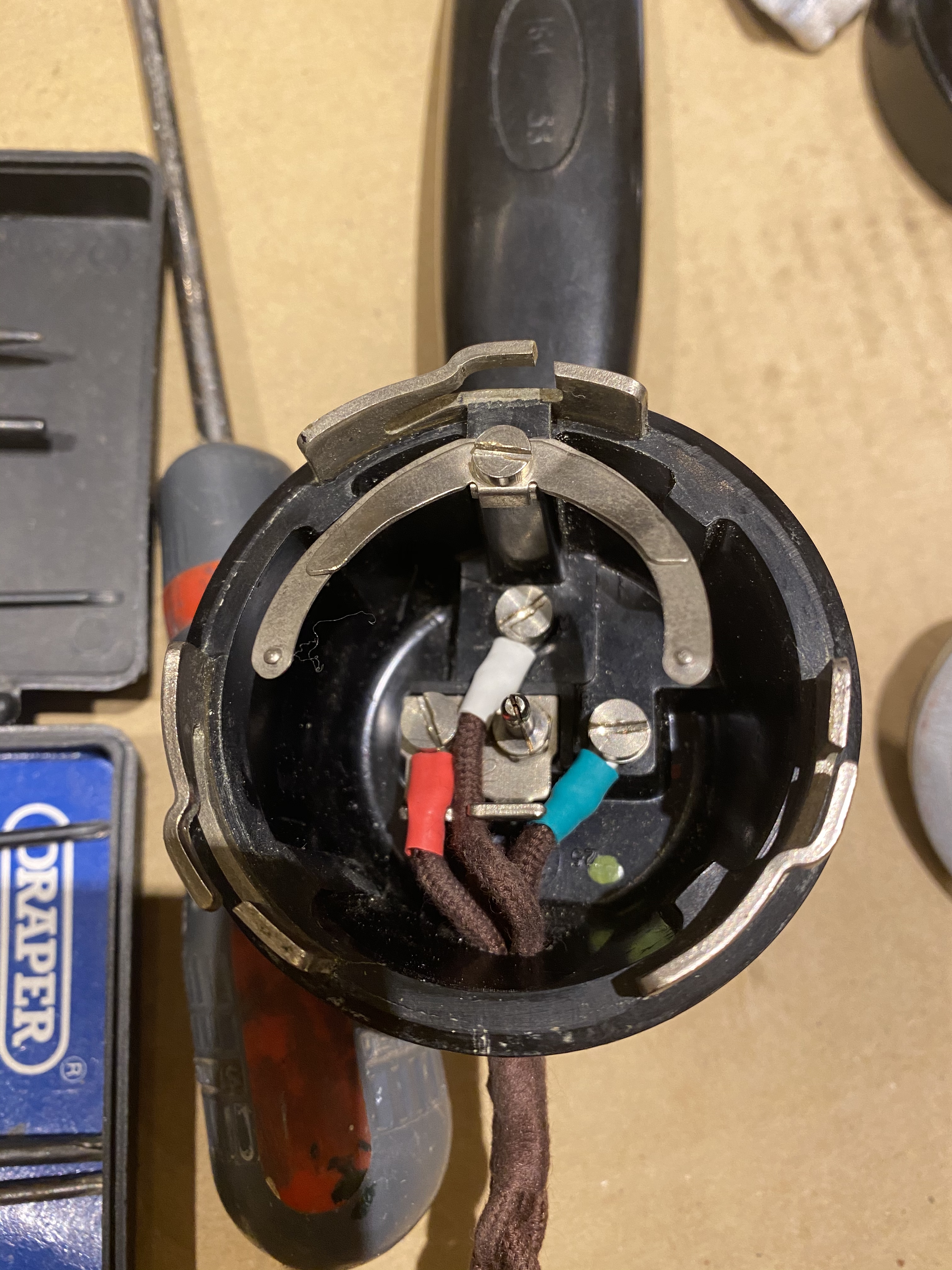
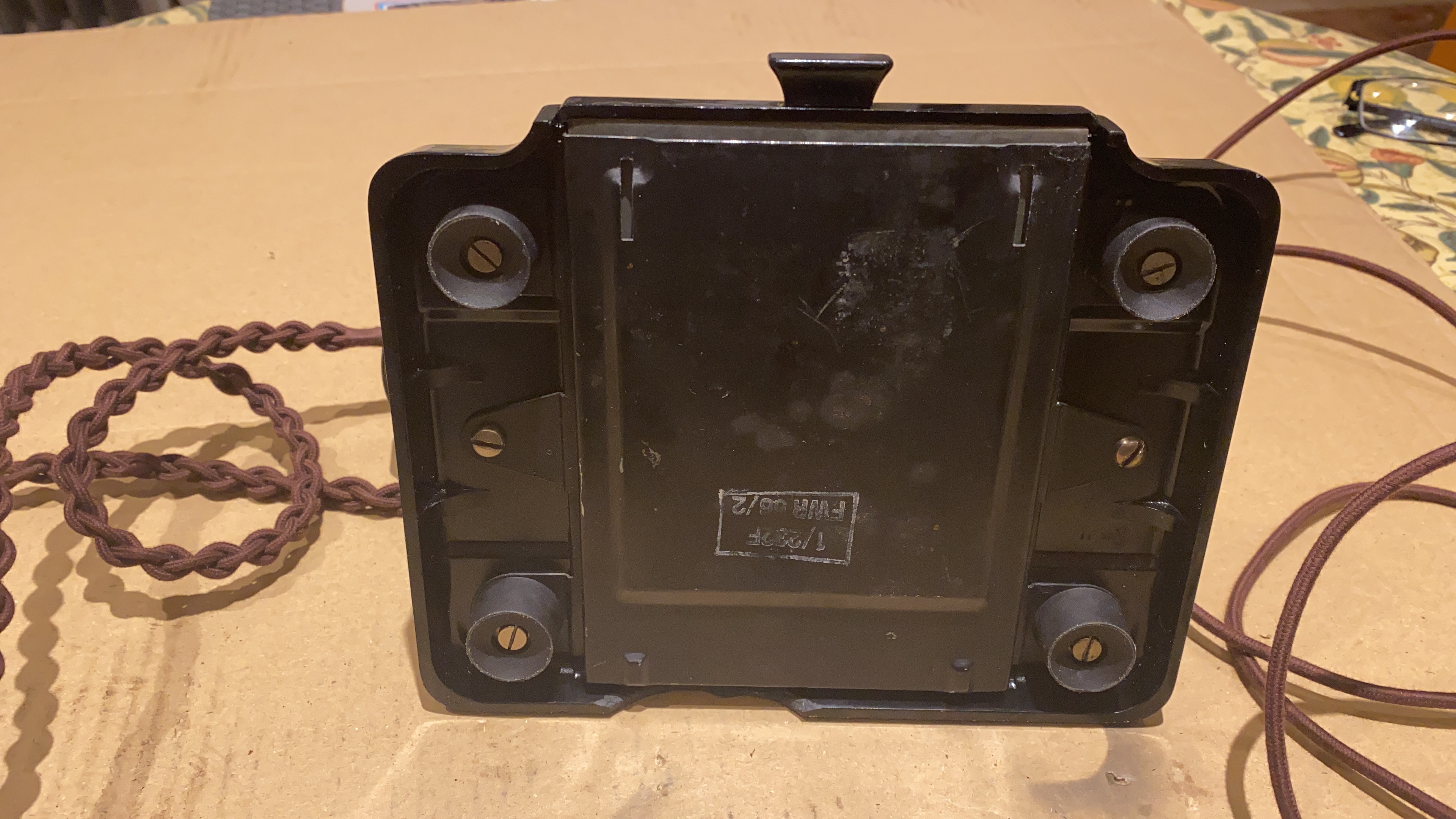
The parts I purchased were:
- A reproduction dial card and a laminate oval – I was fortunate, in that the circlip which holds these was still present on the dial.
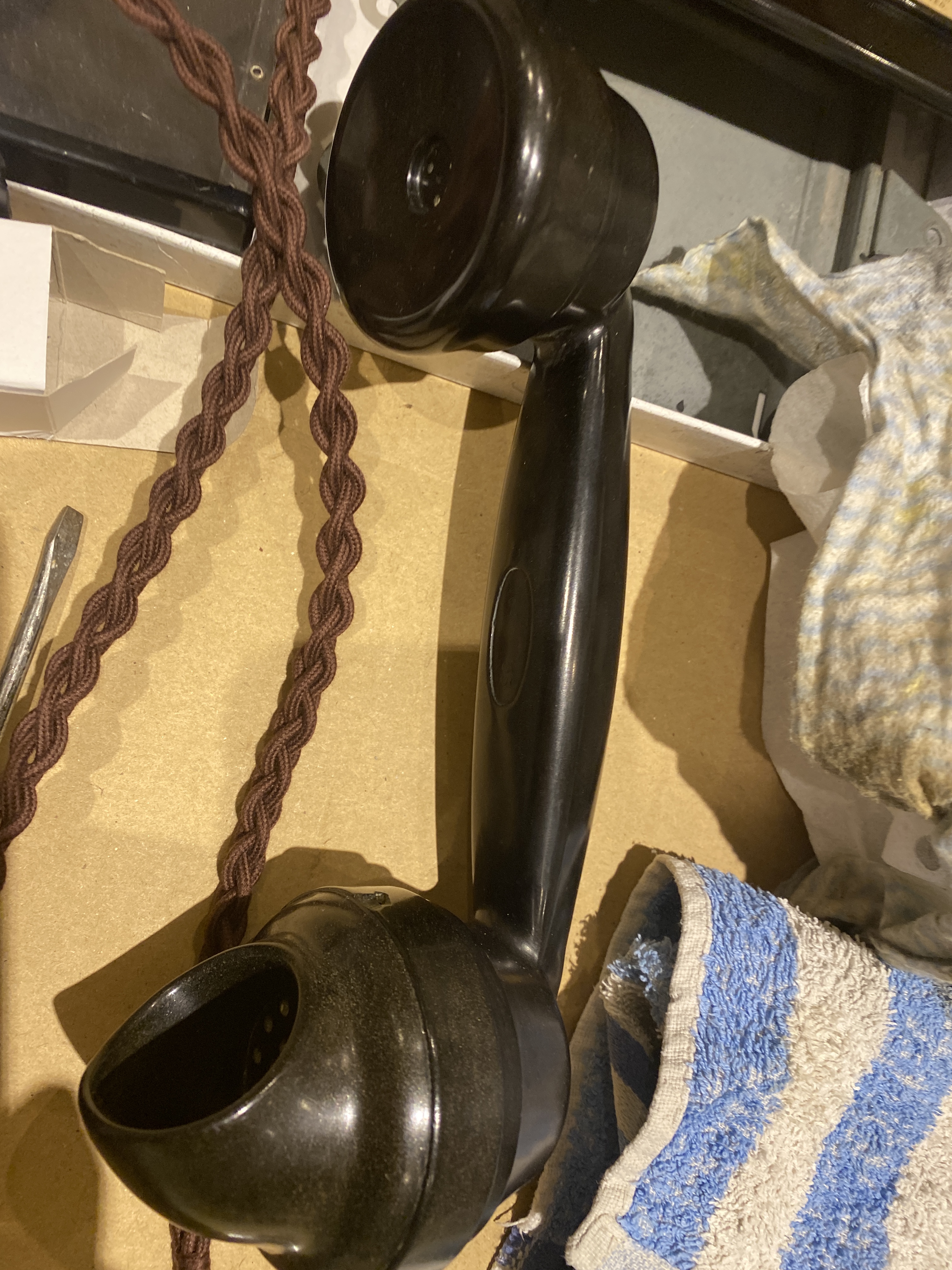
- A new braided handset cable was sourced. You can see from the pictures, that once you open up the receiver and the base, it is three wires to replace at each end. Not too daunting a task.
- A new cable with a modern plug adaptor was fitted (three wires in the base of the phone, not too hard), so the phone can be connected to a standard BT socket.
- New rubber feet, the old ones had perished. It looked as if they had been too near a heat source.
- A tube of No. 5 polishing paste. This paste is reputed to be the same as used by GPO engineers to clean these phones. I didn’t find the result to be fantastic, even with an hour or two of elbow grease. I was tempted to get the dremel out, to see how far I could buff the bakelite. However, I did not, as the phone is serviceable and still bears its worn aged look which is how I intended it to look.
The last things to do are – Type a telephone number on the dial card and source an insert card for the drawer. After which I’ll need to decide a location for it in The Old Vicarage.
 The Old Vicarage B&B, Little Ouse
Leave a comment