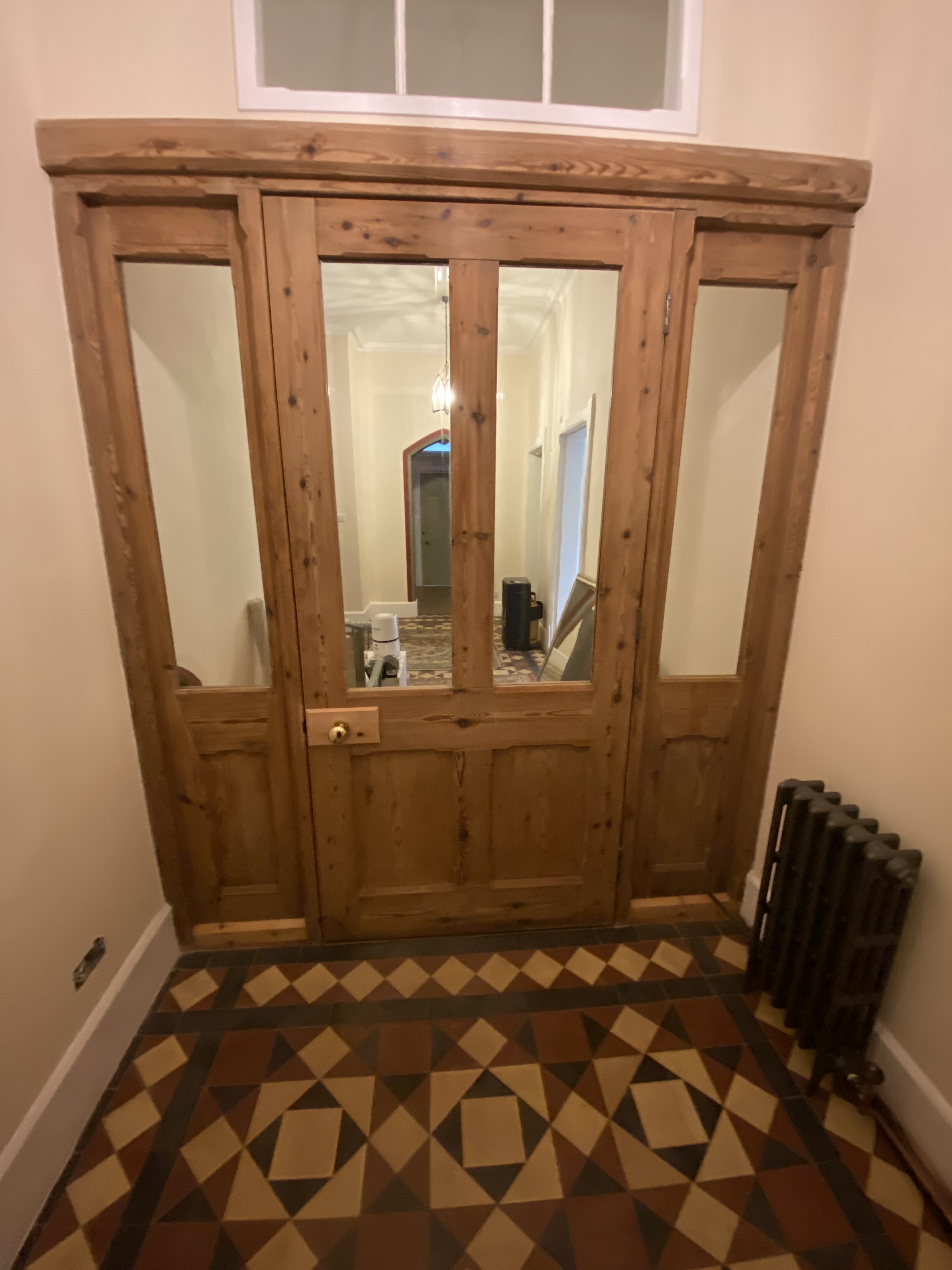
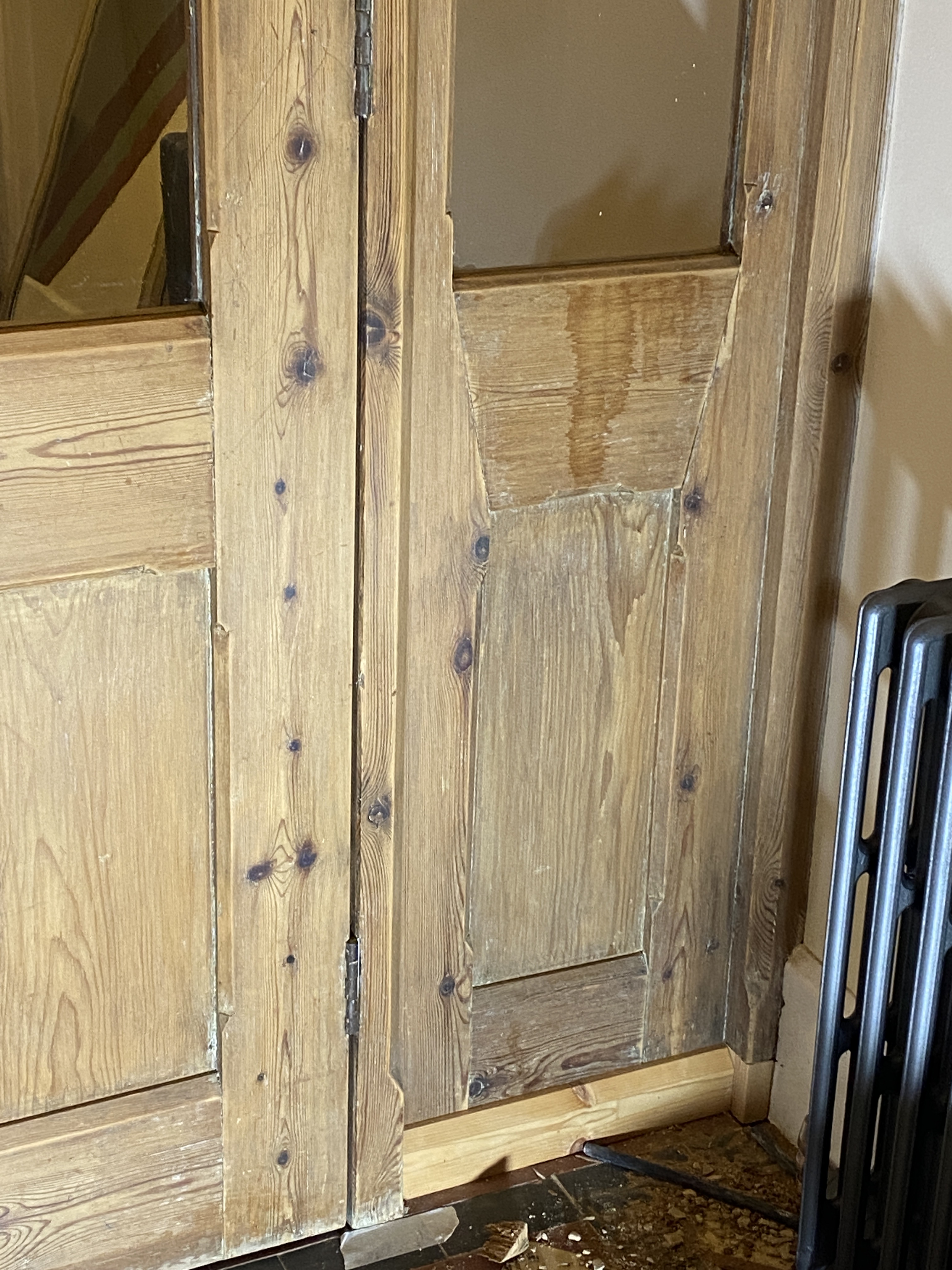
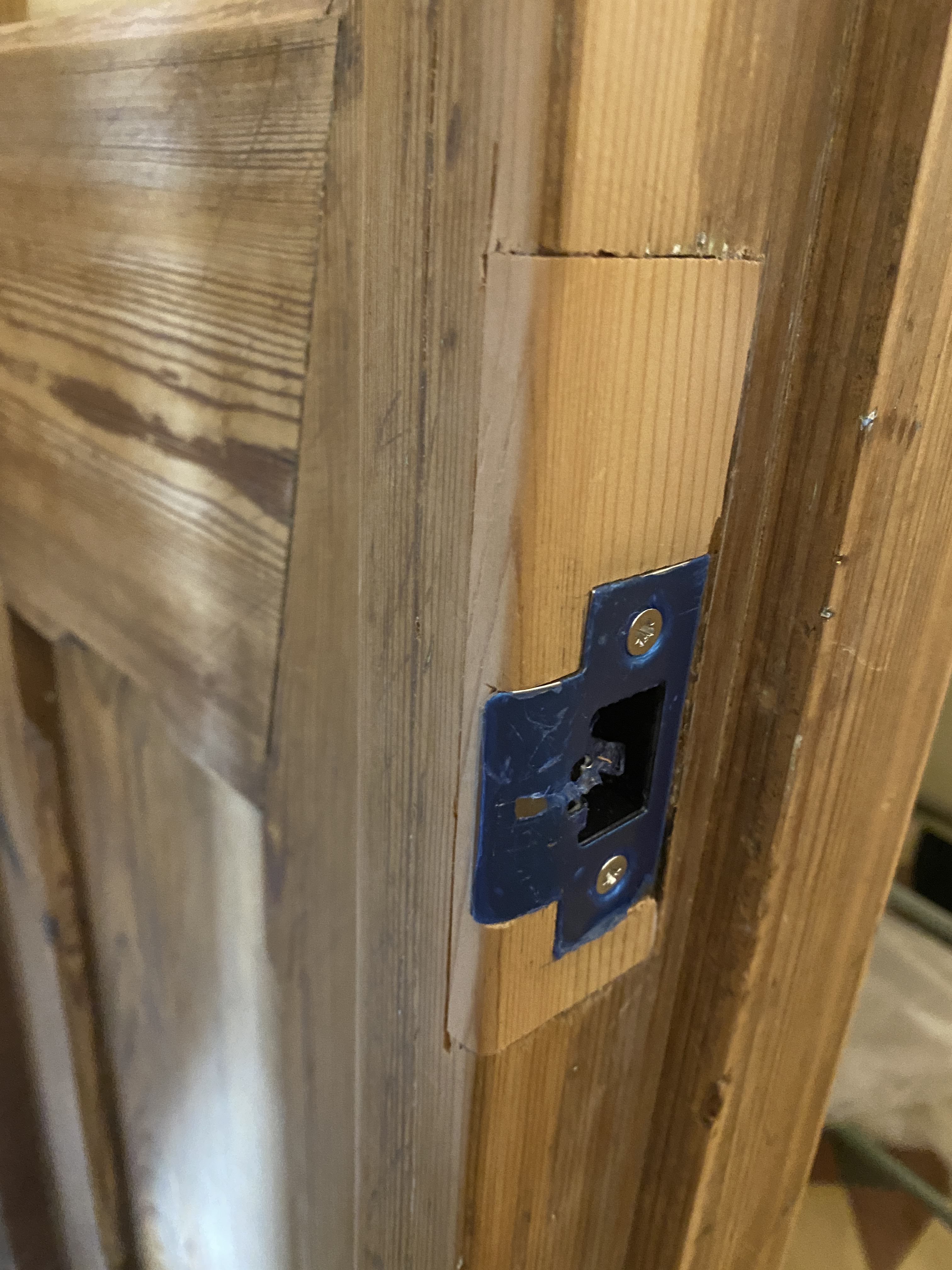
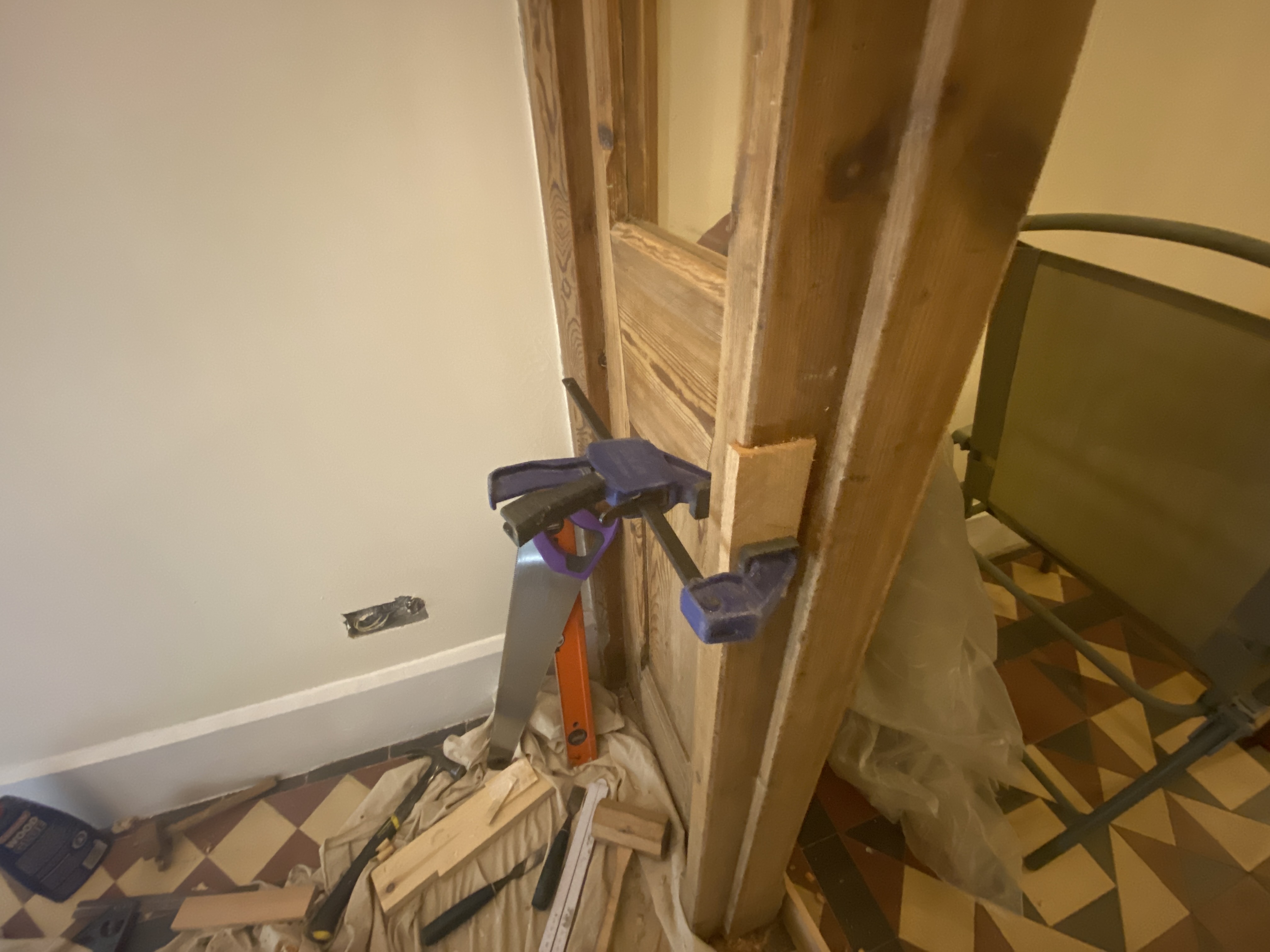
Before work commenced the door and its partition were hand stripped with a shave hook then sanded. The modern lock that had been cut into the door was removed and this area block filled. Similarly the latch in the partition was filled, and then a sharp plane used to shave to the correct fit. All other damage in the door was rectified.
The wood used in the repairs, although it look new, is reclaimed from the house and is the same, age.
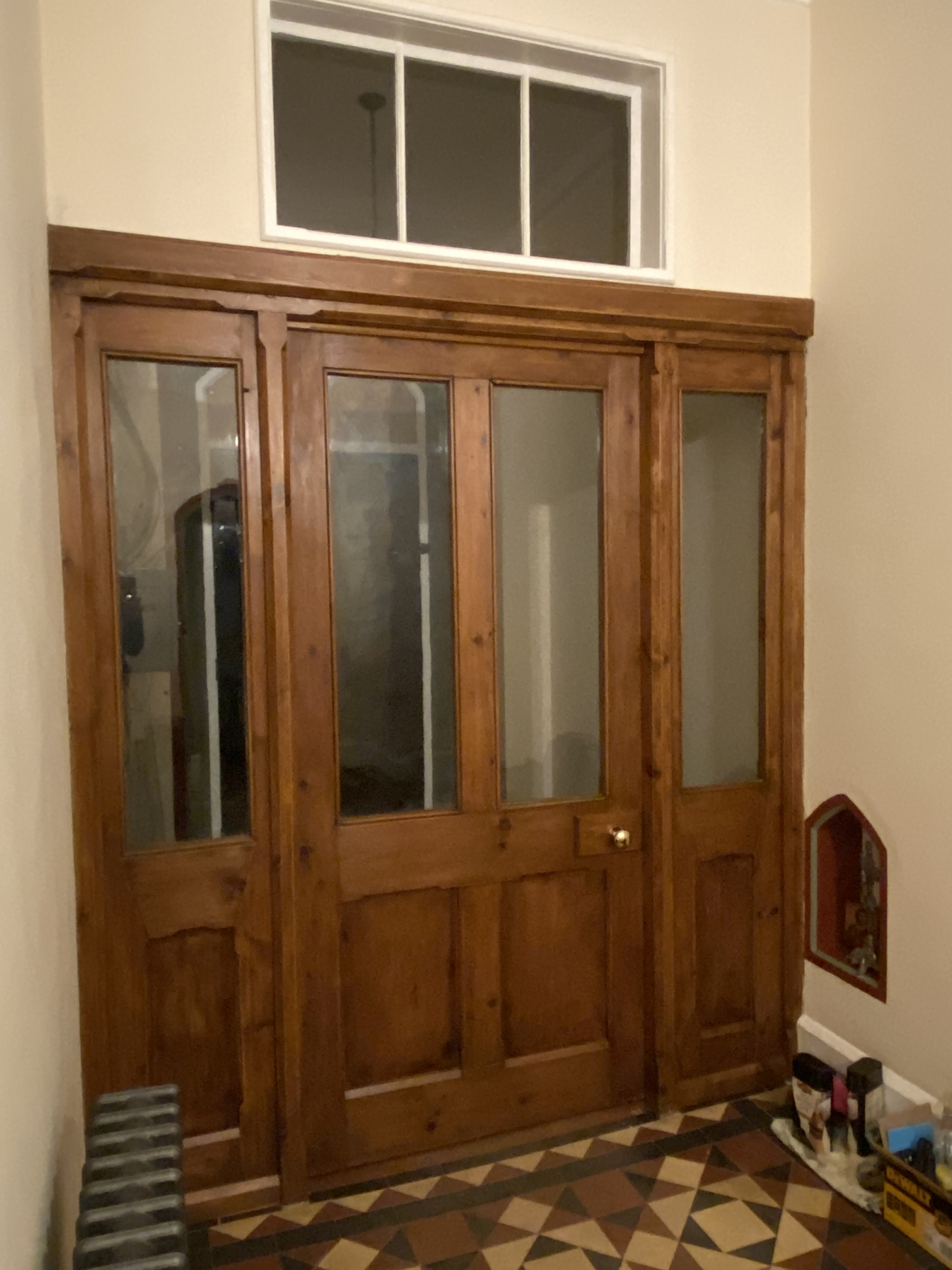
The finish of the door is in varnish not shellac. As the wood has repairs as well as age related wear, there is no need to fake any of this.
Three stains were used to match the wood. The idea was to keep the wood as light as possible, whilst blending the new wood in. Therefore, a light/golden oak stain was applied. This gave the overall tone to be achieved. Next a teak stain was used to age bring the newer wood closer to the original. Next an antique pine stain was used to blend it all together and then finally the light/golden oak was used. There were a few patches where additional teak stain was applied, such as on the new skirting areas.
After this, it was rubbed over vigorously to highlight the veins in the wood, then a couple of coats of a satin varnish was applied.
The finish is reasonable, not perfect. The wood underneath all the paint had been stained, presumably when new in a mahogany colour. This had penetrated the wood and took some time to lighten, you’ll see a few patches on the panel which would have needed bleaching to bring them back to uniformity.
A couple more days on preparation would have got it closer, but it is a lot of time for lessening results. Once the hall is polished and dressed correctly, no one will notice minor imperfections.
All of the stains used were from the Liberian range. The varnish used was Ronseal clear satin.
 The Old Vicarage B&B, Little Ouse
Leave a comment