The Old Vicarage is divided into the main house and the small house. the smaller house has its own entrance and staff staircase. The separation between the two houses is superficial, in that to walk through the archway on either the ground or first floor allows access to the man house or staff quarters.
The available records show that when the Vicarage was built, it had a minimum compliment of three staff to serve the family. This consisted of the cook as the senior member of staff, a maid and a stable boy/gardener who lived in the room above the stable. The function of housekeeper was served by the Vicar’s wife.
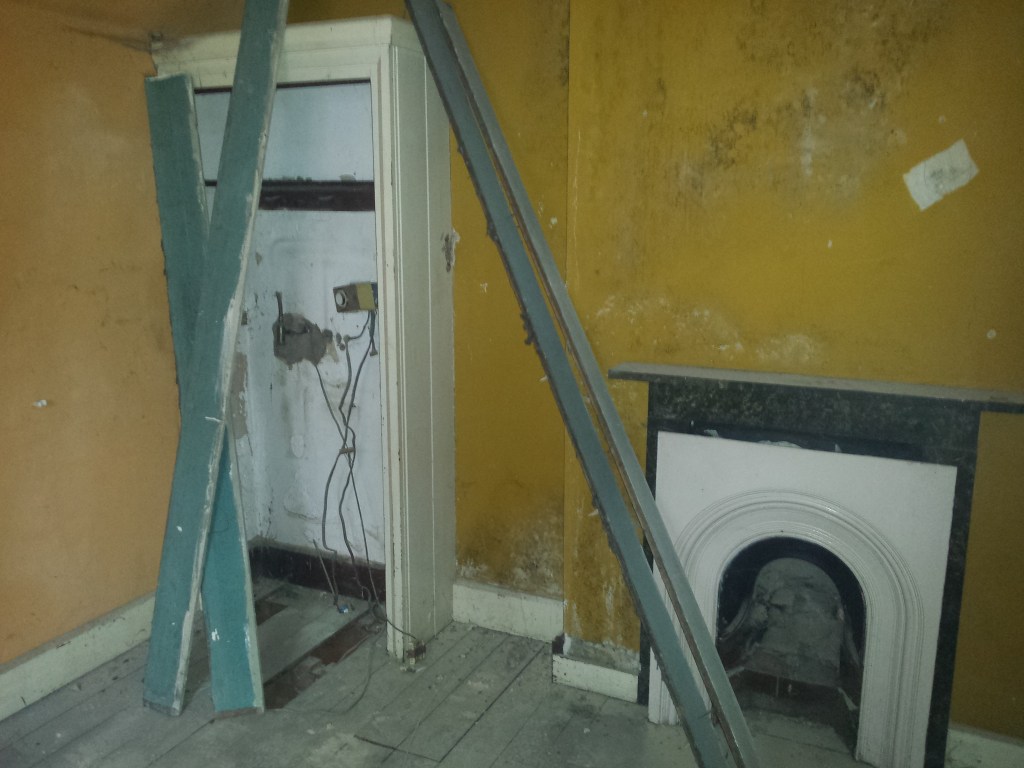
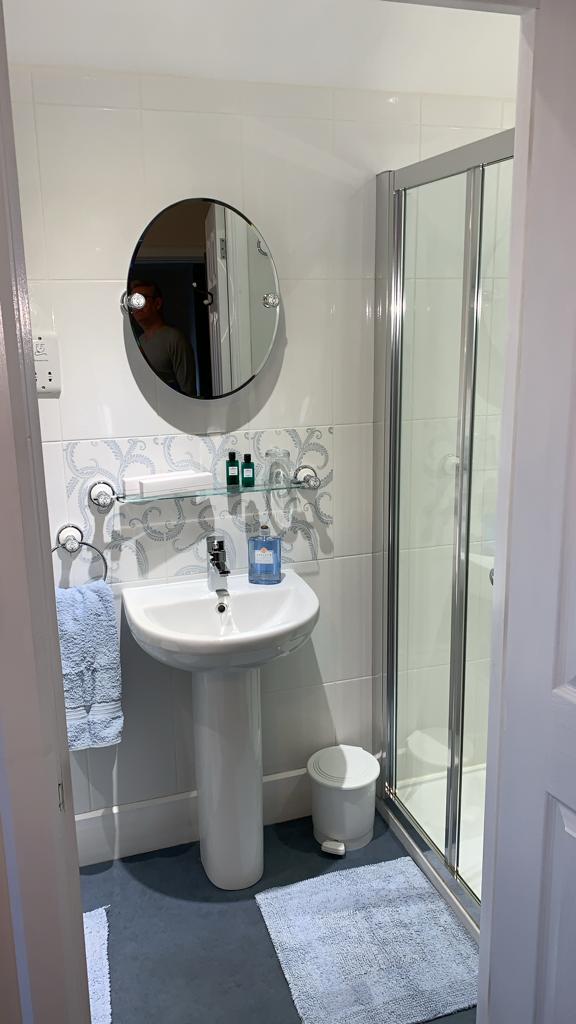
The previous occupants had removed the door from the plank wardrobe and placed an immersion heater in the cupboard. It didn’t exactly fit and was half in and half out. Which is why they probable removed the door. This was removed to make way for an ensuoite in this area.
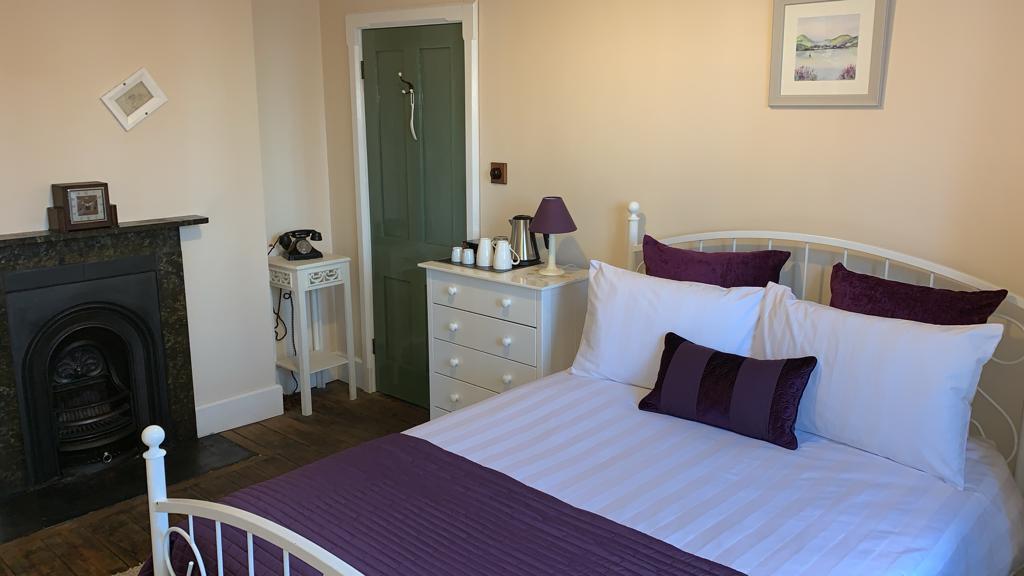
The white fireplace insert is not the correct one for this room its broken and you can see its too large for the slate surround
On the chimney breast you can see a magnolia patch, which has the name Mr Gotobed (a common name in this area) who decorated the house in 1893.
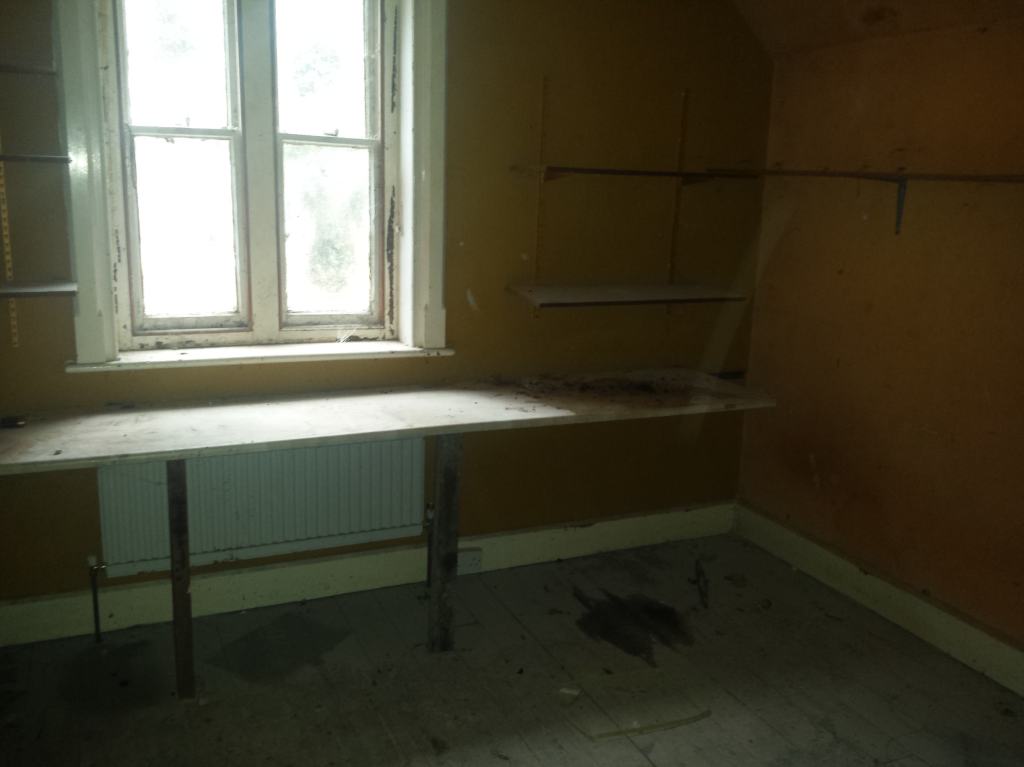
This room seemed to have been used as a workshop by the last occupants. All of this shelving was removed and the spillages on the floor cleaned up.
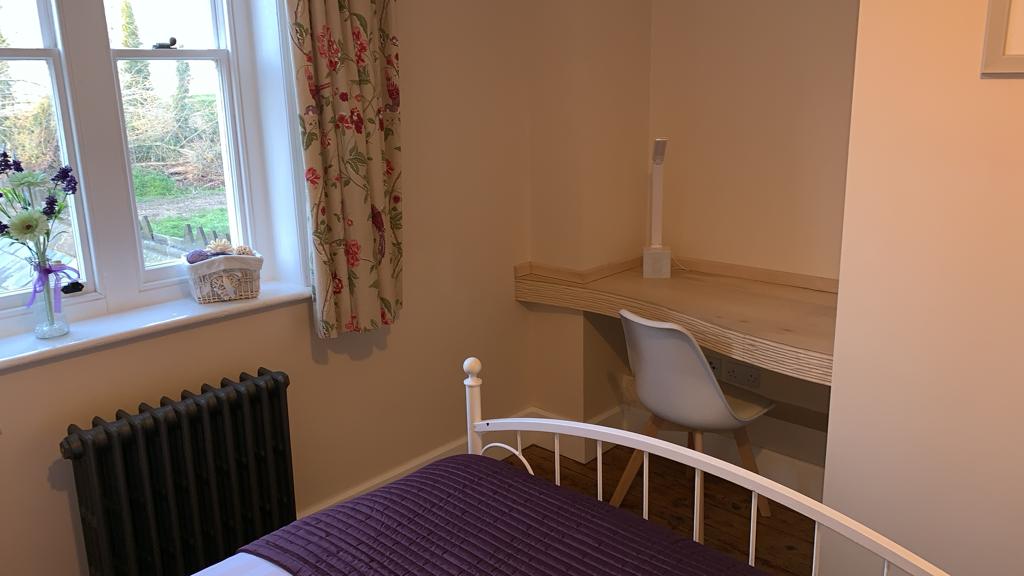
The corner by the window now has a purpose built desk in sycamore
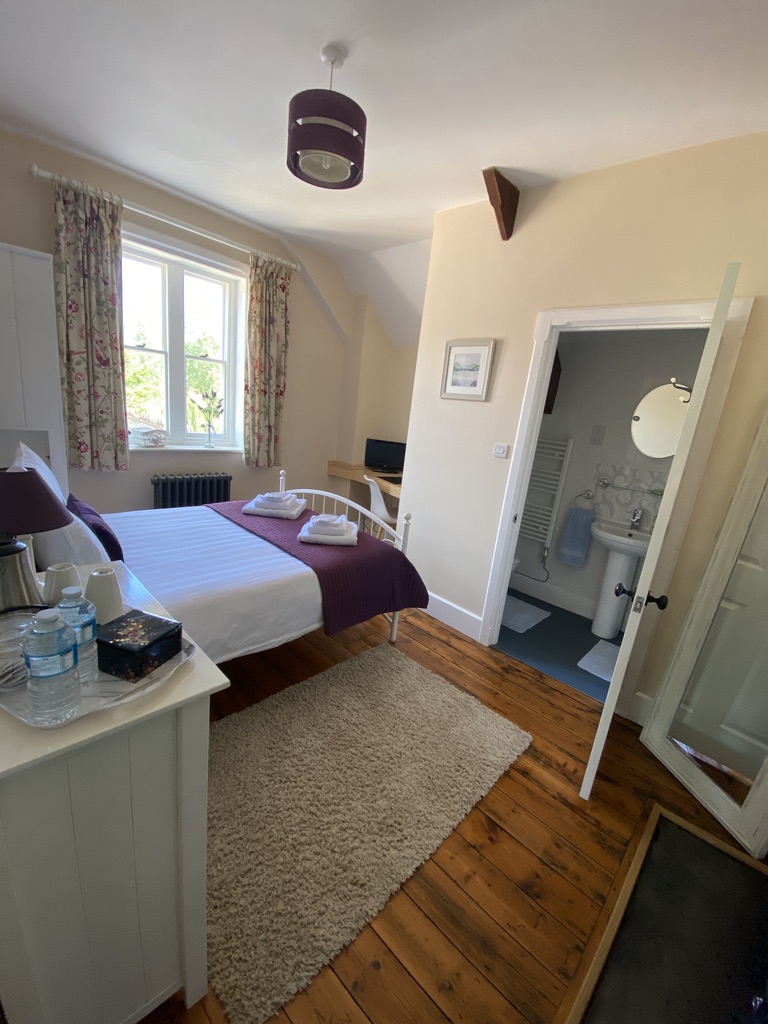
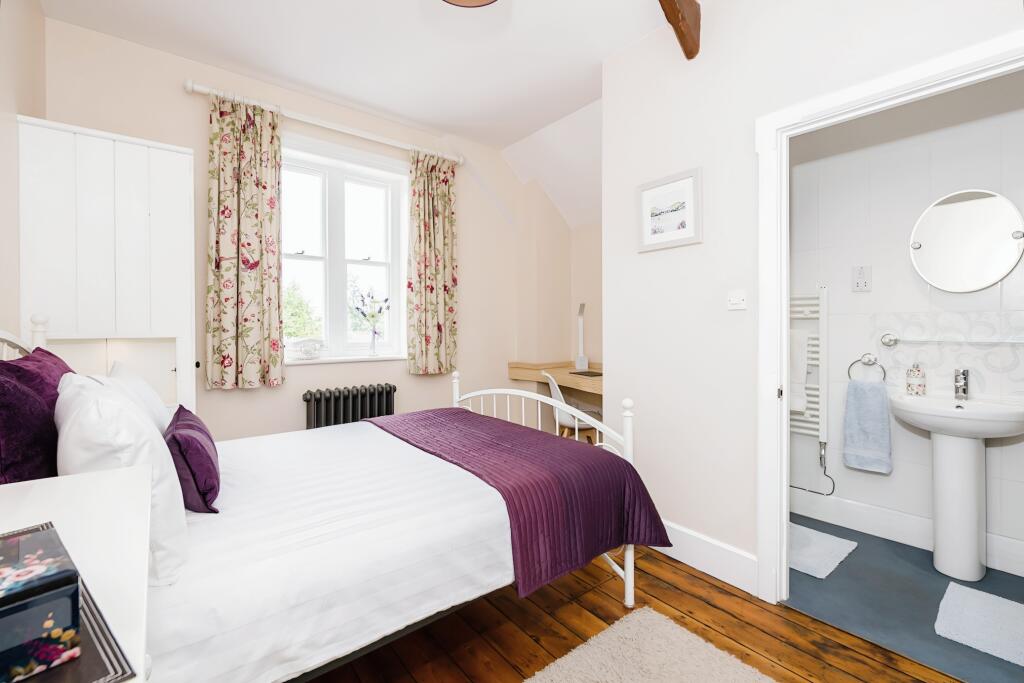
The room transformed with a new ensuite and a purpose built desk in the corner by the window.
The floorboards have also been cleaned, sanded and waxed.
The lime cement hearth has been blackened and an oak surround made
The handwritten note from Mr Gotobed (1893) on the chimney breast has now has a small glazed frame . You’ll notice that the frame is been set at the angle of the writing.
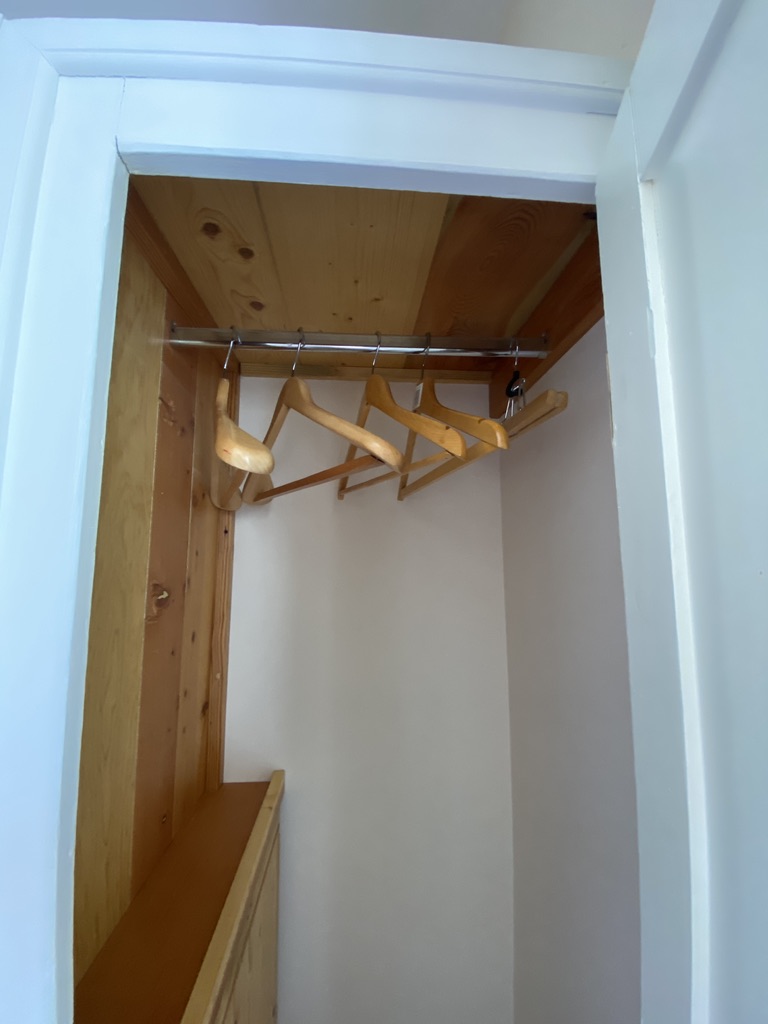
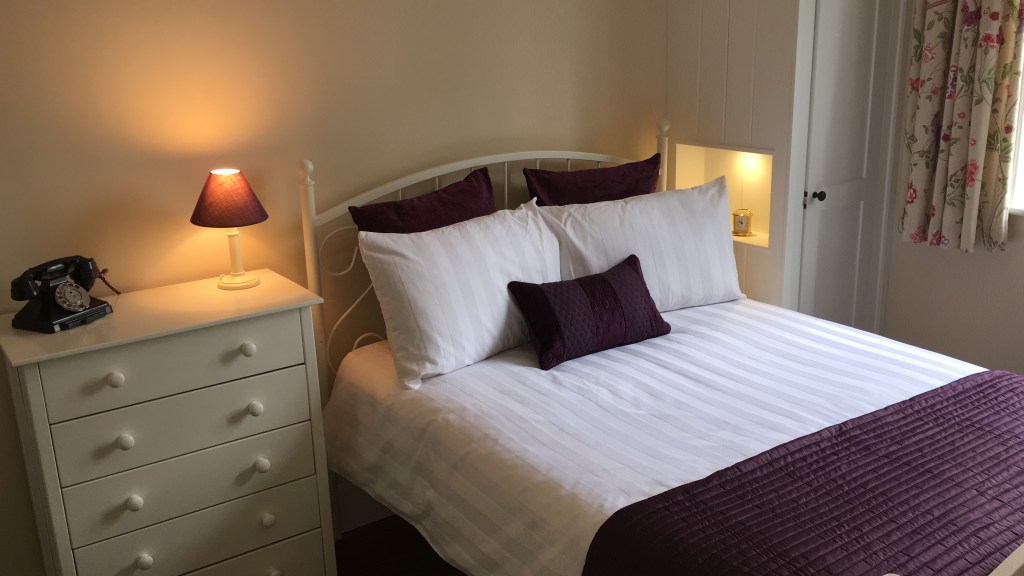
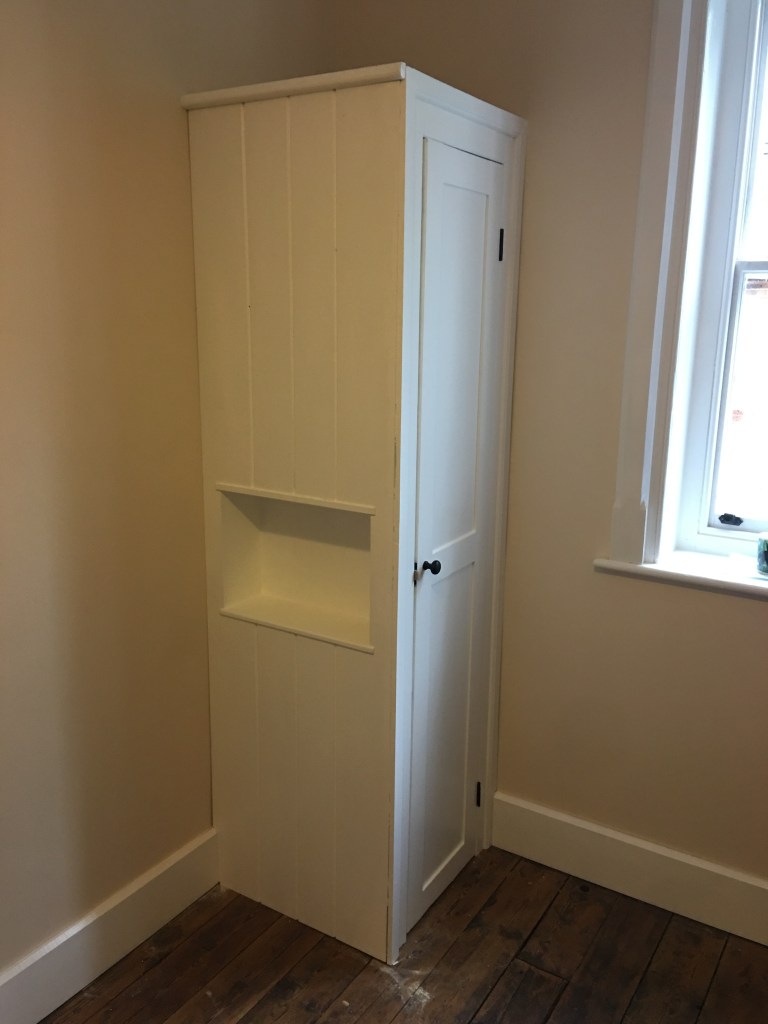
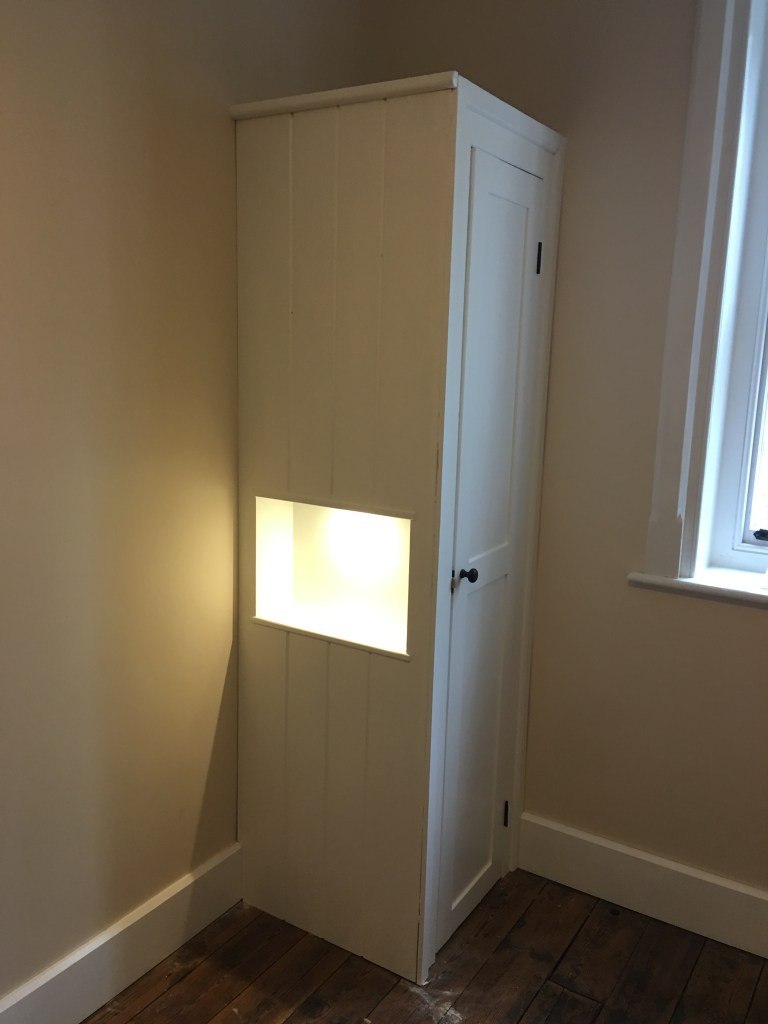
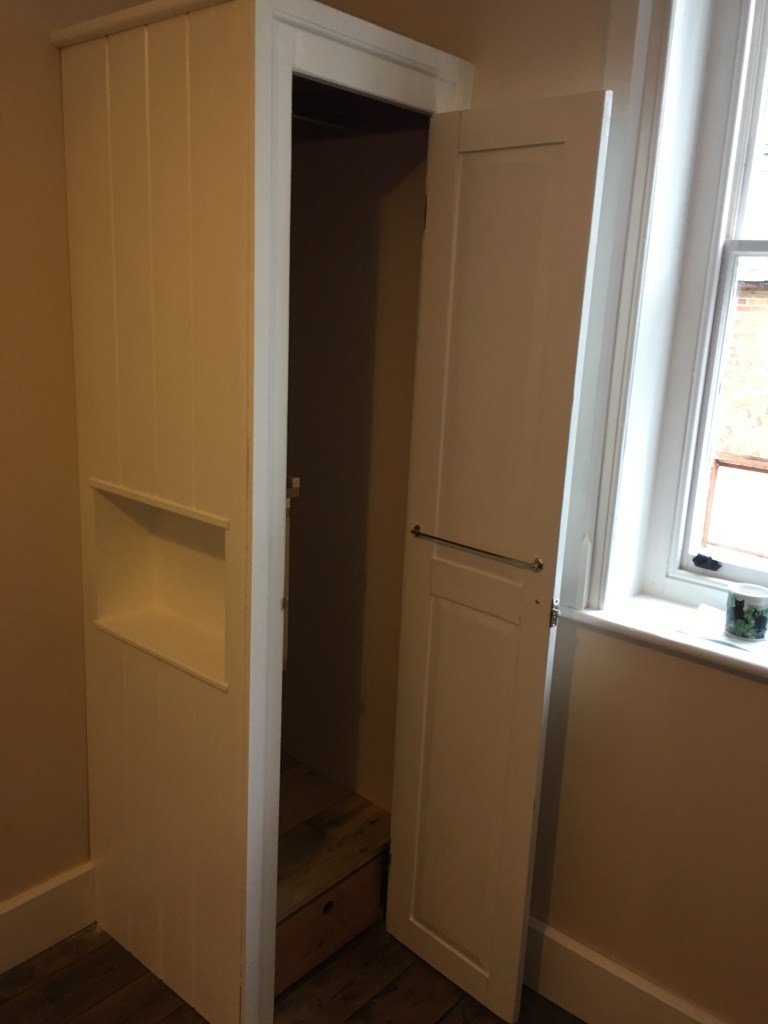
The plank wardrobe has been recreated to the right of the bed. The door and frame of this was taken out of the main bathroom and repurposed here.
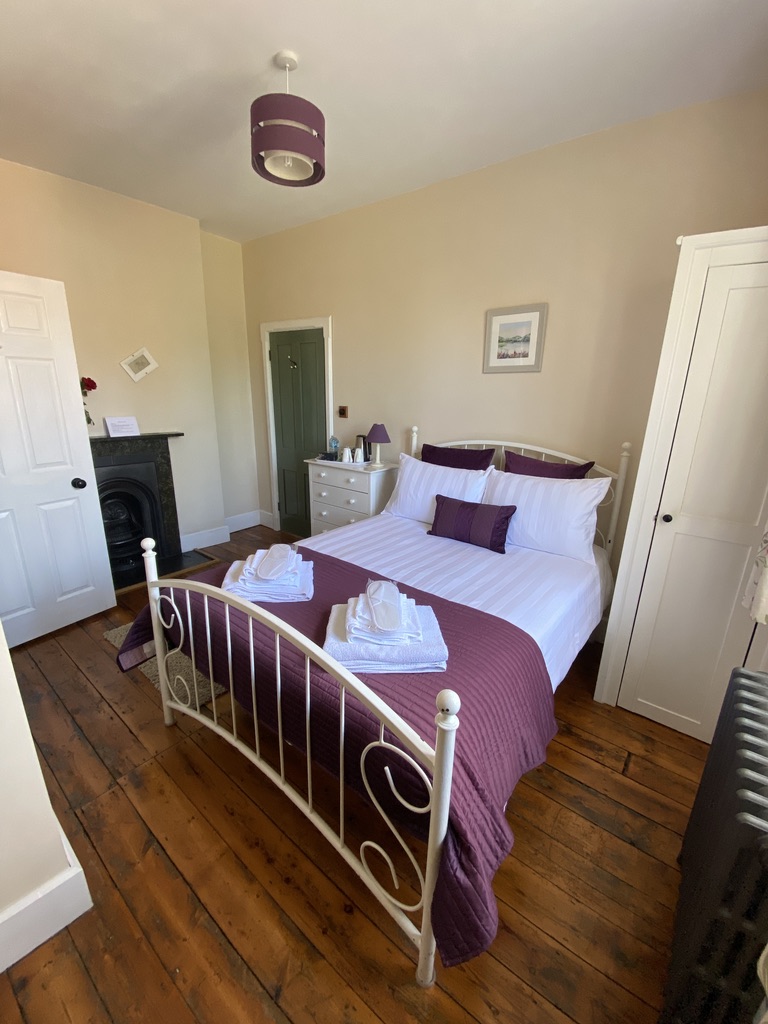
The carcase of the plank wardrobe has been made from reclaimed wood. The door and surround were reclaimed from the bathroom and were used as the template for the height and width.
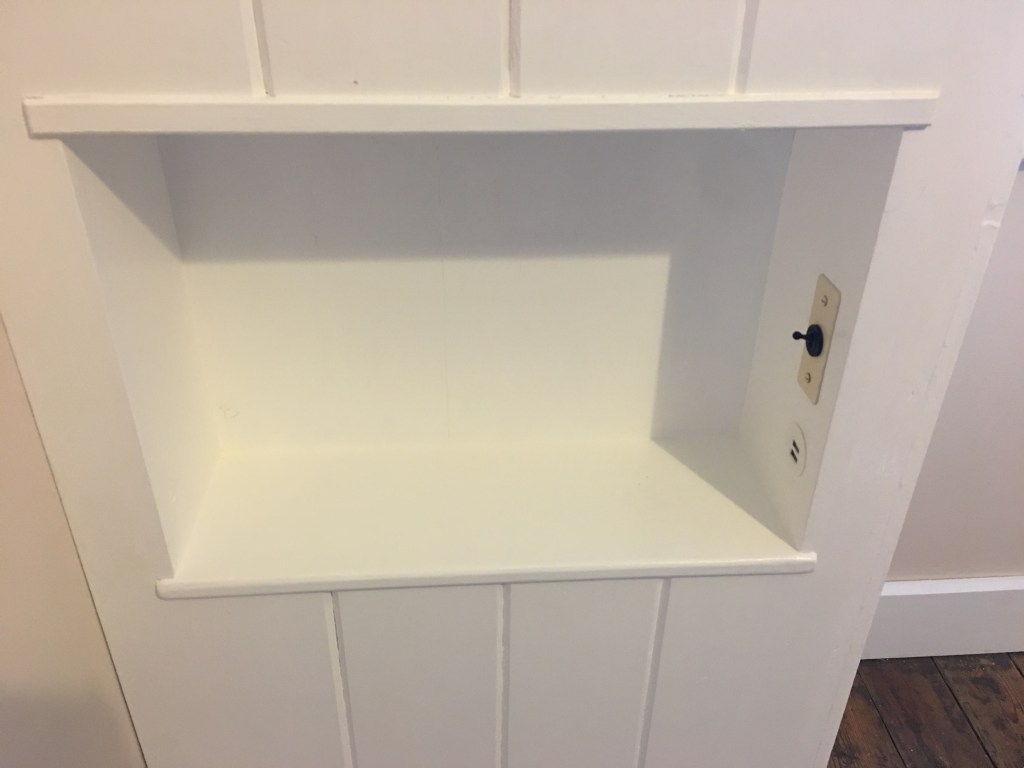
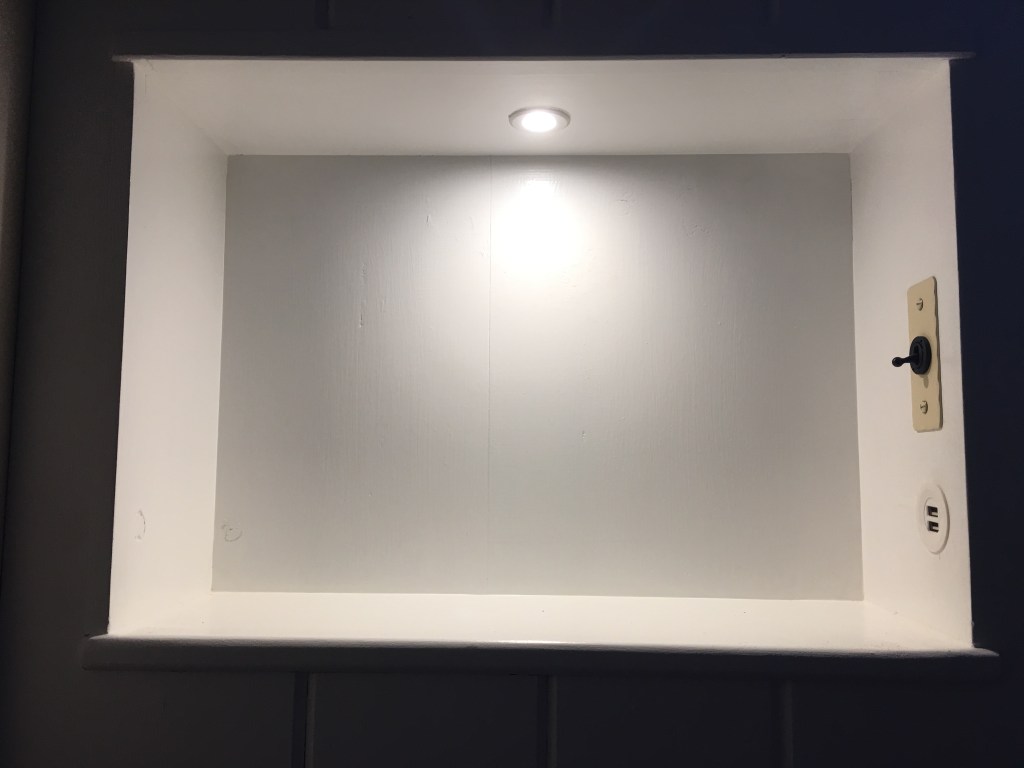
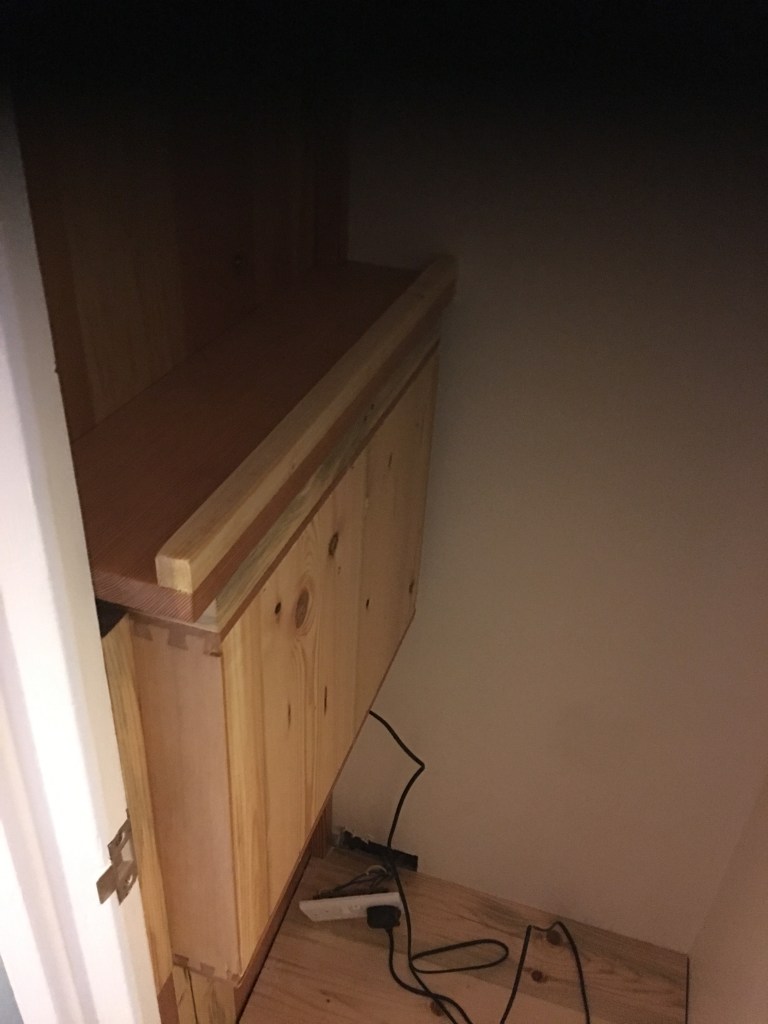
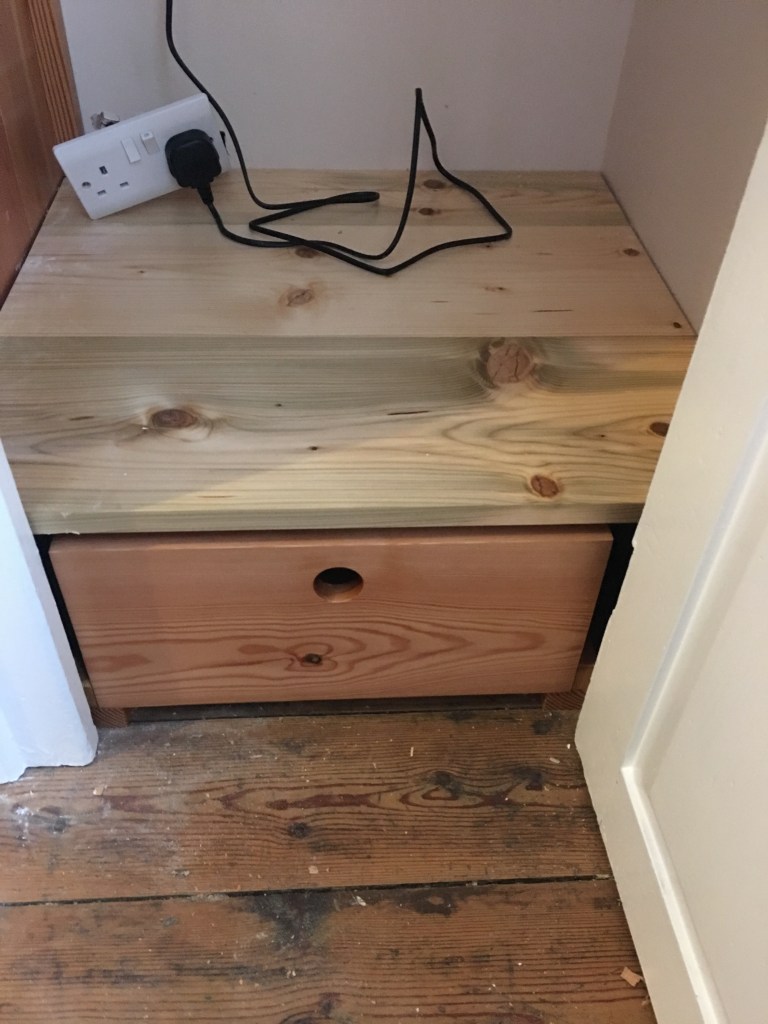
The box top half way down on the left hand side, lift to allow access to replace the light build if needed in the recessed shelf.
Unusual feature:
Above the fireplace you will notice a picture frame set at an unusual angle. On closer inspection you will see that this bears testimony to the decorator who in 1897, decorated the Vicarage and left his name and address behind the wallpaper. the family name although unusual to the rest of the country is common the the Fens and his descendants are still living in the area.
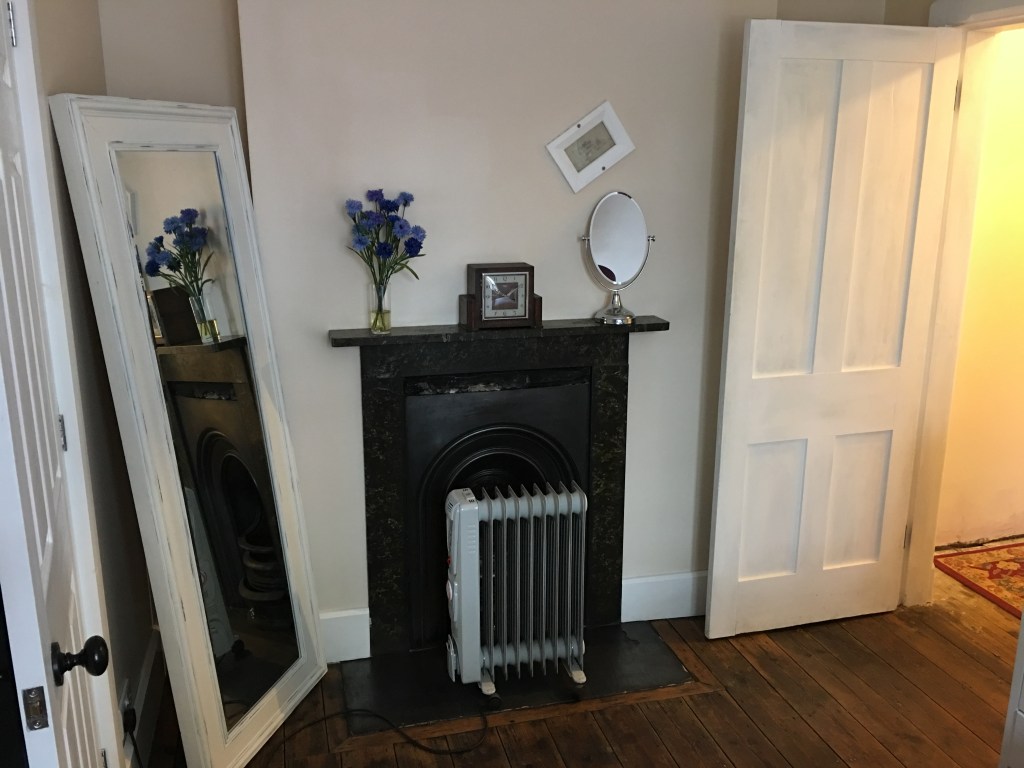
This picture was taken before the room was finished. You’ll see the frame that was made to preserve Mr Gotobed’s comments for posterity. It was also fixed specifically at the angle to match the angle of his note.
This fireplace insert was found in the outbuildings and was cleaned up. It may have been the one for this room as it is the same design as those original ones in the other rooms. It of course shorter than the surround, but this could be one of two reasons. 1) It was removed and cut to be used in the outbuilding. 2) It was always like this. In some of the other rooms, they also don’t fit and were nailed in position and then a lime cement used to set them in which was then coloured, so you don’t notice they don’t quite fit. We have set this in now and used some tiles at the top which match the colour of the surround, see later pictures.
Restoration:
Fireplace – The slate surround is the only surviving one in the house which retains its original Victorian marbling effect. The process of doing this was to dip the slate in a bath of oil paint, the oil would be swirled before dipping, and the float on top of the water. On contact with the slate the paint would transfer. You would then dry, buff and in some cases apply a varnish sealant. the only restoration that has taken place on this surround is the removal of over 100 year of grime. As would be expected it has lost some of its original lustre, but is still in excellent condition.
Fireplace insert – The cast iron fireplace insert was missing when the house was taken over. All that was present in the room was a broken brick surround where the fireplace had been prised from. the good news was that the original insert was found in the stable block, it had had several coats of paint applied to it, which were stripped and then it was polished with a graphite polish by hand. This of course is quite a dirty job, and of course requires a light repeat of the operation every several months to keep a high sheen on the metal, A job when the house was built which would have been the preserve of the parlour maid. But alas now is the owner’s job!
The final job before the fitting of the fireplace insert back to the chimney was the restoration of the brickwork. there was a stock of original soft red bricks available in the house, these were made use of and a lime mortar mix (as per the original used in the construction of the house) to secure and then seal the brick work as far up the chimney as possible.
When the fireplace insert was presented to the fixed surround, it is clear that there was a two inch gap at the top. This is not unusual in Victorian houses. and it could be seen that this has always been the case. In some houses a smoke cover/cowl might have bee fitted which accounted for this, but in the Vicarage, the polished remnants of plaster could be seen which had ben applied and butted up to the fireplace insert and then graphite polished. The reason for this is simple. The Vicarage was built for a fixed cost and the LittlePort builder, who built it used items he had in stock where possible. You will see this a lot in older houses especially Victorian houses where the deliberate use of paint hid defects such as this.
We performed the same Victorian hack and then whilst in France, sourced some chamfered tiles in graphite grey, which we have now applied. This give a far superior look and is an exact match to the polished fireplace.
Renovation:
The room had suffered some damage to it, in particular the small Victorian inbuilt wardrobe which had been mostly removed and a hot water tank placed in what remained of the frame. As a result the room was stripped back to bare and the following carried out:
- Ceiling – A new ceiling was installed to replace the damaged one.
- Walls – The walls were battened, an insulated plasterboard was and then fixed and skimmed.
- Cabling – As part of the rewiring of the house, new plug sockets, digital and satellite television, sockets as well as FM radio, telephone and cat 6 internet cabling were installed. You will notice the main light switch has been replaced with a bakelite reproduction with oak backing plate to match the 1929 sockets which were in the house.
- Heating – As part of the copper repiping of the entire house a reproduction cast-iron radiator was fitted to the room.
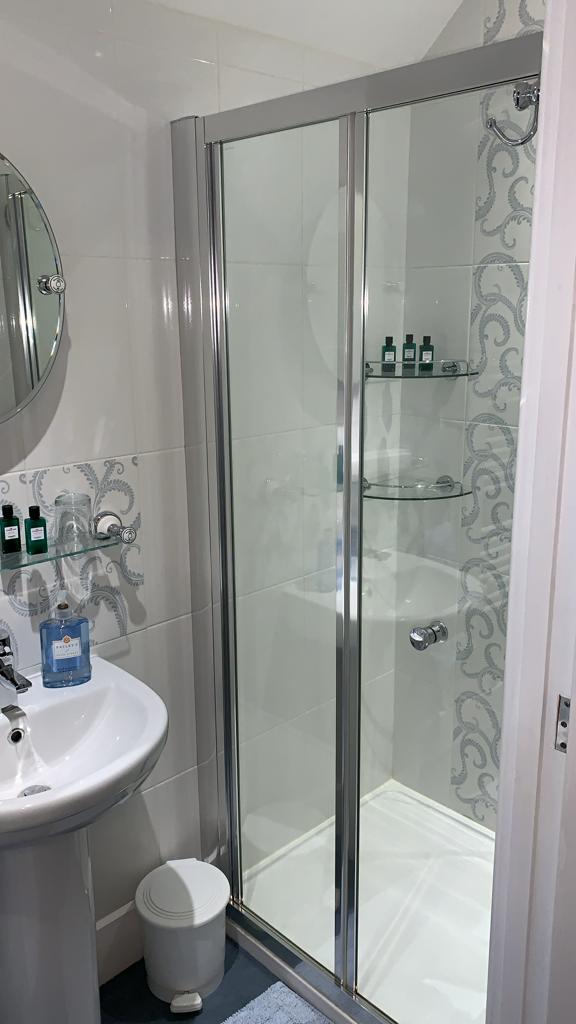
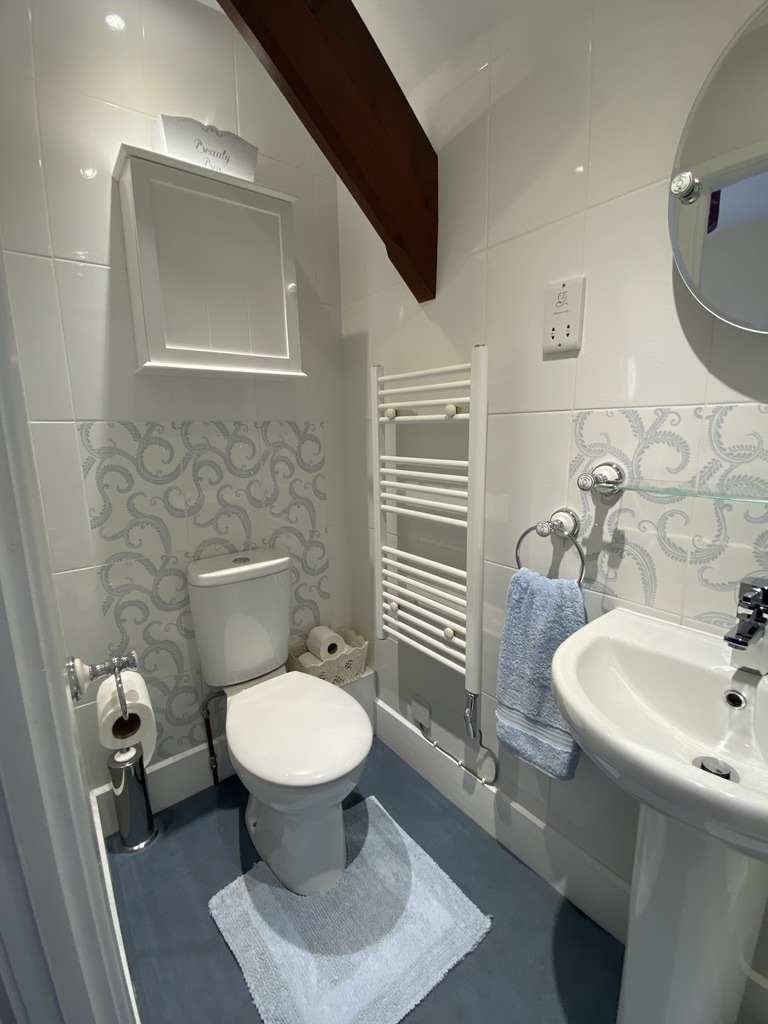
- Ensuite – A new ensuite was built in the room where the former hot water tank had been. It is worth noting that the decision was made to make all ensuites in the house practical. As a result the minimum shower tray in these is 1 x 1 metre. the ensuite is fully tiled, and as this room would have originally been the home of the cook, a Laura Ashley tile was used.
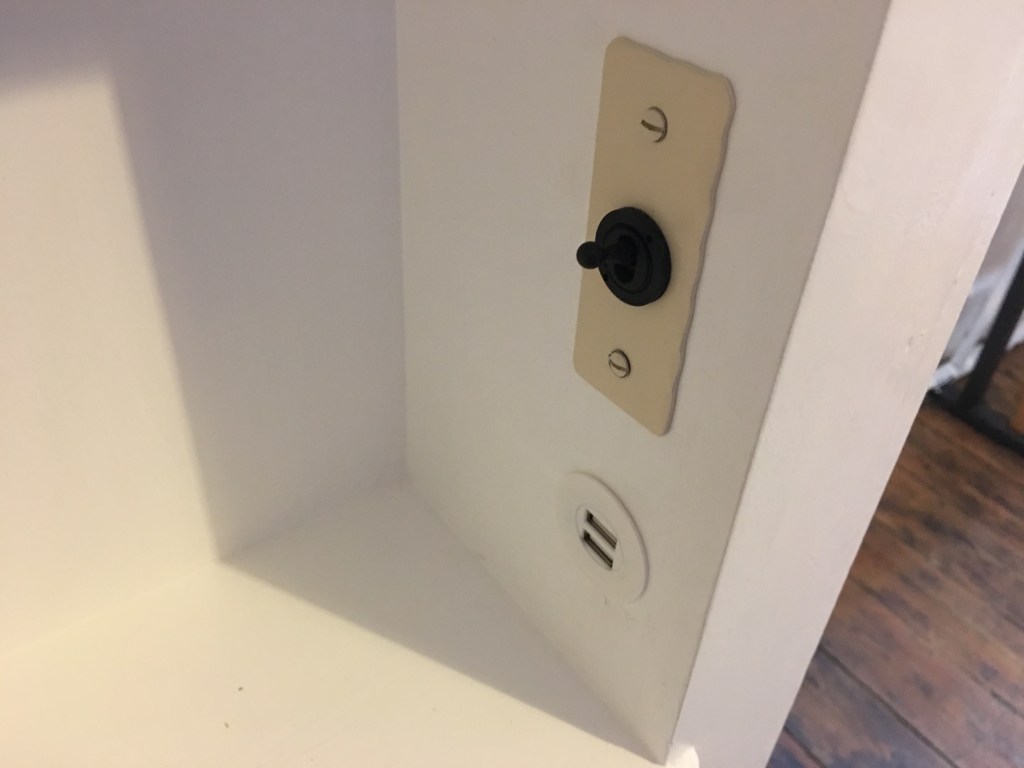
- Wardrobe – The new fitted wardrobe by the bed reuses the door and frame from the cupboard in the master bathroom and is an excellent reuse of available materials. The plank sides mimic the original simple design of the original wardrobe in this room are reclaimed pine. It is worth noting that the original wardrobes did not have the depth to accommodate a modern coat hanger, they had two wooden hooks. I expect this near enough sums up the old saying “One on and one in the wash”. The new wardrobe while respecting the original design gives this increased depth. One last design feature of this wardrobe is the box insert on the side, which acts as a bedside shelf. This has a ligh as well as USB sockets installed.
- Desk – A fitted desk has been made by a local cabinet maker. The desk is made from sycamore and has a curved front. The front of the desk is hand carved to give a ripple or bark effect and a hidden draw has been cut into the front. The desk finish is natural and waxed, we will let the wood age naturally.
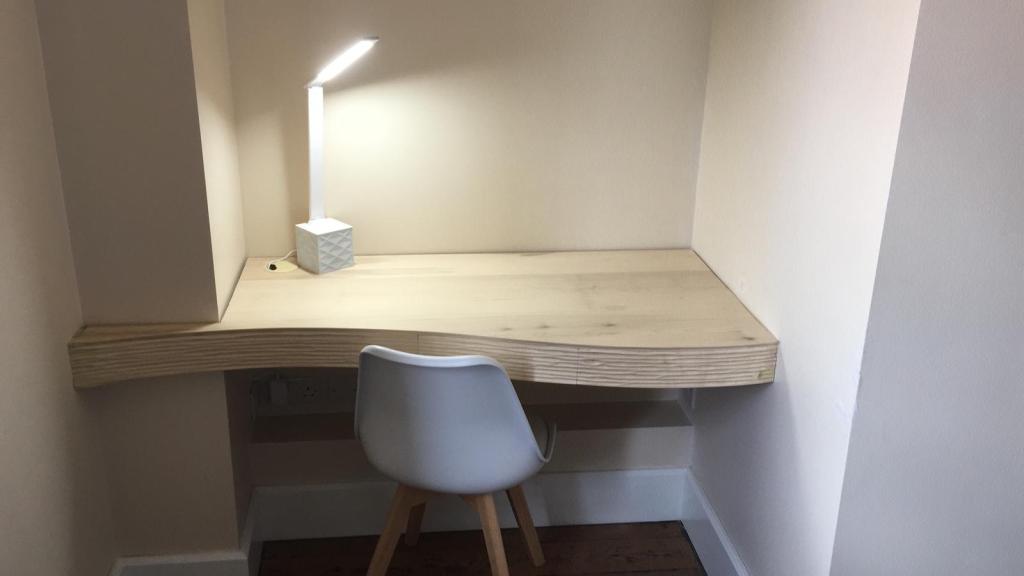
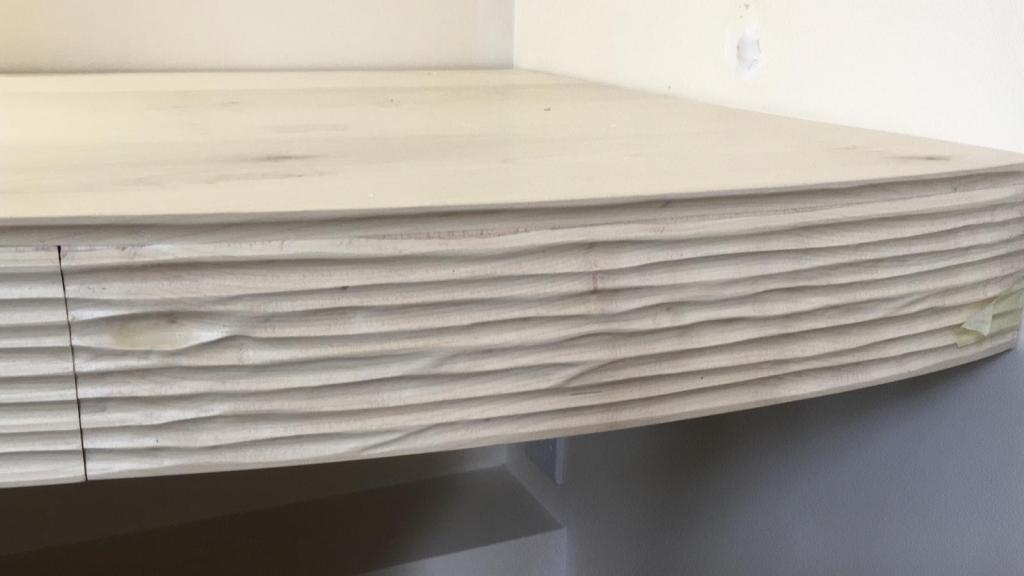
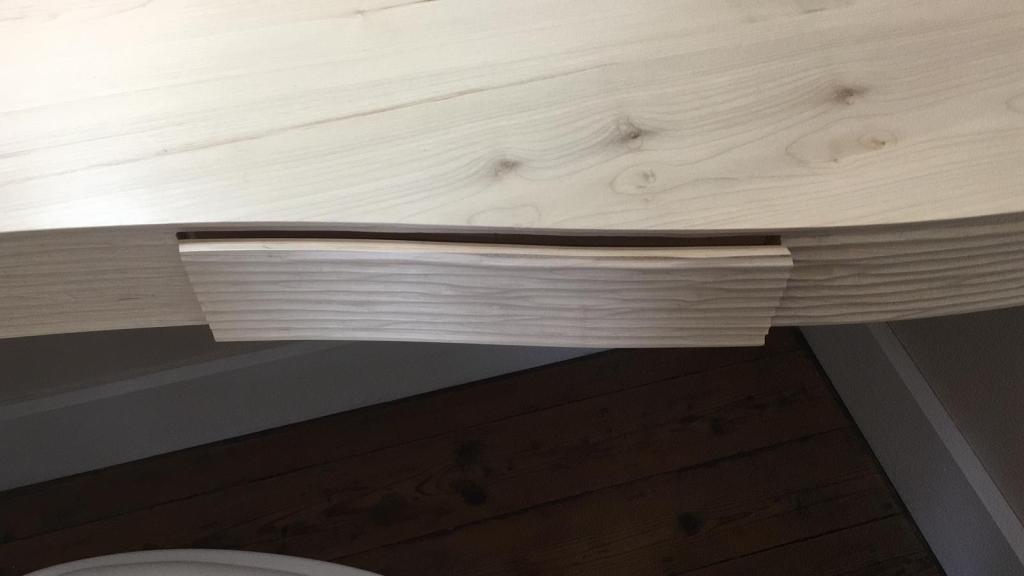
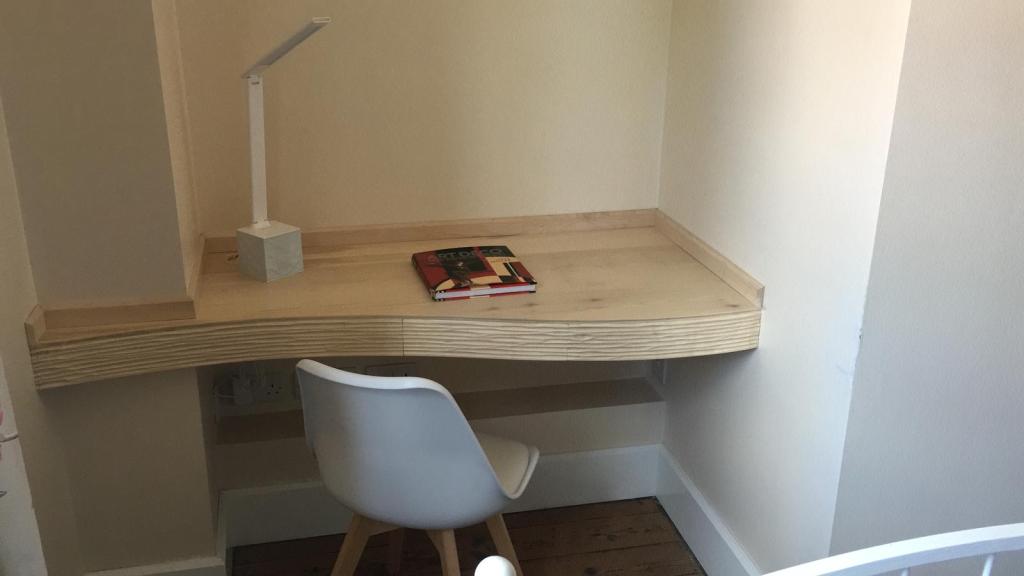
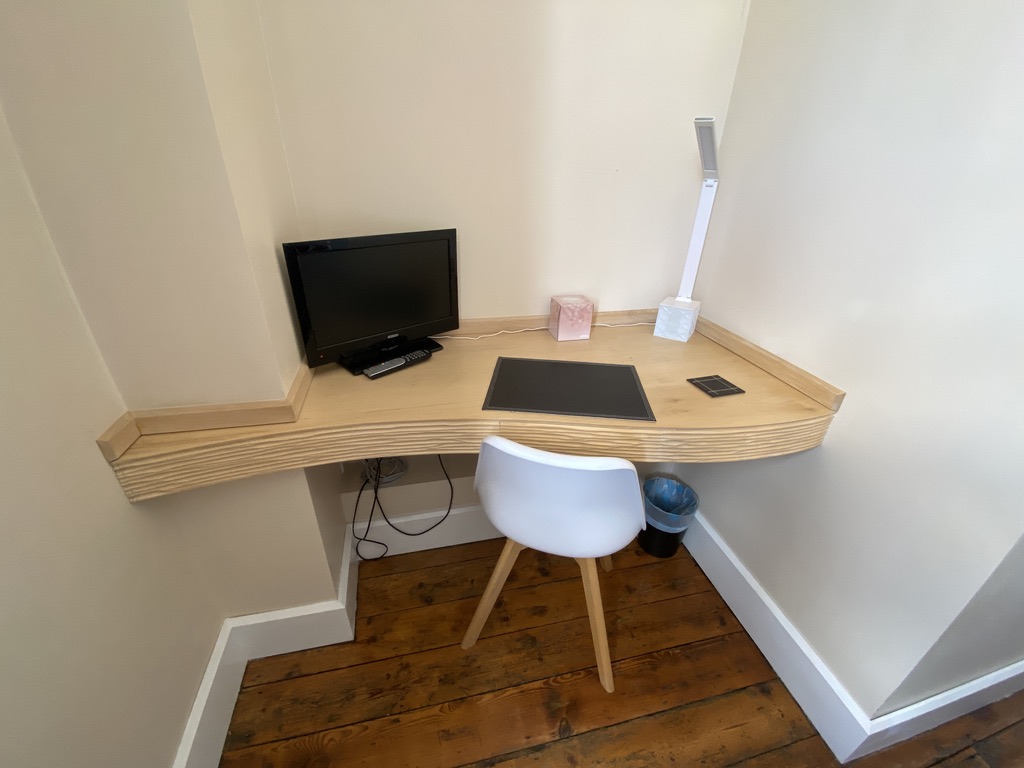
The sycamore desk finished and with a natural wax applied.
Interior Design:
- The rooms theme colour is purple and pink, which runs through the curtains, bed throws, lamp shade and highlighted in the wall art.
- The pewter (electric) oil look lamp on the desk is an artisan piece which was commissioned in Villedieu-les-Poêles, France thenty years ago for a previous project (this has now moved to the Dining room).
- The desk chair is a simple modern chain which compliments the clean antiseptic sycamore wood and was found on a visit to Le Touquet (Le Touquet-Paris-Plage).
- The cheval mirror was source locally in Soham and has a off-white distressed look.
- The curtain poles throughout the house have the same finish, which is ivory with gold highlights. The difference between these and the main house are the finials which are bun ends to match the original servants staircase.
Companies and Trades people used in the commission of this room:
- Coventry Demolitions – supply of reproduction cast iron radiator and bronze valves.
- New from Old – cabinet making – creation of desk and wardrobe.
- Laura Ashely – ensuite tiling.
- Port Plumbing – supply of shower tray and shower door.
- Adam Paint stripping – stripping of fireplace insert and door.
- Glasswells, Bury St Edmunds – curtain poles.
- John Lewis, Norwich & Oxford Street – pictures.
 The Old Vicarage B&B, Little Ouse