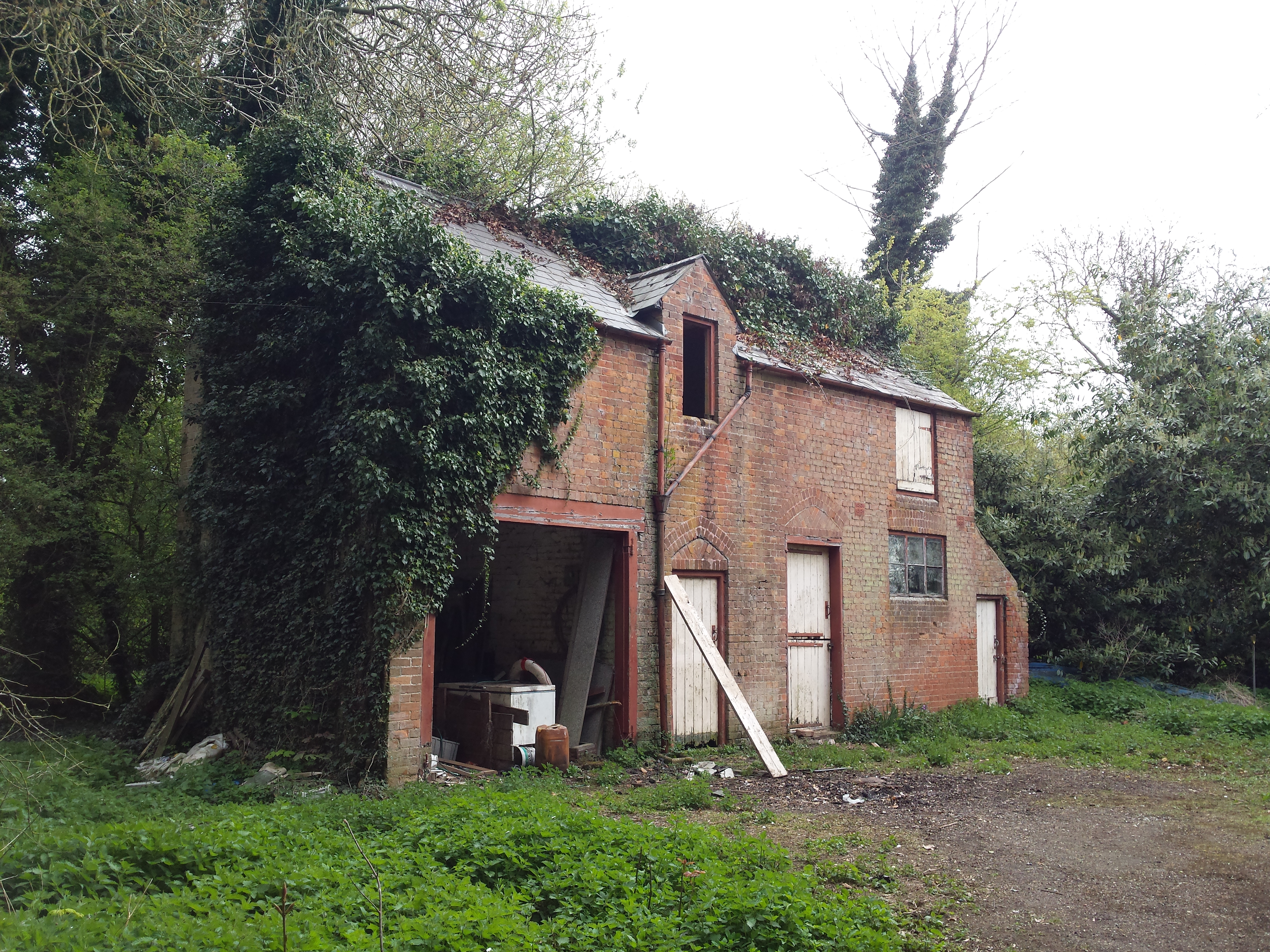
The stable block before renovation. Like many things, it was only as we stripped it back that the extent of the rot was found. If you look at the picture you can see a tree trunk that is leaning towards the back of the stable. This had actually fallen on what had been the stable chimney.
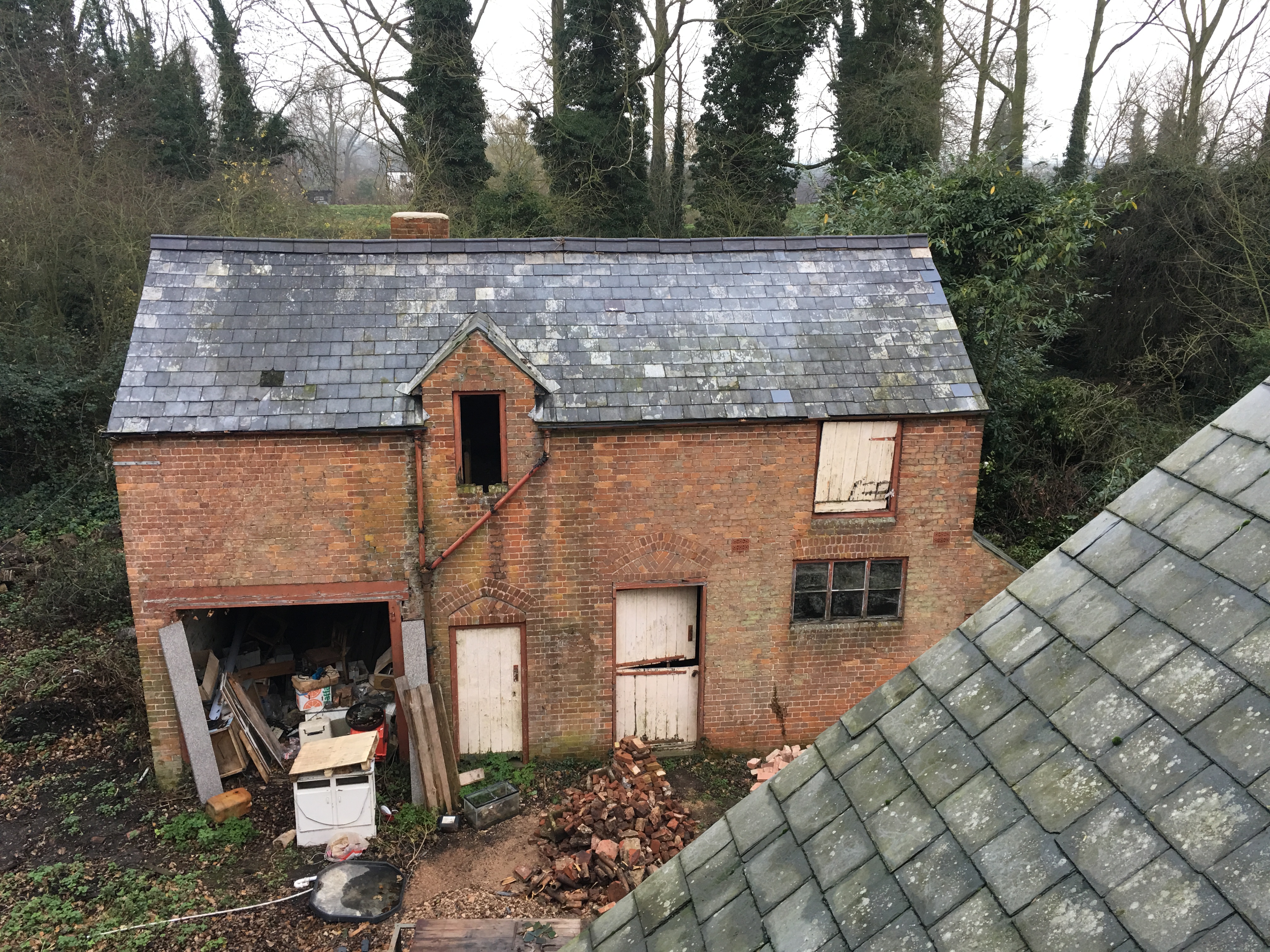
The ivy has been removed and the roof temporarily patched and the chimney has a temporary cap on it. Doesn’t look too bad from the front. The back of the roof is a different story. There were many slates missing which meant that water had been getting through for many years.
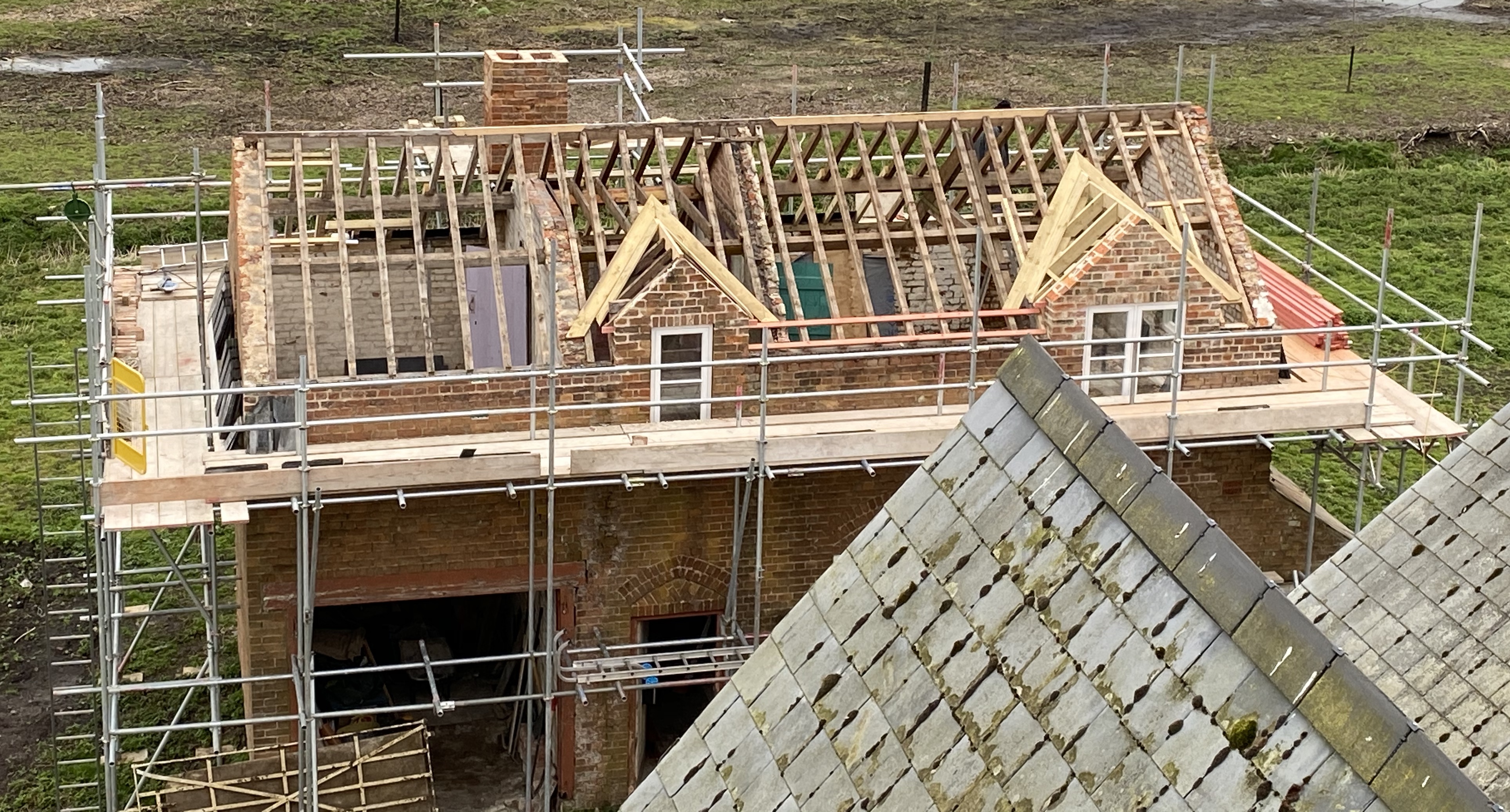
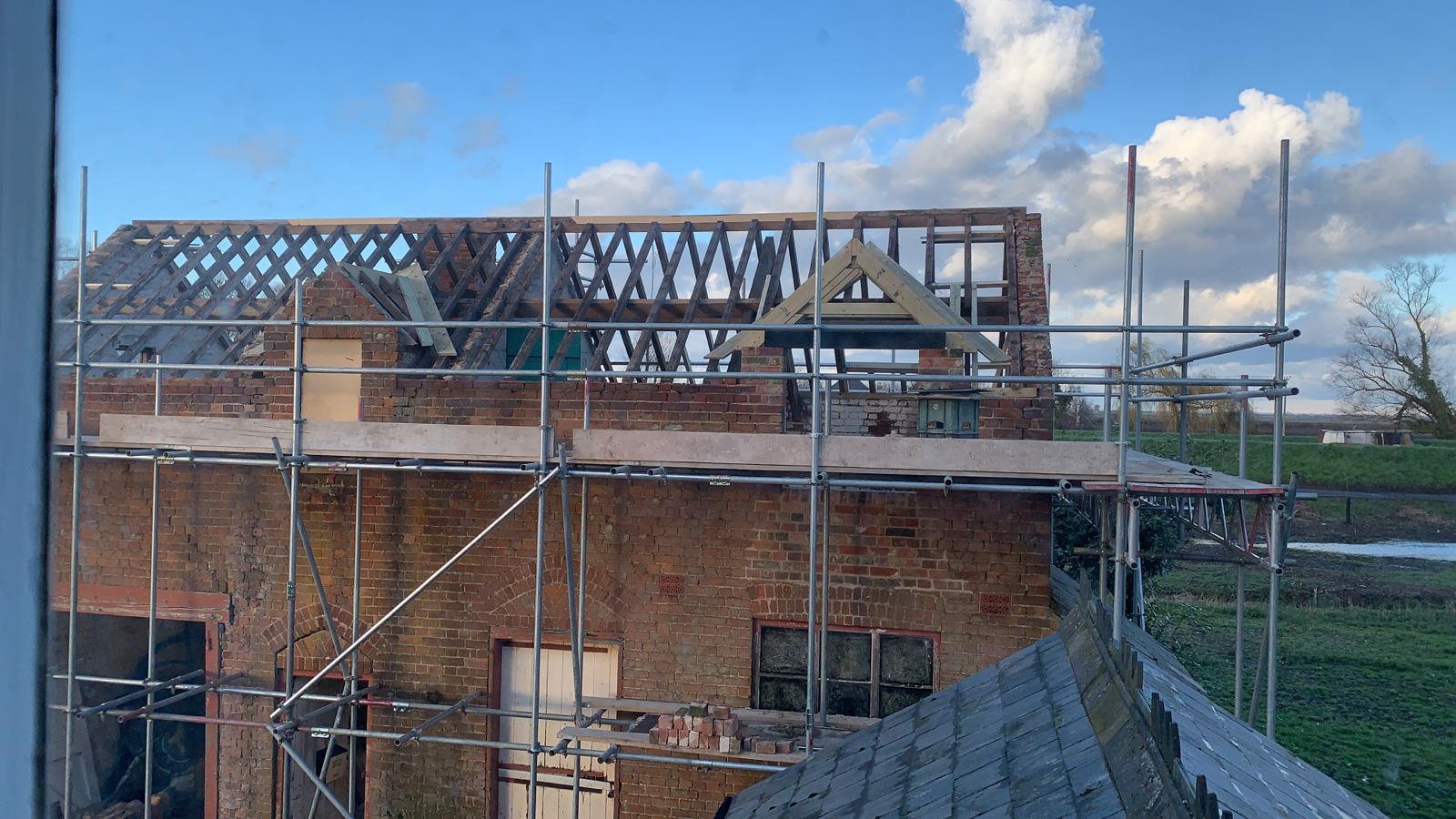
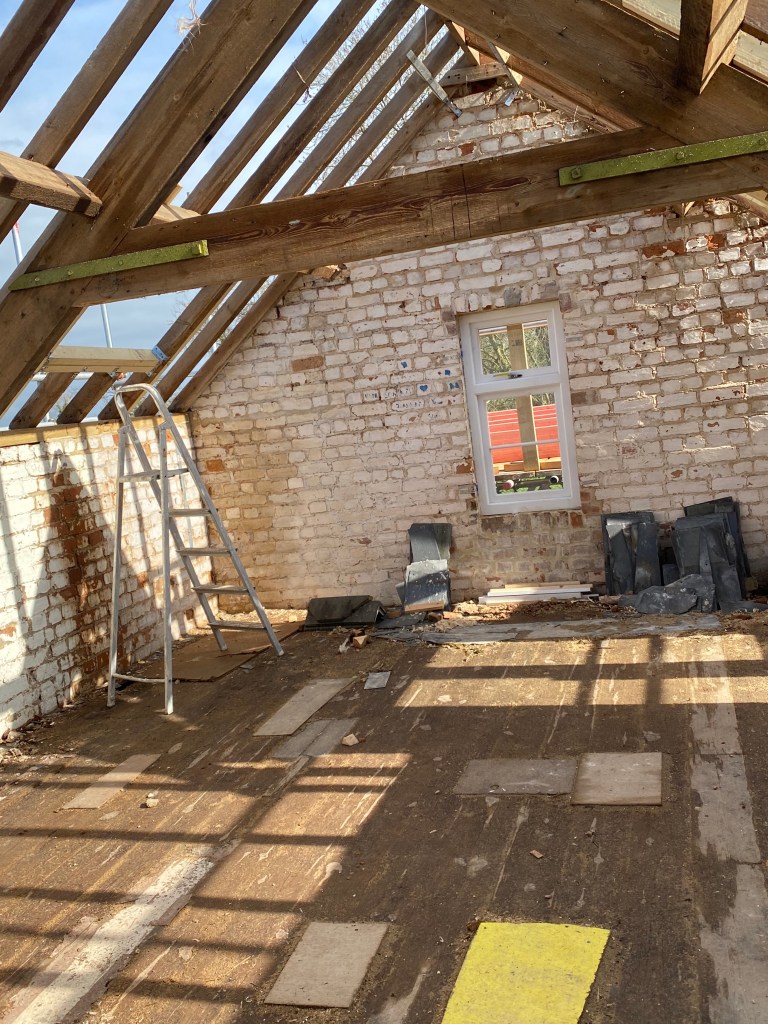
- The slates had to come off. You can see all the new wood that had to be cut in on the ridges
- The chimney had collapsed and we put a temporary cover on it. This has been removed and rebuilt, ready for its new crown and chimney pots.
- The overgrown garden around it has also been cleared
The Hayloft.
- New double glazed window installed
- On the wall on the left you can see the new footplate installed for the roof. The old one had rotted away.
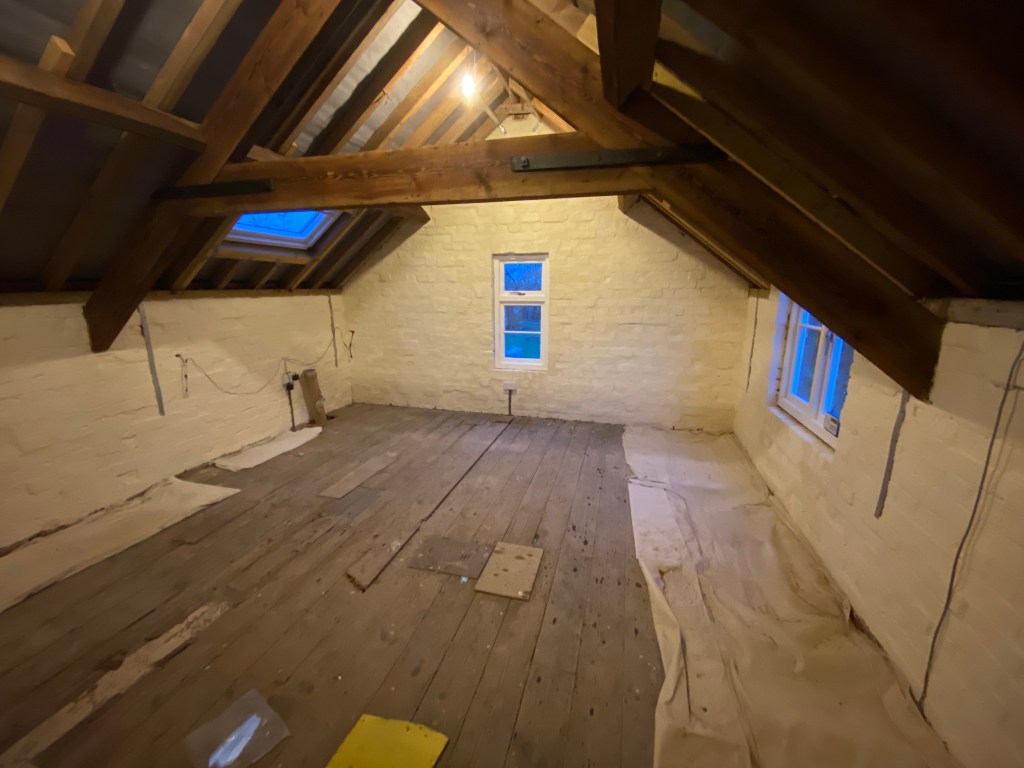
- An opening for a Velux has been added on the left-hand side. This room only had the small window at the gable-end. Which gave sufficient light when it was used to store hay. This and the new dormer on what was the hayloft door give this room some much needed light.
- If you look at the floor, you can see board patches. This is because the floorboards are rotted out. This requires a complete floor and beam replacement in some areas.
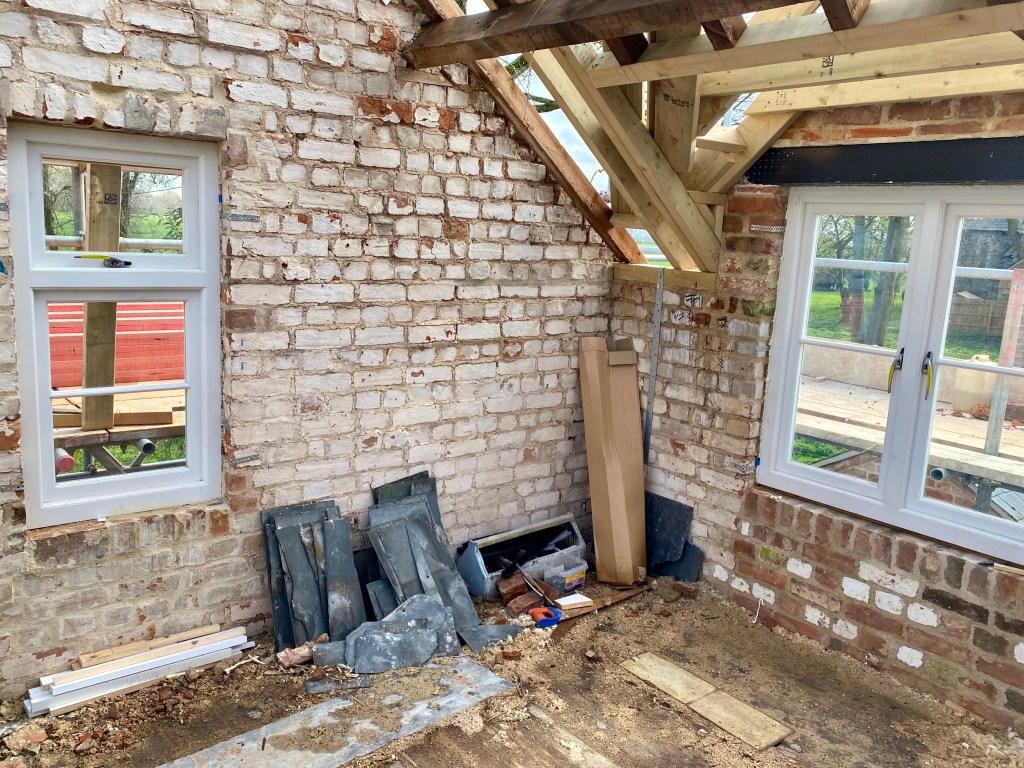
New double glazed windows fitted. To the left the old hayloft door has been filled with reclaimed bricks from the house and a new dormer added. This has been made to match the height and style of the current one which also had to be totally rebuilt and not break the ridge line
Upstairs Hall
The roof is back on and time to start renovating the shell.
Filling the walls, ready for a coat of breathable paint.
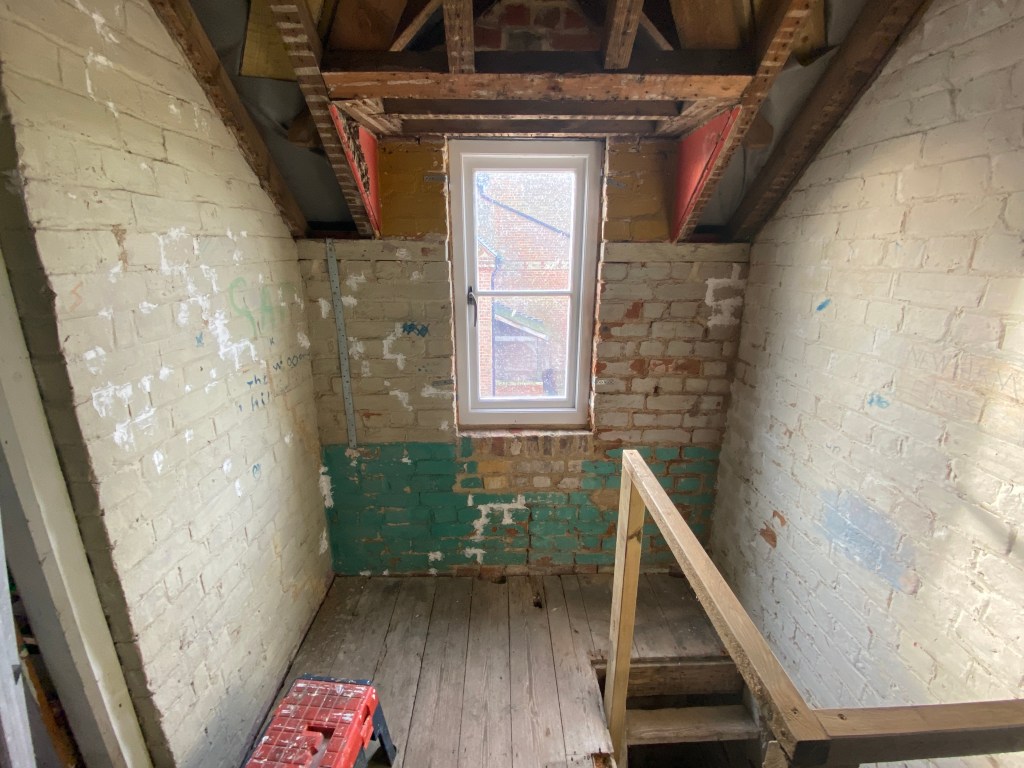
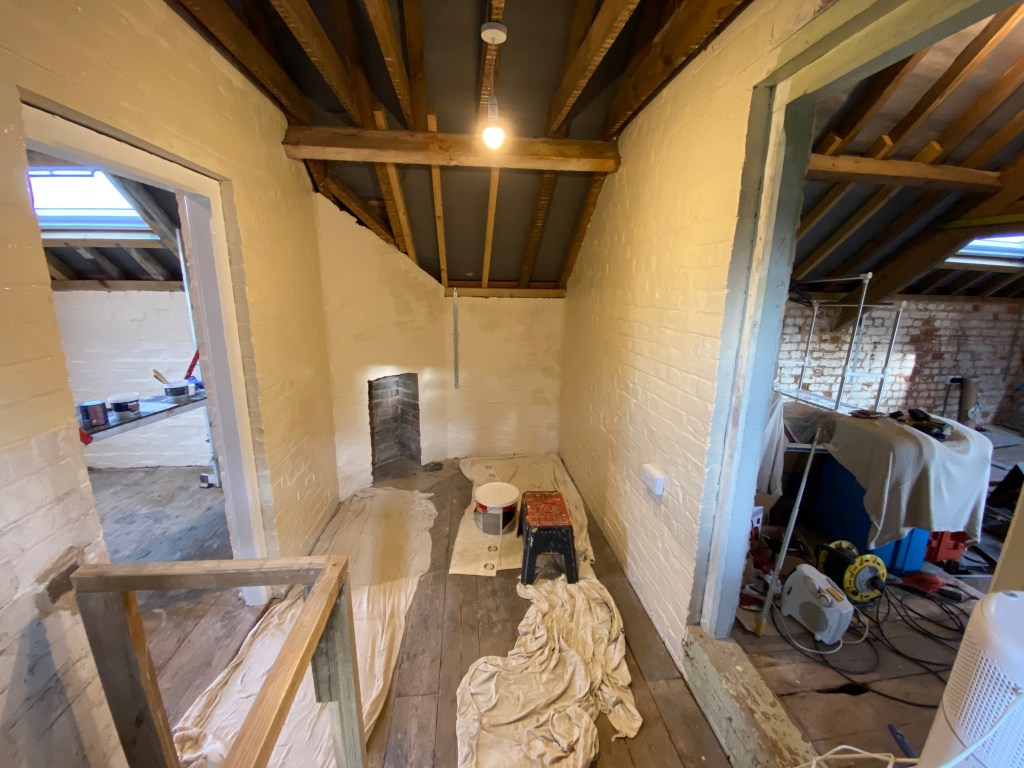
New roof on. The hallway looks transformed with a coat of paint. Also electric has been run upstairs now that the building is watertight.
Blacking the hearth. There is a fireplace in both the downstairs and upstairs hallway.
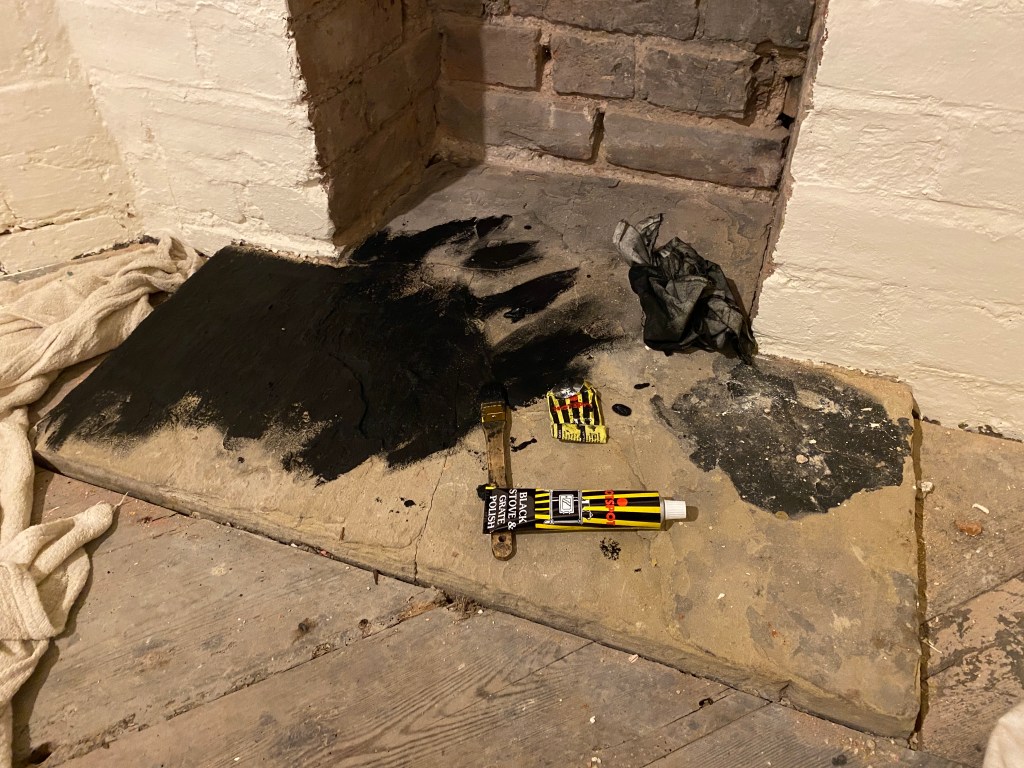
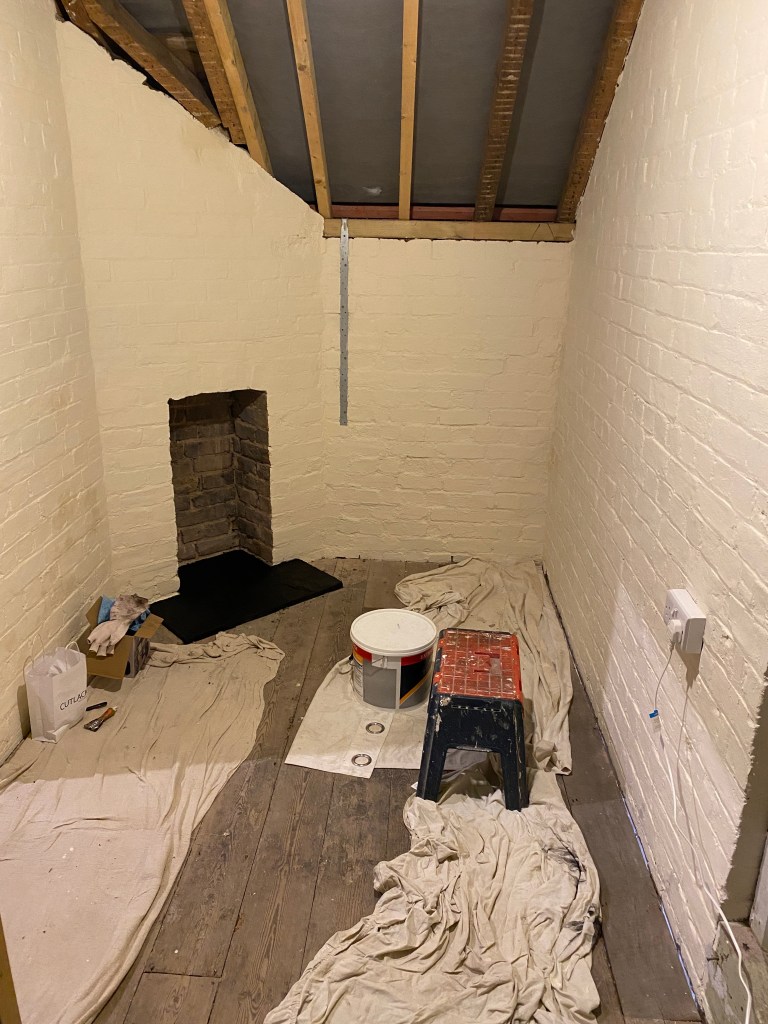
Hearth blacked
The current opening is where the hayloft ladder is. This used to have a hinged hatch cover, which was broken. This has been removed and a guard rail put round the opening.
If a conversion is made to this area, it wouldn’t be hard to remove this section of flooring and fit a staircase.
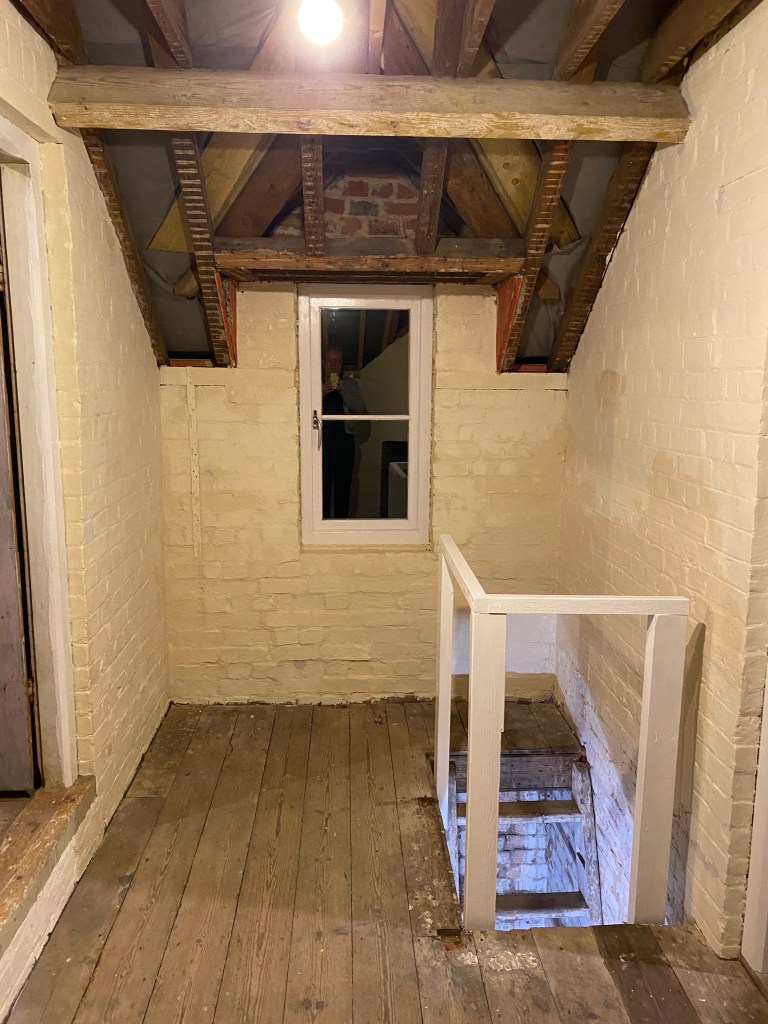
Bathroom (or bedroom with an ensuite)
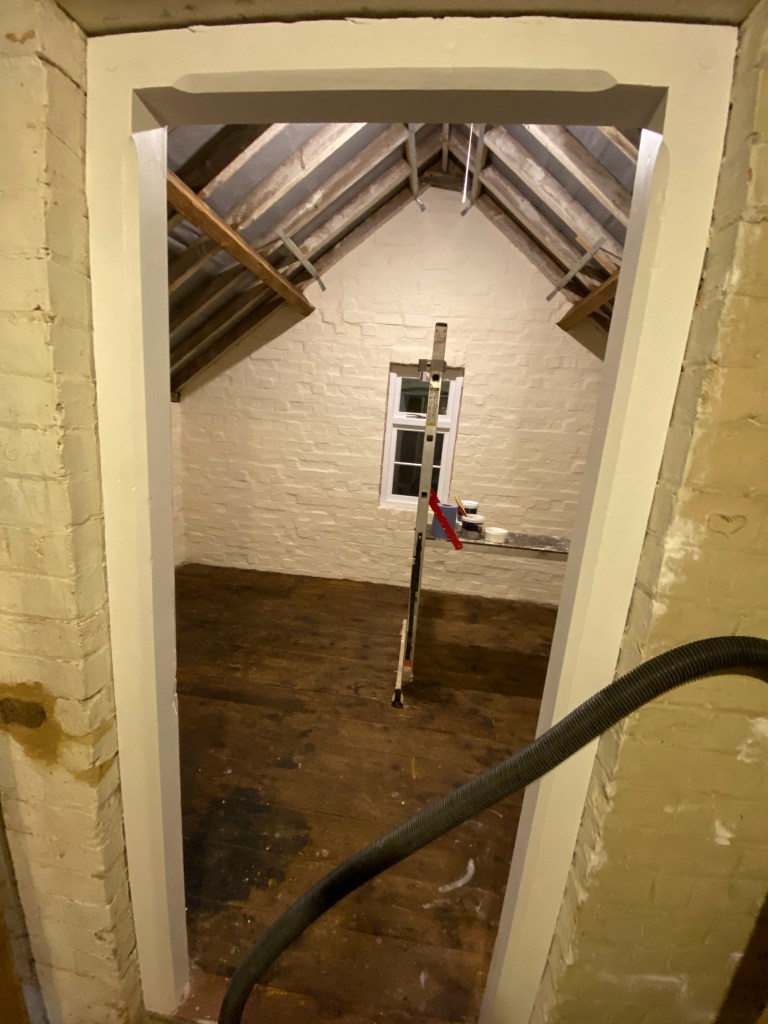
The smaller room in the stable block is listed as being for the stable boy. I’m not quite sure if one ever lived in here but, he certainly was not spoilt if he did!
- You can see the new lined roof and new double glazed window in the gable end.
- This room did not suffer the same level of water damage as the hayloft and the floor has been repaired.
- The walls have been repaired and to smarten the room up have been painted with the same breathable paint that was used in the house.
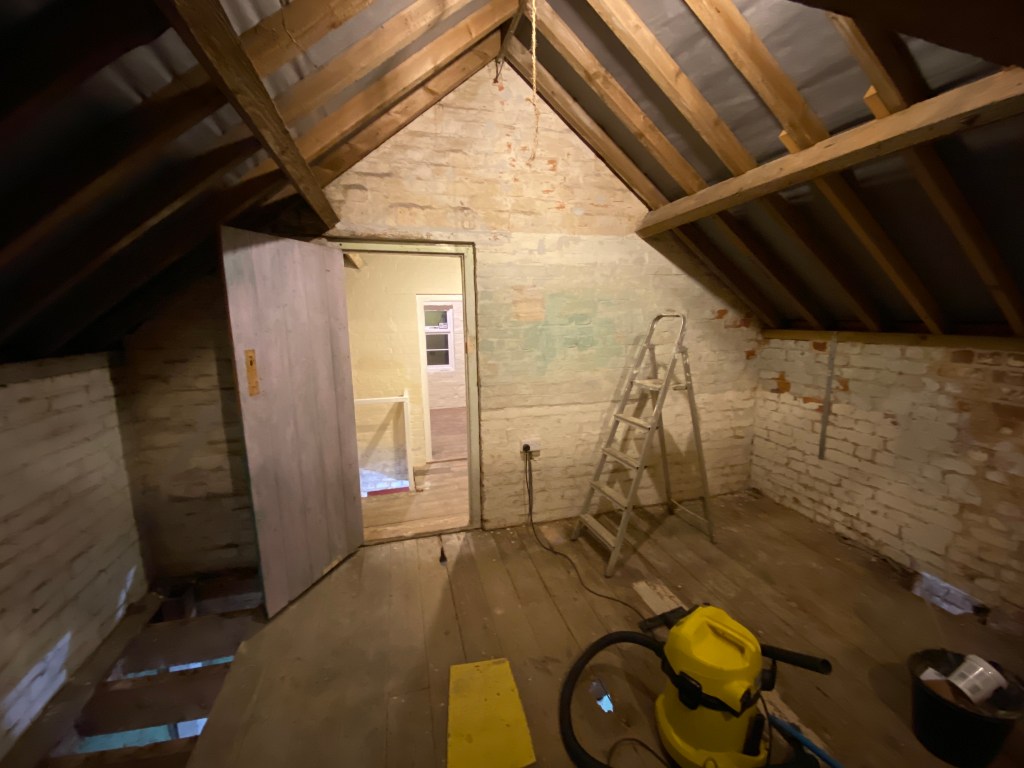
The doorway and room repaired and repainted. You can see through into the hall that the stable had been used as a children’s playzone at some time and they had decorated it themselves. This entire loft has now been taken back to a base magnolia colour.
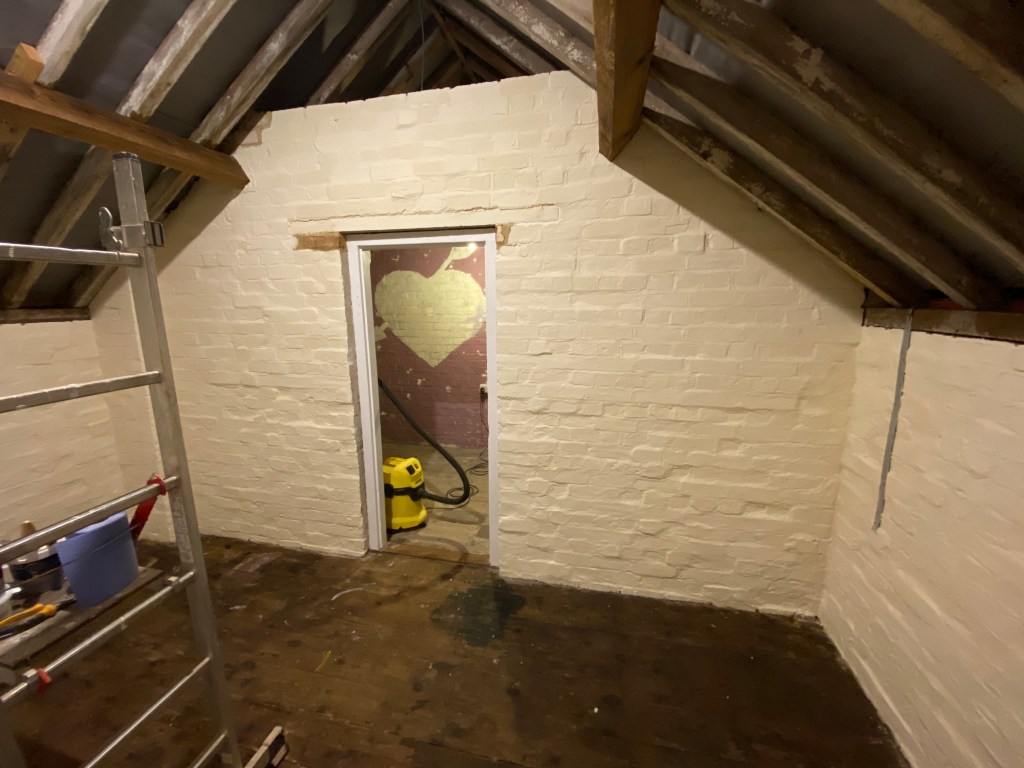
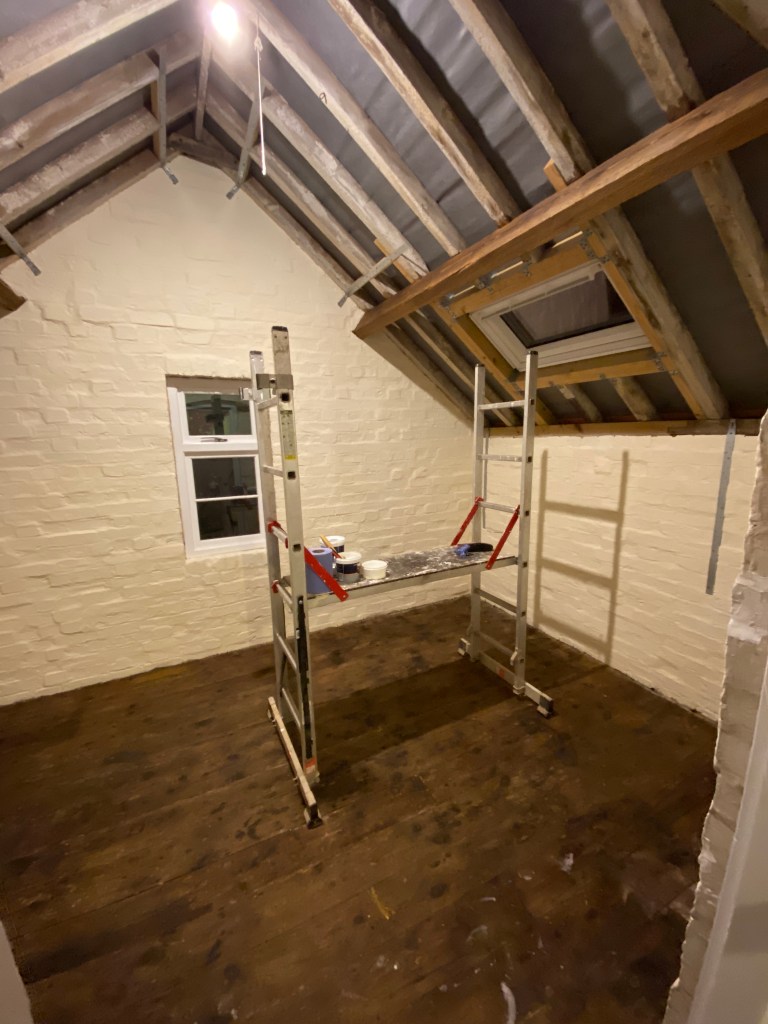
In this shot you can see the repairs to the roof, and also a Velux has been inserted to give adequate light to this room.
Main Bedroom and bathroom (or possibly two bedrooms and a bathroom)
The plank doors had suffered some damage and also the latches were broken. They have now been repaired and painted and the latches replaced with similar.
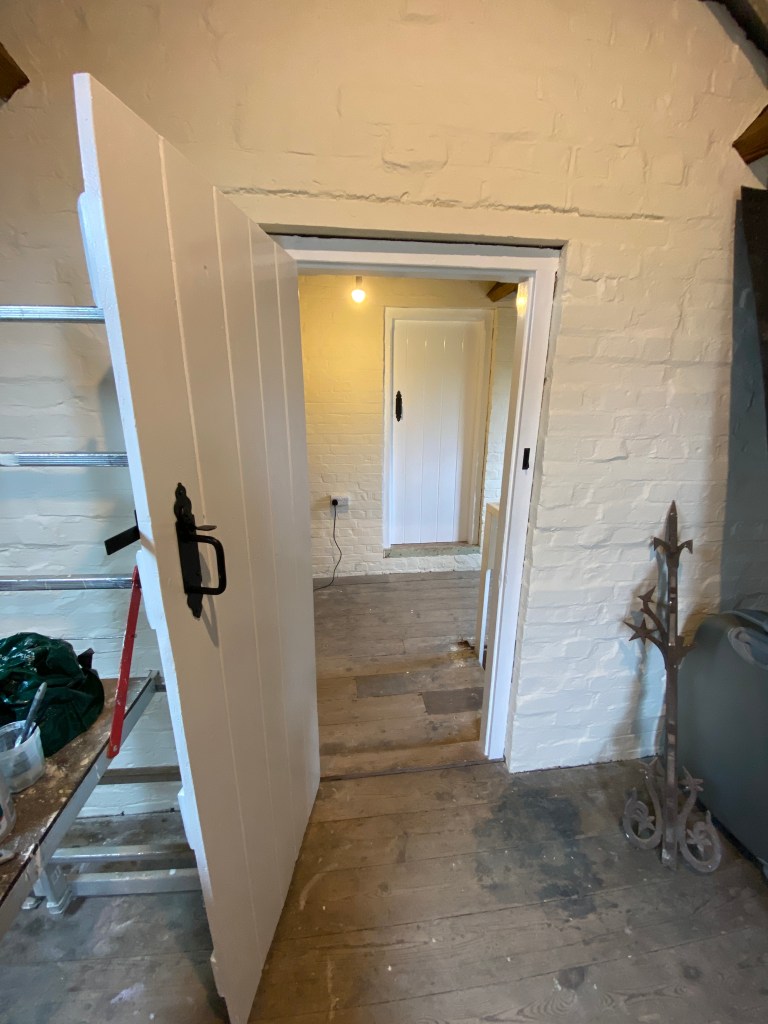
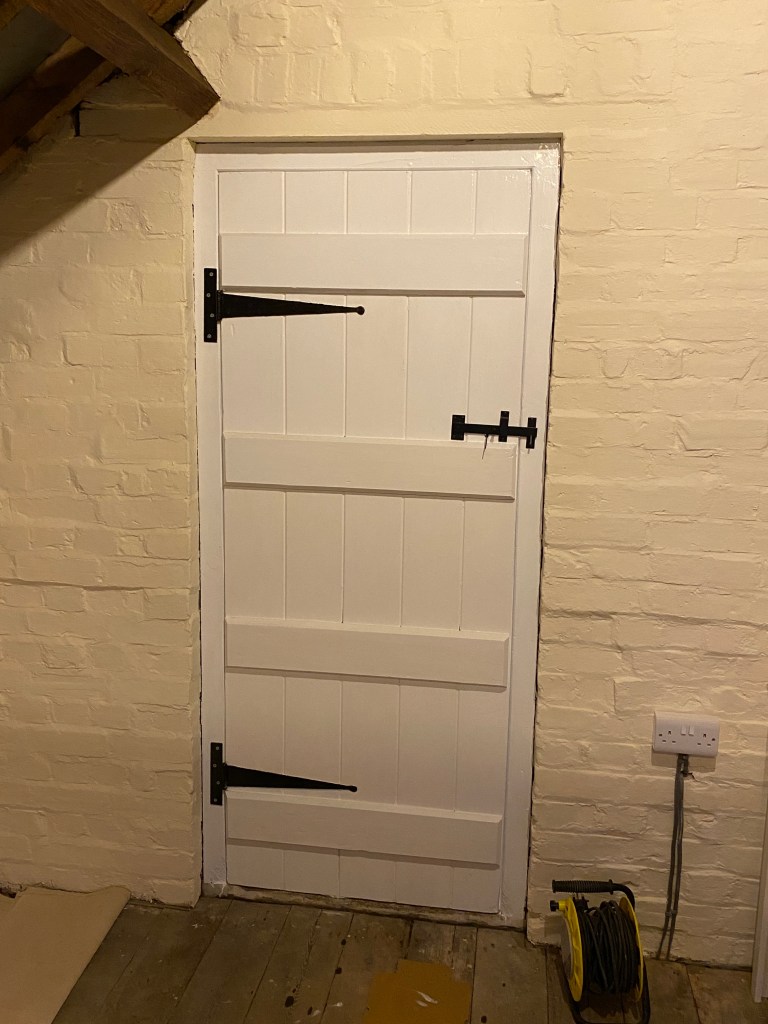
One of the repaired plank doors with its new hinges and latch.
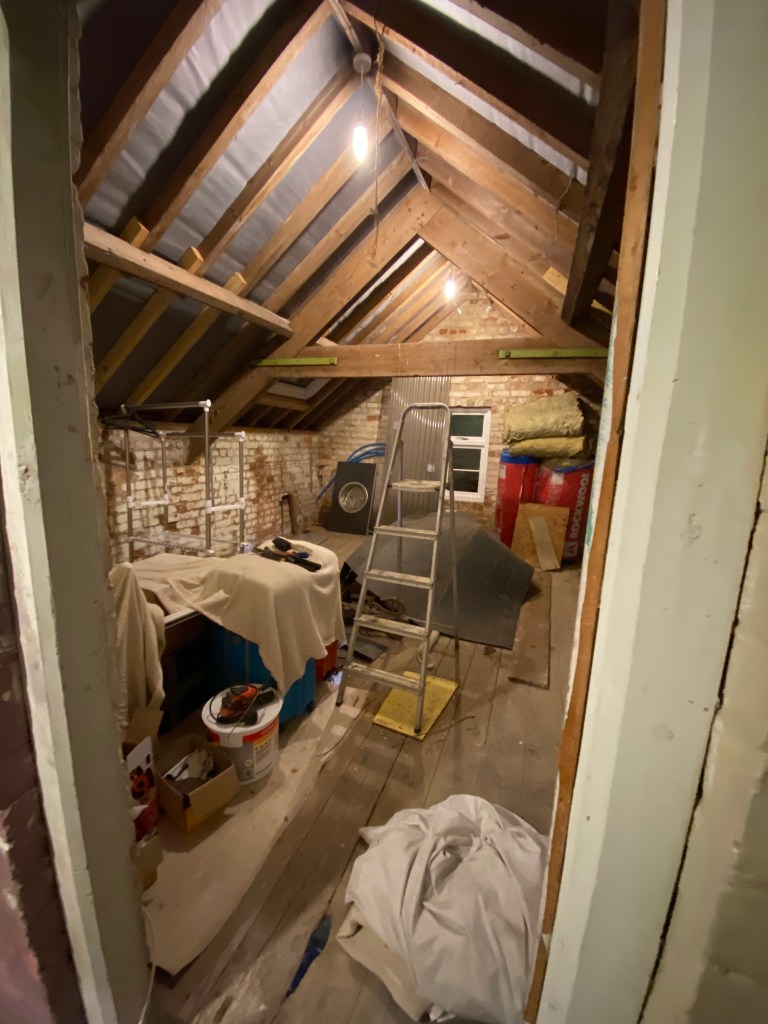
In the earlier pictures, you can see how dry and old the roof beams looks. The entire roof has been treated for rot and then oiled.
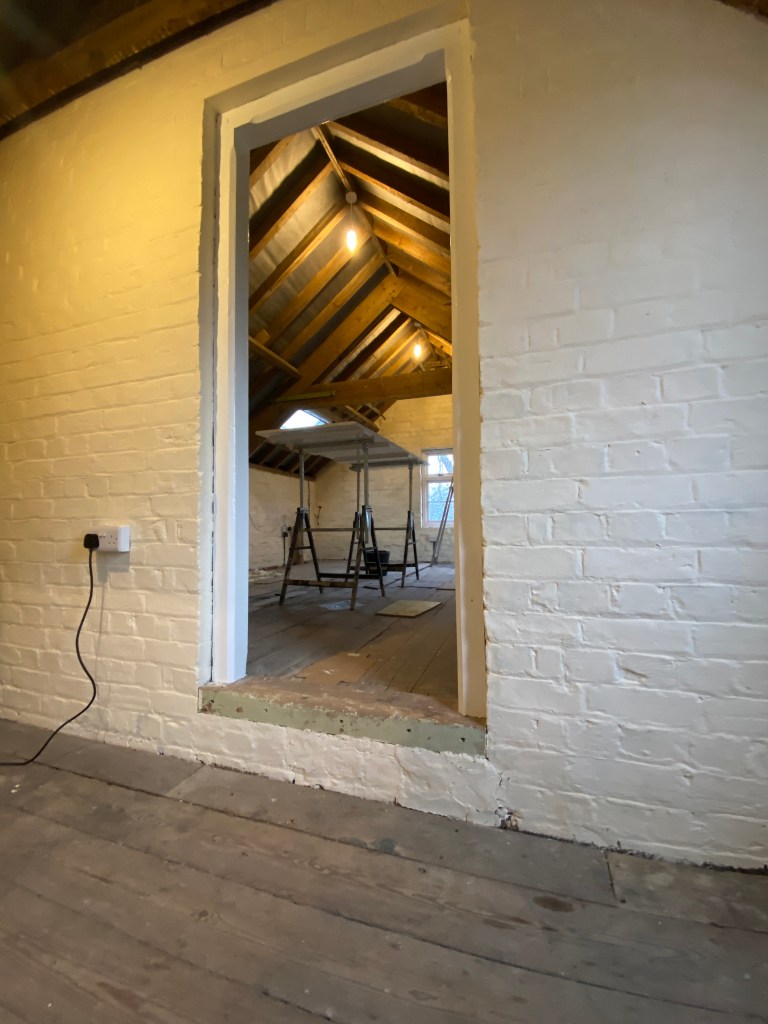
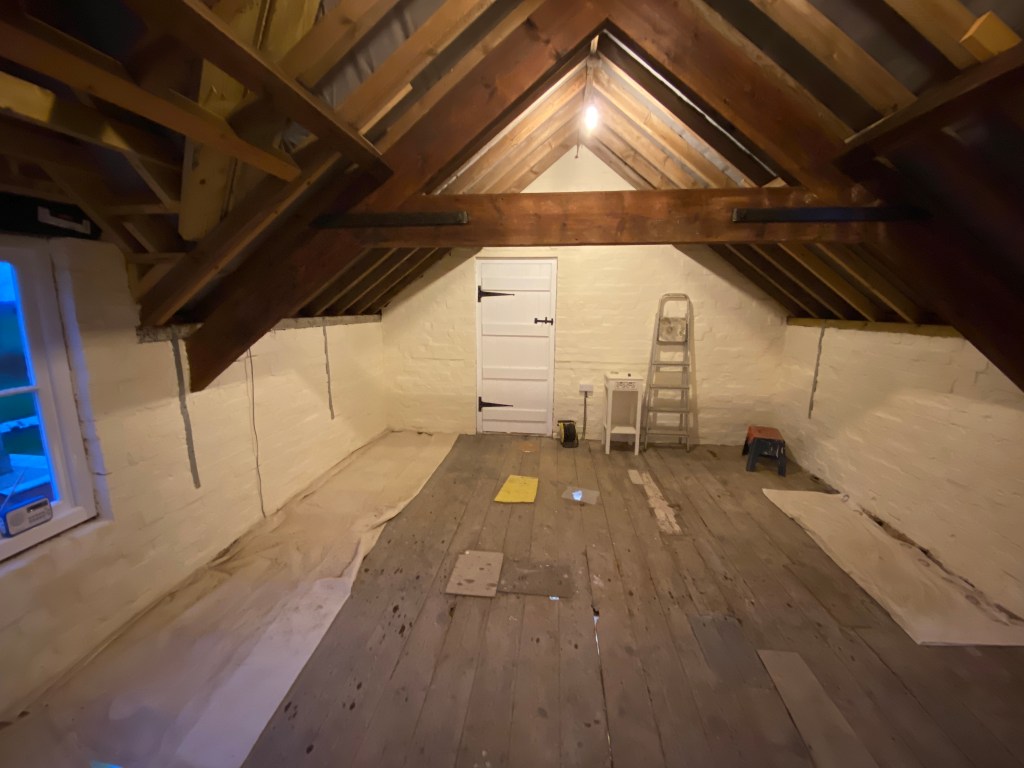
The old hayloft will make a very large bedroom, perhaps two! It will soon be time to get that rotten floor up.
This picture shows clearly how long the roof had been leaking. You can see the holes in the floor directly under those leak points.
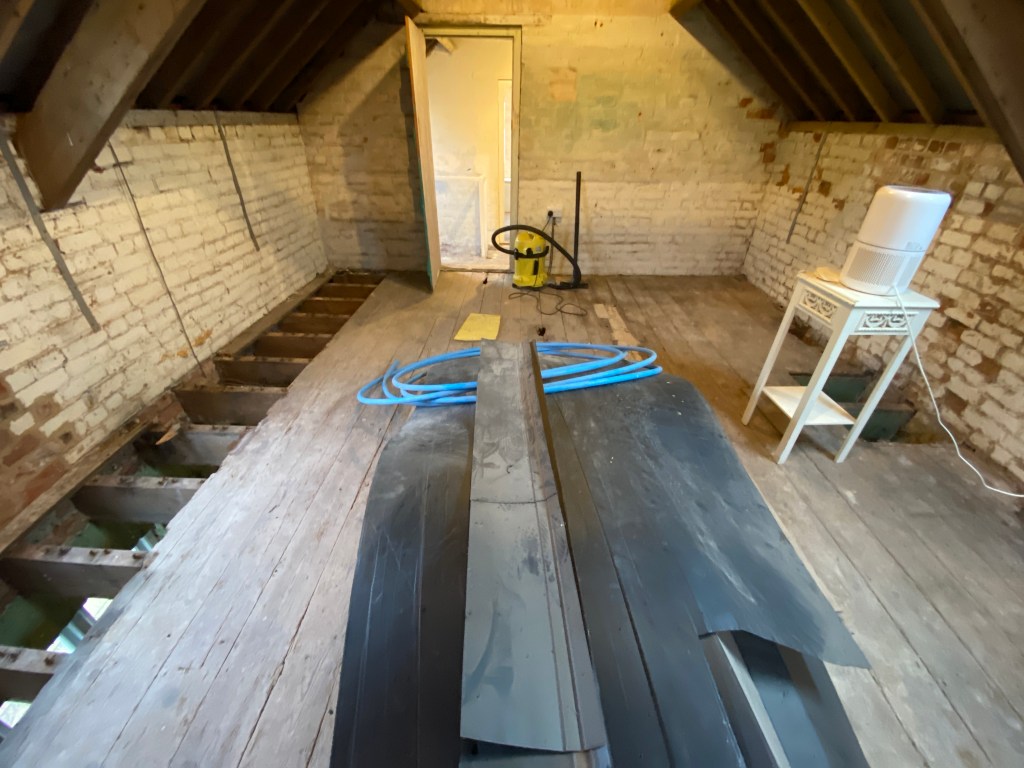
In this picture I have started to lift some of the floor boards.
Where to begin. Any watertight area is always a storage area when you are doing a renovation.
The door repaired and sanded.
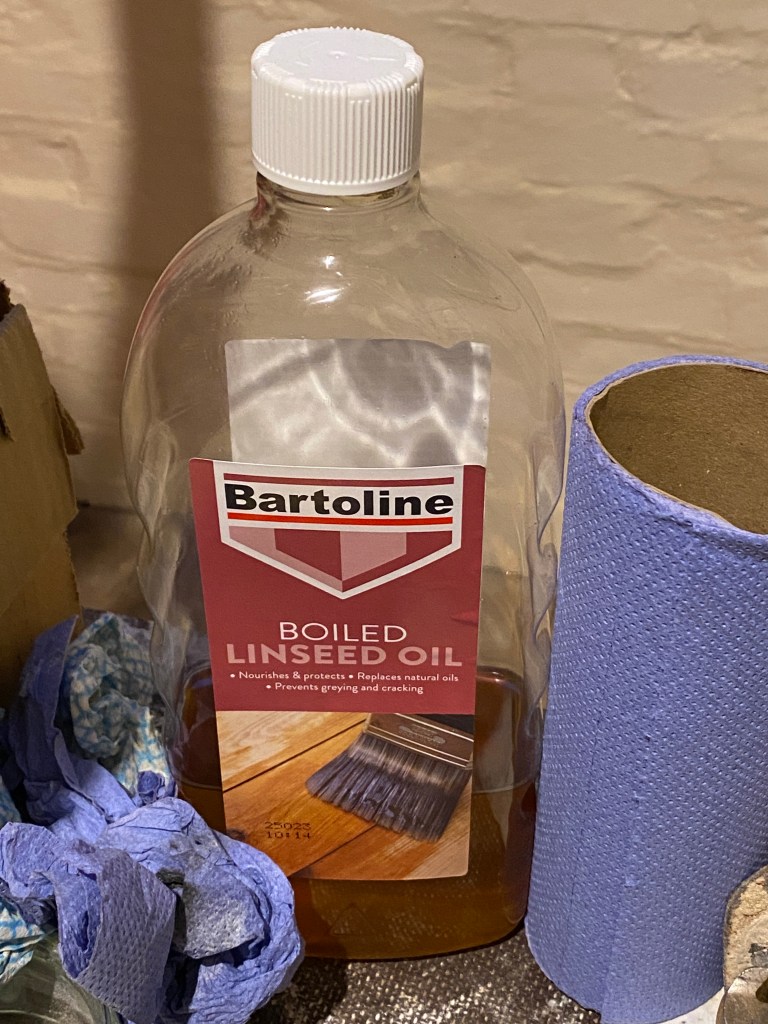
After wood is treated for rot, I like to give it a couple of coats of oil. I probably have gone through gallons of this over the last several years. One thing that I have noticed is that when I started the renovation, I used to buy bottles for about £1.75. Some places are now selling the same bottles for up to £10. I wonder if I could even afford to go to the same level of detail, if I had to start a renovation now!
Upstairs in Orchard Cottage (the old stable block) the hayloft is being converted into a rather nice room. A few minor adjustments have been made to this room. The first, is a Velux facing the river. This give a nice view and importantly retains the same external roof line. The second is the creation of a dormer where the old floor level door was to pull in the hay bales.
Although the shell of the building was made watertight some time ago (new windows, roof etc.), the inside is now being cleaned out and made ready for any future use. The paint used is a water based breathable paint as used in the main house, which means it will not need to be scrapped off, if the walls are boarded at some future time.
The room above is the top left as you look at the stable block, the smaller of the two. You’ll notice it has frosted panels in the bottom of the window and would make a good bathroom. The waste pipes are outside the stable and could be run up the wall and in. We had waste pipes connected to the the new septic tank when it was installed. There is one at each end of the stable block to give flexibility.
 The Old Vicarage B&B, Little Ouse