Nearer the mouth of the river, the Brandon Engine was the main outlet for the drainage of the northern half of Burnt Fen from 1830 until 1958. The original steam engine was replaced in 1892, by a new engine that could pump 75 tons per minute. That engine was replaced by a 250 horse power oil engine in late 1925, supplied by Blackstone and Company, which drove a 42-inch (110 cm) Gwynne rotary pump. The pump could discharge 150 tons per minute against a head of 18 feet (5.5 m), and lasted for 30 years. When a replacement was considered in the 1950s, the Commissioners of the Burnt Fen were faced with the problem that the White House Drain which supplied it had become bigger and more unstable as the ground surface had shrunk, and the engine sat at the top of a hill, rather than at the lowest point on the northern Fen. Consequently, a new electric pumping station was constructed at Whitehall on the River Great Ouse, the flow in the drain reversed, and the pumping station decommissioned.
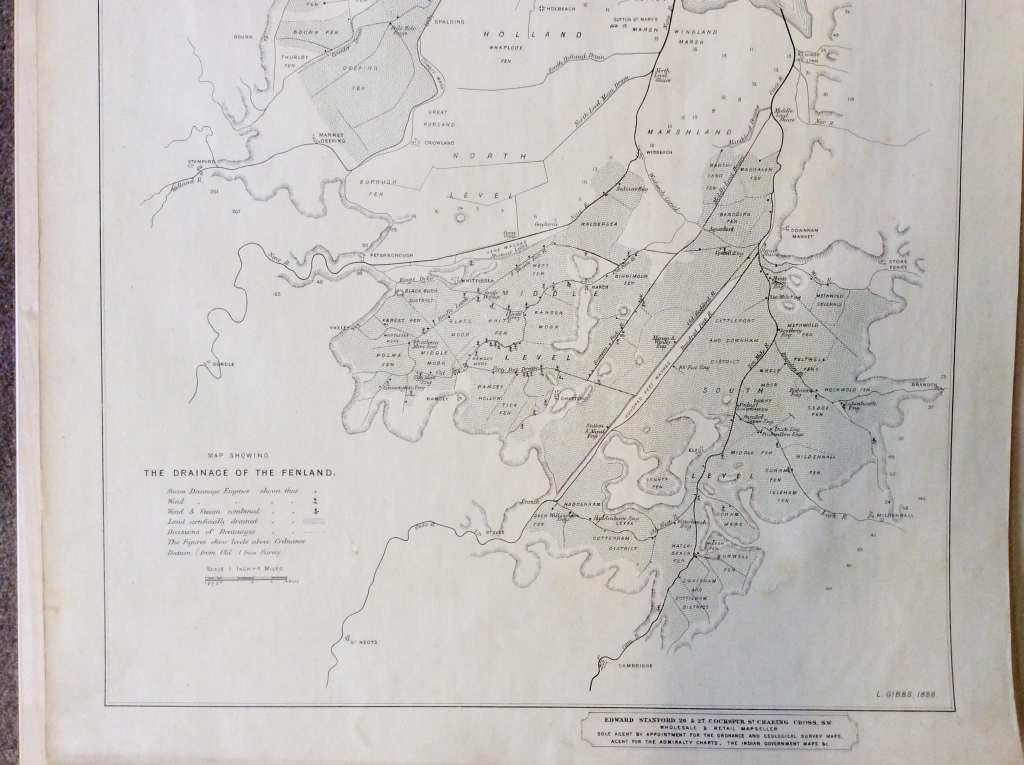
This is a Drainage Map from 1888. On this map Steam Drainage Engines are shown as a black dot and Wind ones are shown as a small windmill.
On the right hand side of the map, Whelp Moor is shown. There is enough information around this: Feltwell Fen, Redmere, Sedge Fen, Burnt Fen to see that What it calls the Brandon River is actually what we would now call the Little Ouse. If you look carfully, you will see a black line (White House Drain) leading from Whelp Moor leading to a black dot on the Brandon River. This will be the Pumping Station at Little Ouse.
https://www.facebook.com/groups/1026849820769556/posts/6592953924159090
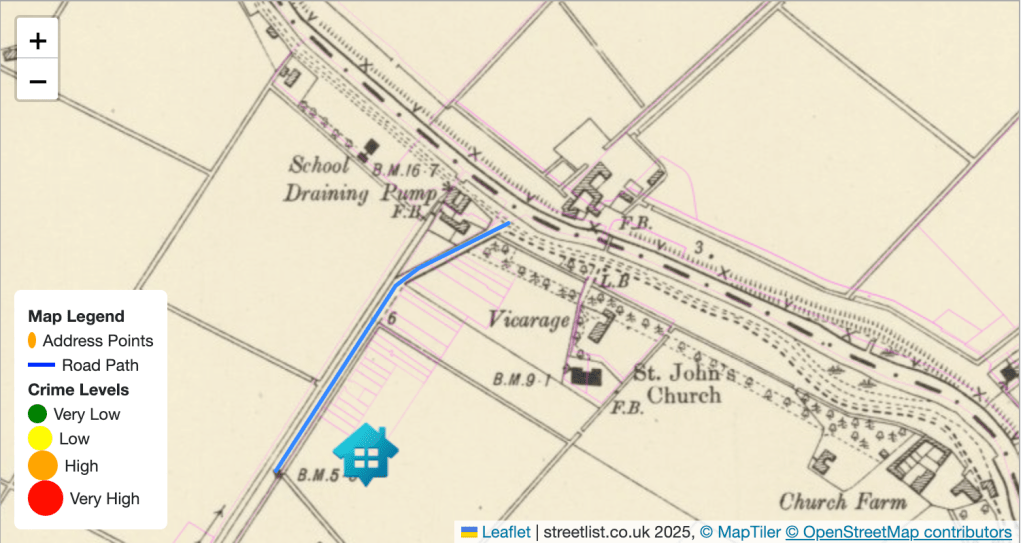
In this historical map (sometime after 1869 at St John’s Church is present), you can the following:
- A “U” shaped building which is the Draining Pump (now demolished).
- A long sort of “L” shaped building to the side of the Pumping House. I believe this was probably outbuildings for The Engine House. It would have been awkard to have these at the back as the Pumping Station is there.
- The empty triangle to the side of The Engine House is where Danzak Bungalow now stands and has no relevance to the map or the next picture from the Littleport Society Archives.
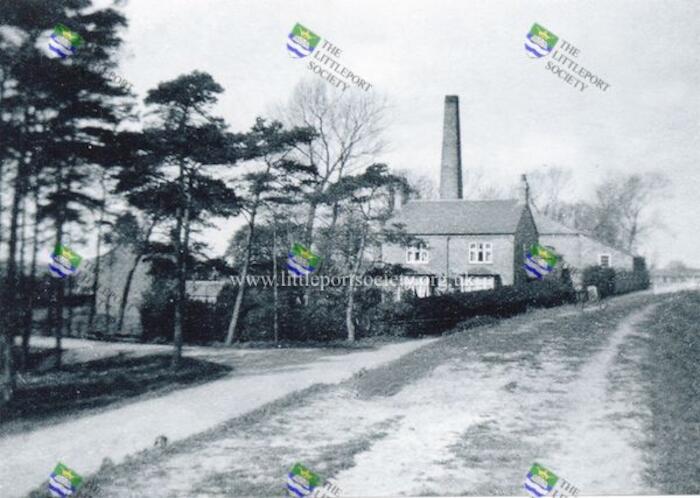
This photgraph shows the “L” shaped outbuildings to the left. The Engine House is quite clearly shown as a residence, plus the Pumping Station behind with the large chimney. I believe that this fits the map above.
https://www.littleportsociety.org.uk/catalogue/index.php/Detail/objects/3593
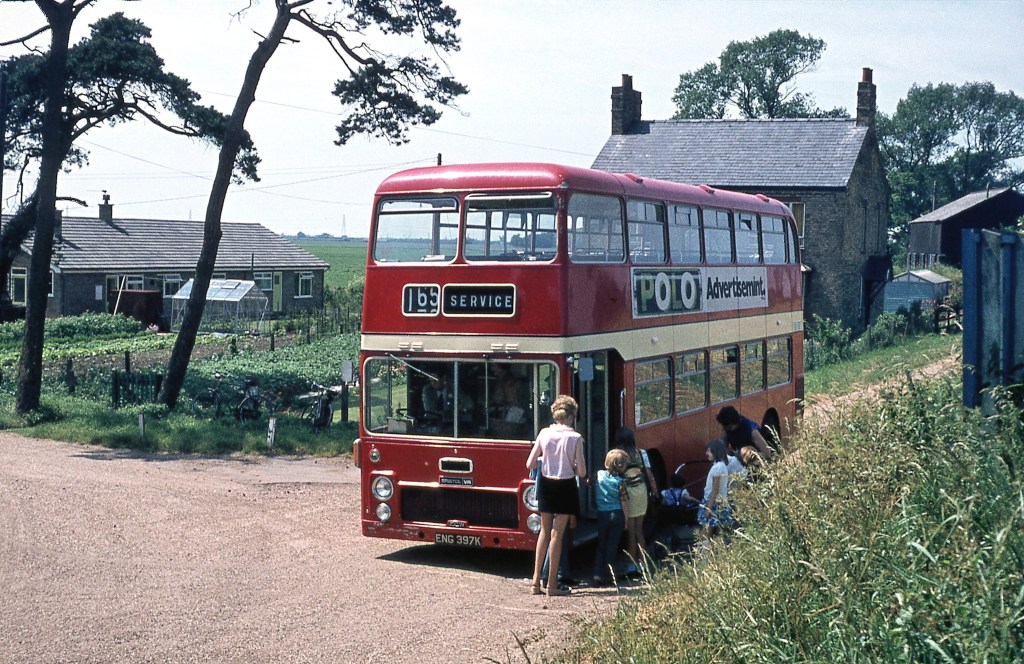
In this 1973 picture you can see Danzak Bungalow to the left and The Engine House behind the bus with a Welsh slate roof. The black shed building behind is NOT the Pumping house but a more modern agricultural building.
My assumption would be that the chimney was probably taken down first when the move to an oil pumping engine took place (1925) and having visited a pumping station, they are not the easiest building to convert. This was probably demolished post its closing in 1958.
Taken from the flickr photostream of David Flett – https://www.flickr.com/search/?text=little+ouse
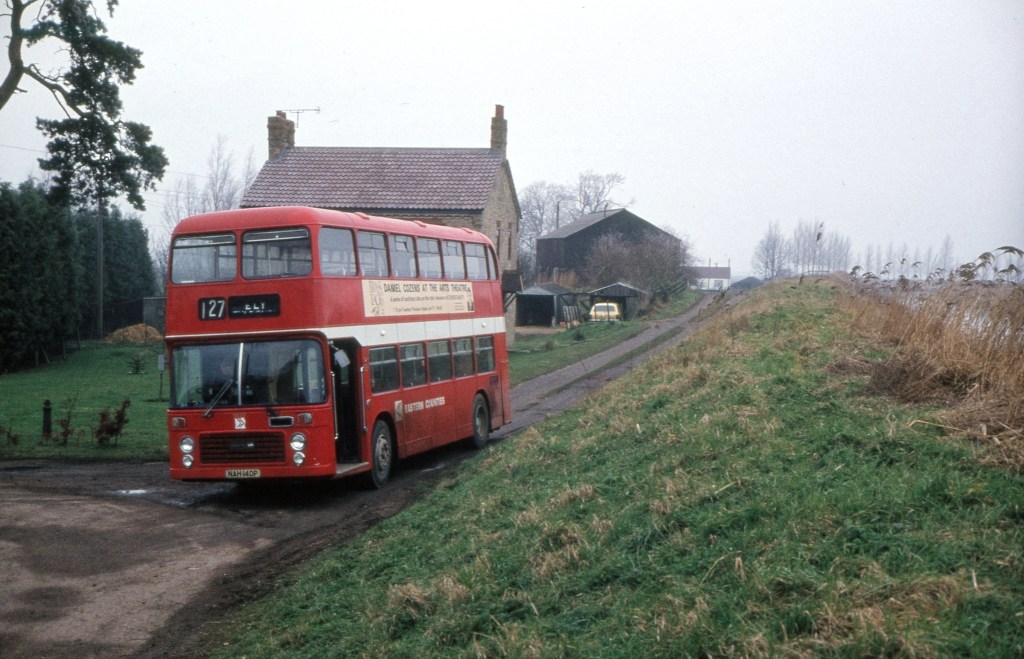
This 1984 picture give a slightly different view. The Engine House has had its roof replaced with what look like pan tiles and the agricultural building isn’t either The Pumping Station or The Old School shown on the map. So a comparatively recent addition.
Taken from the flickr photostream of David Flett – https://www.flickr.com/search/?text=little+ouse
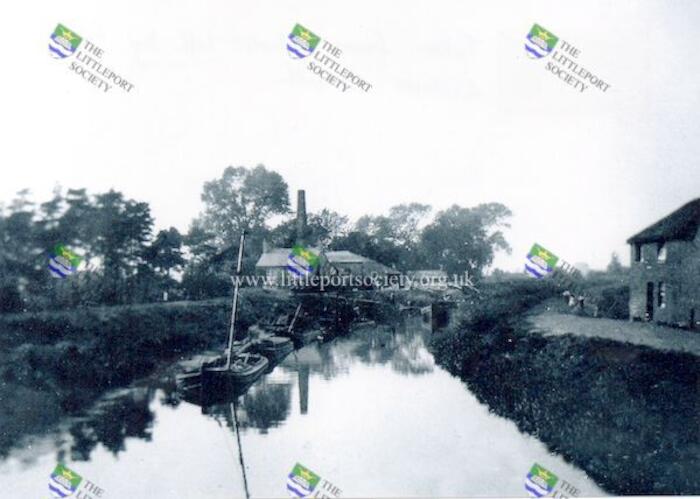
Other than being a very scenic shot, this lends nothing to The Engine House and Pumping Station information above. The points of interest are:
- There seems to be a building after the Pumping Station. Is that the Old School and Anglican Mission?
- The traffic on the river is quite substantial. But unlike the first picture, this picture seems to have been taken from a a high vantage point mid-river. Probably from the one of the predecessors of the Little Ouse Bridge?
- The houses on the right, map quite well to some buildings on the map above. These houses do not exist anymore.
https://www.littleportsociety.org.uk/catalogue/index.php/Detail/objects/3593
- 1936, June 29th, Monday – Barbers Almanac – Monster pike, weighing 15 lbs., taken from the Engine Drain at Little Ouse by Mr. Walter Hills, engineer in charge of the Burnt Fen Pumping Station.
- 1939, July – Barbers Almanac – Monthly meeting of Little Ouse & Brandon Bank Women’s Institute. Mrs. W. Hills gave a demonstration on the making of scones.
- 1952, February – Barbers Almanac – Death, at her home, Engine House, Little Ouse, of Mrs. Louisa Hills aged 79, wife of Mr. Walter Hills. A native of Yorkshire Mrs Hills had resided at Little Ouse for some 40 years.
 The Old Vicarage B&B, Little Ouse