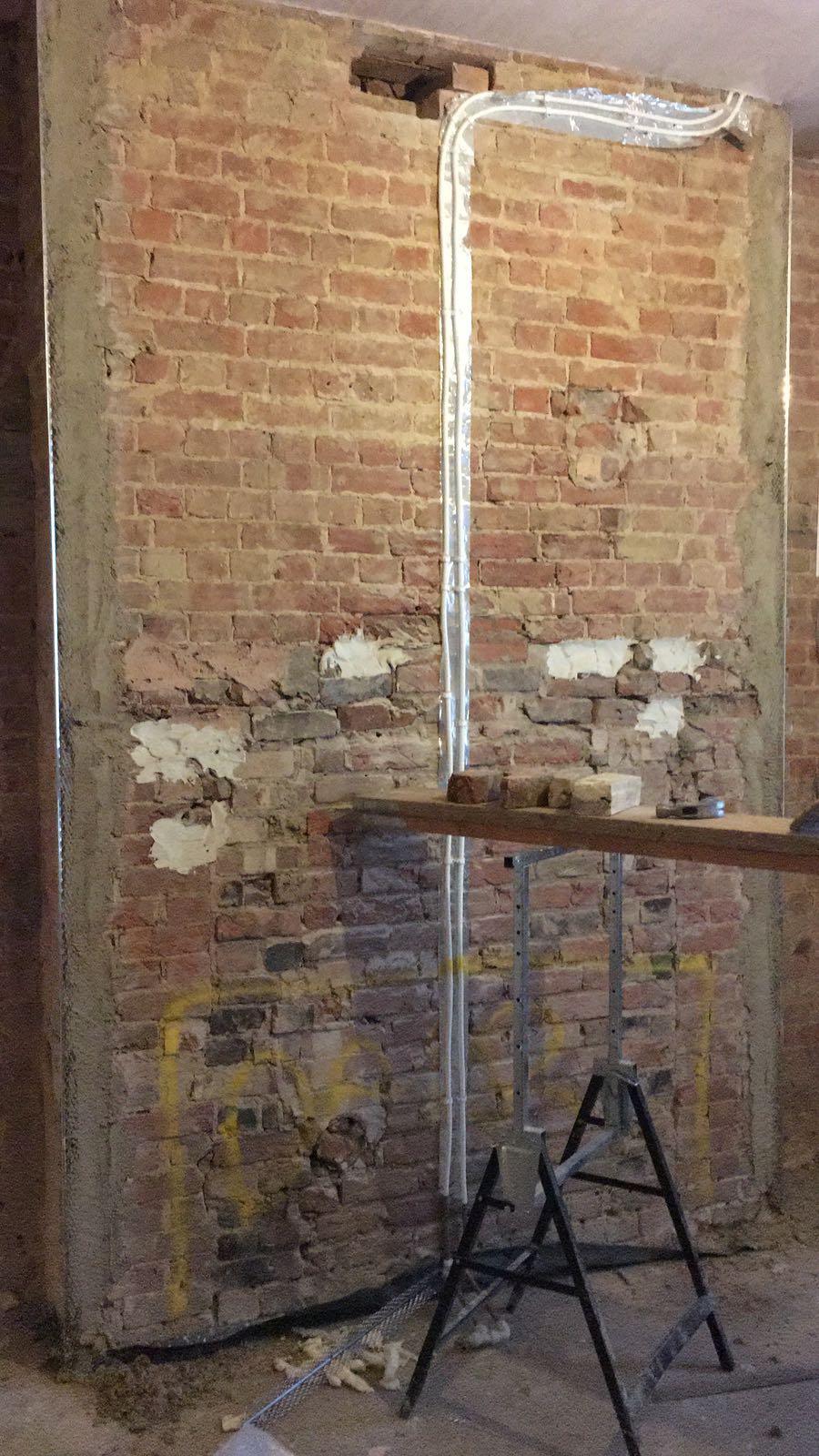
The morning room was originally the kitchen and was the centre of the Vicarage. It had suffered decades of neglect, these included the loss of its cooking range and the bricking up of the chimney. This room had also housed the bell-board, a dark patch could be seen at the top of the wall where the board had been positioned. In the Canon’s room behind the plaster are the remnants of the tin pipes which fed the wires from the rooms, through the loft and then down the wall in the Canon’s room to the bell board in the kitchen below, and all this mechanical.
Restoration
Renovation
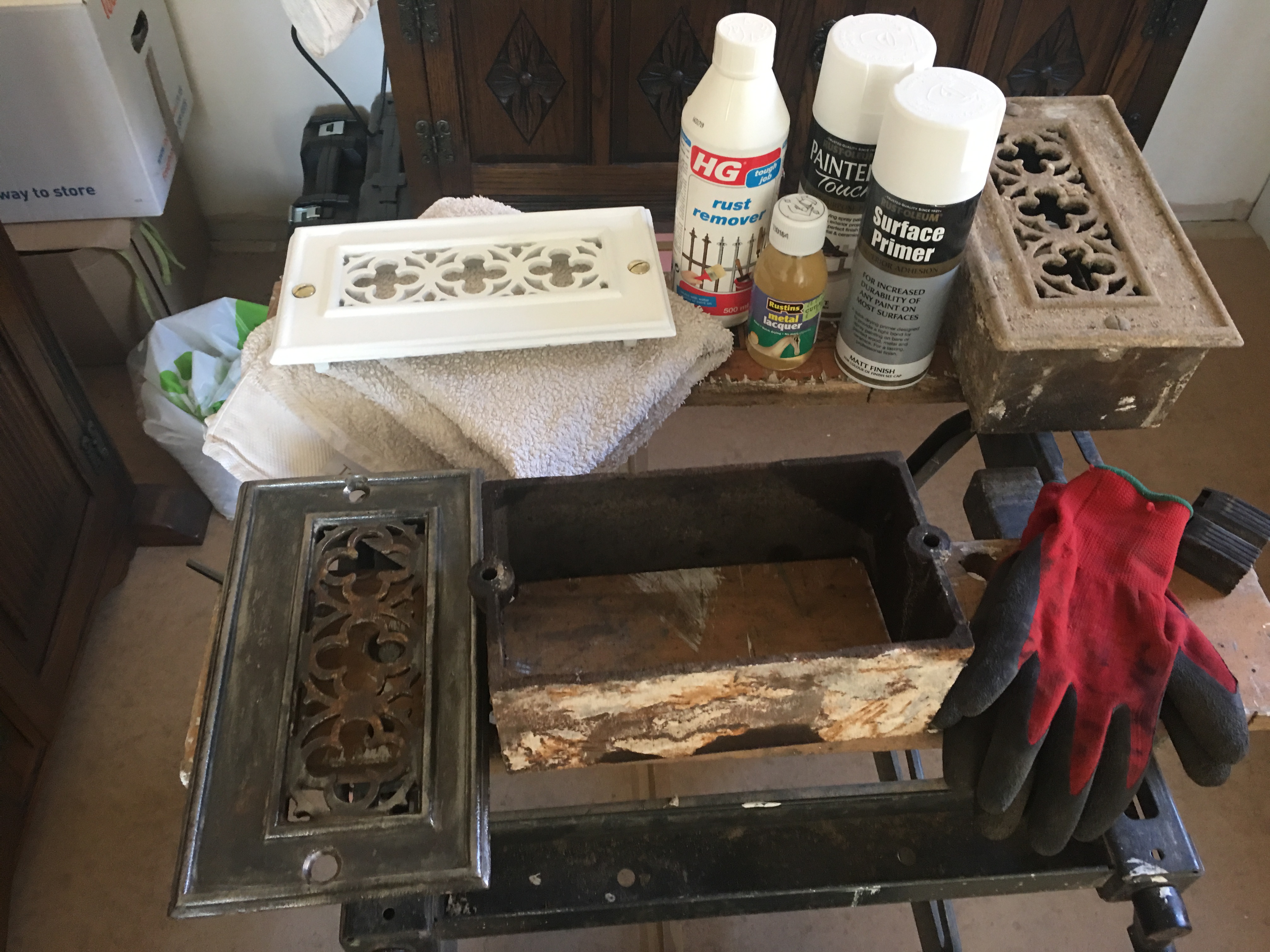
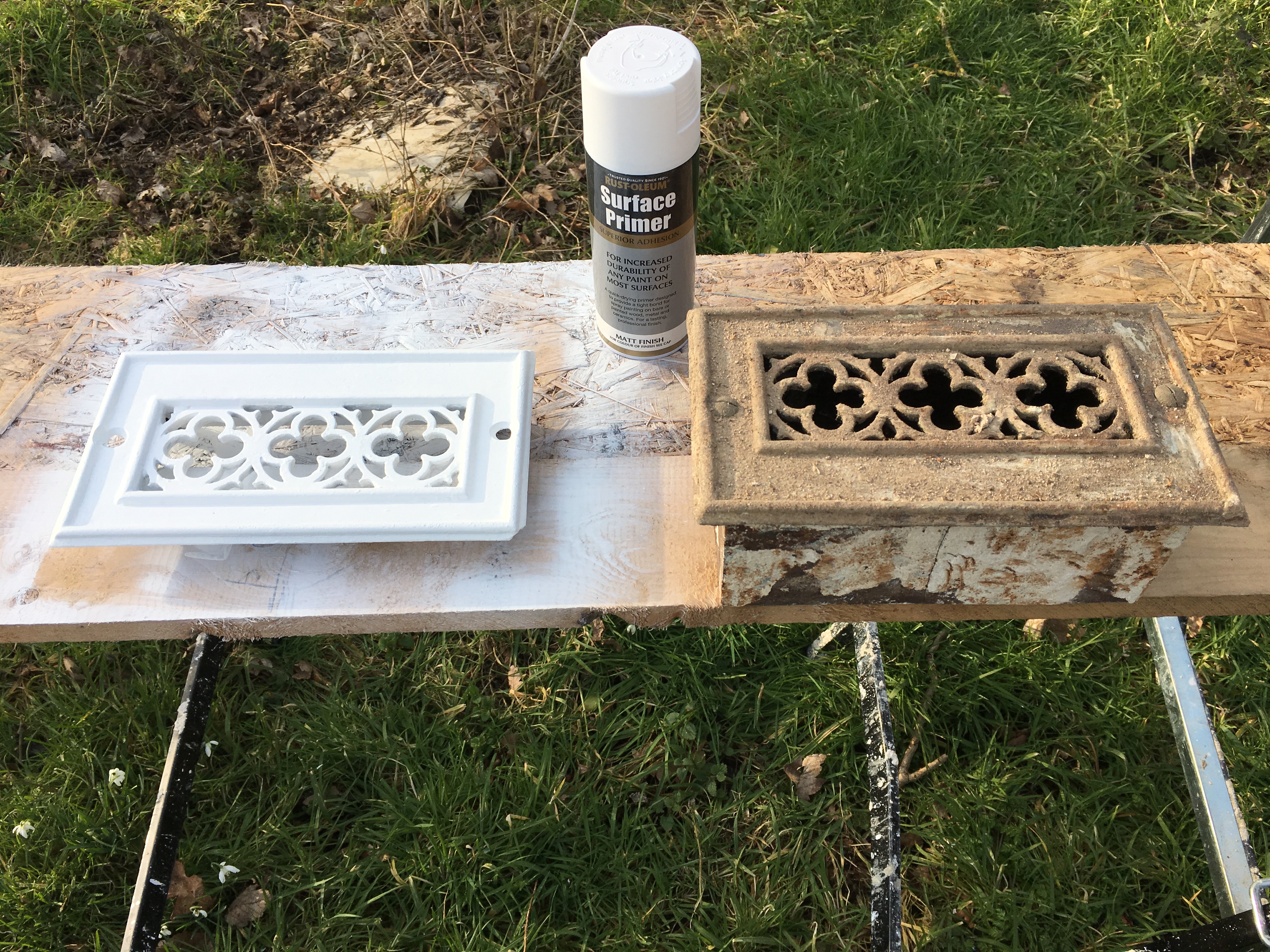
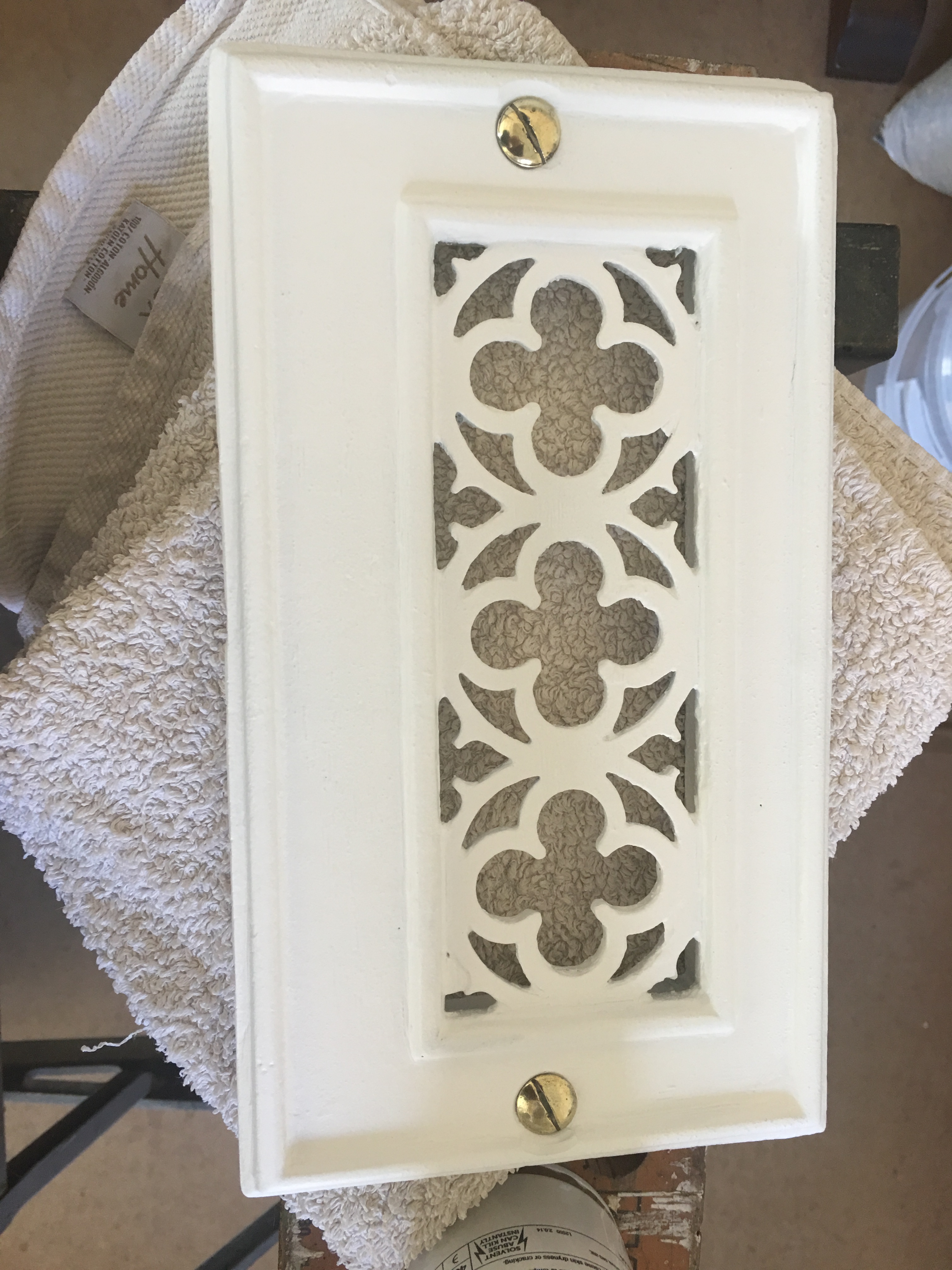
- Air brick – This is not an original feature of the room. The kitchen fireplace had been sealed up many years ago. As the room was being re-purposed to a morning room, the decision was made not to reopen the fireplace. A brick was carefully removed from the top of the wall and a camera allowed an inside view to assess the condition of the chimney. Everything looked good! It would have been far easier to just put the brick back in and seal it up as before. But, old chimneys can get damp in them, so one of the original cast iron air bricks was removed from one of the other rooms and taken to a foundry in Lincolnshire and a copy, complete with brass screws was made for this room.
Interior design
Works carried out in this room:
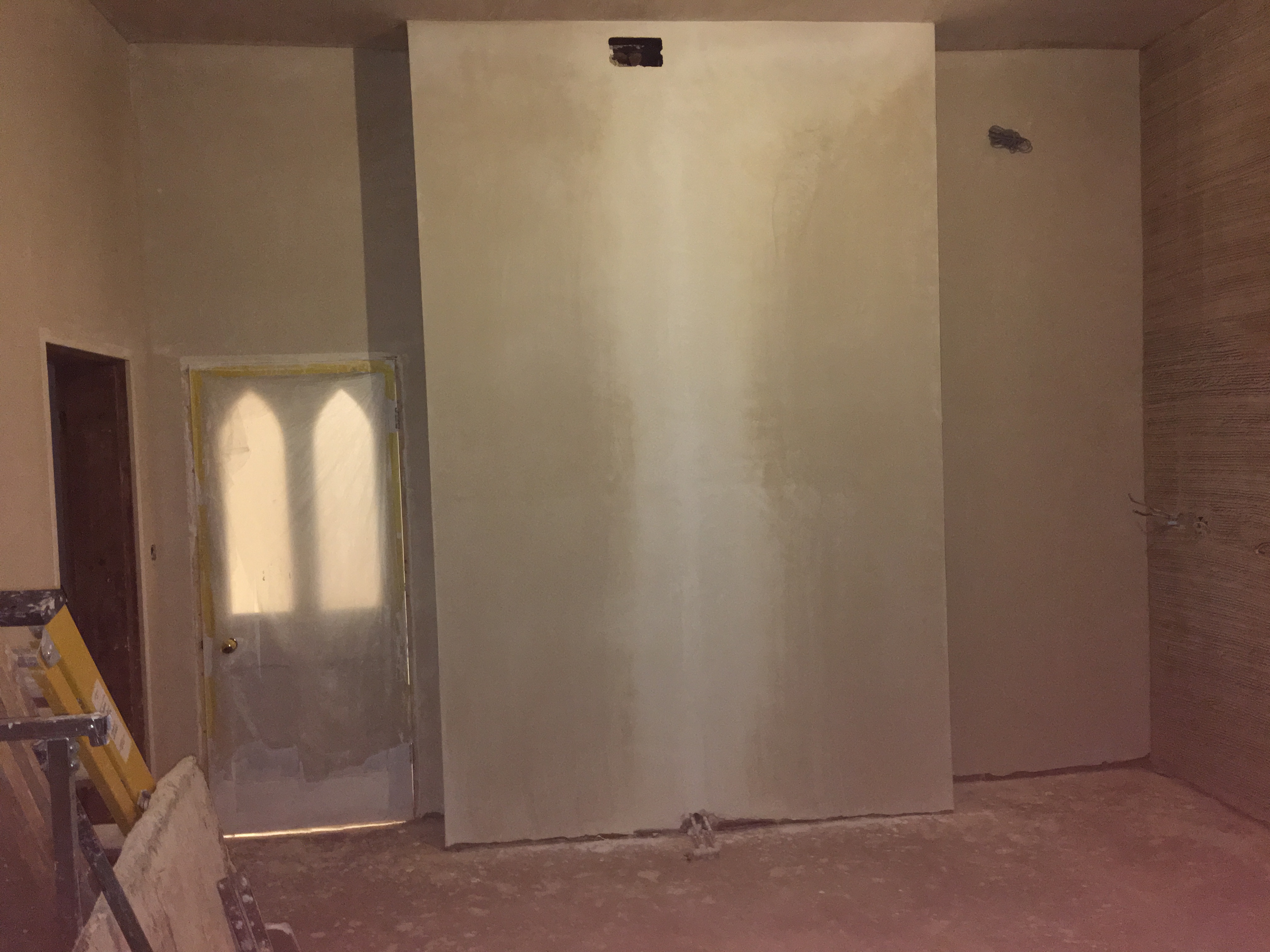
- All lime plaster removed from walls and replaced with new lime plaster.
- Lathe and lime plaster ceiling removed – and replaced with modern equivalent.
- This room had no coving. Therefore, the finished appearance is no different.
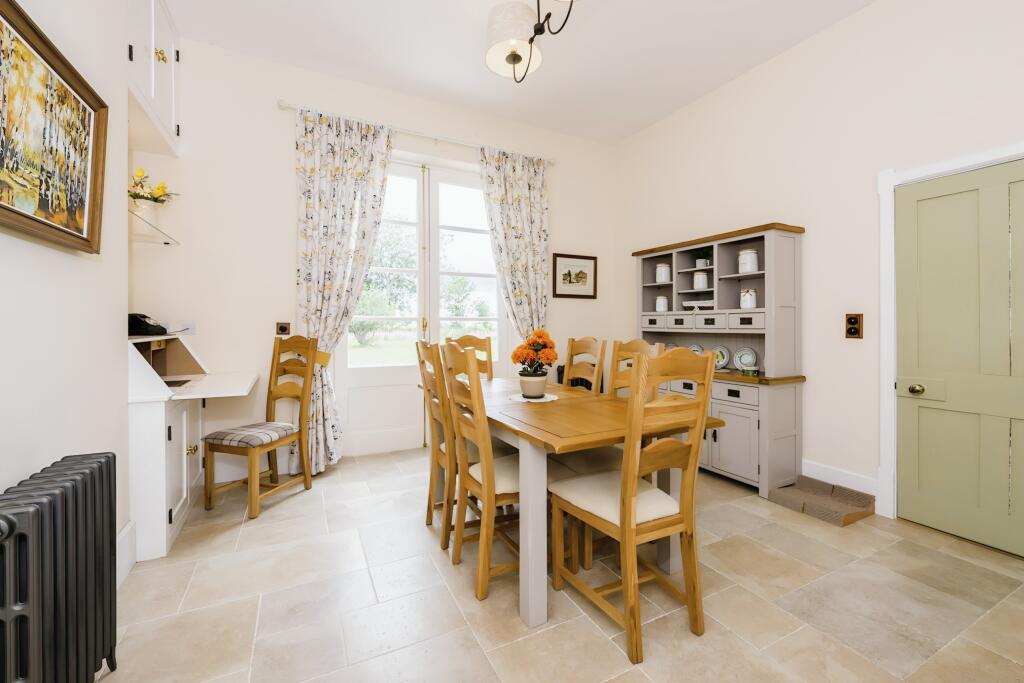
- Floor relaid with an oatmeal tiles as a continuation of the kitchen.
- The original red quarry tile floor laid on cinder has long since gone. in its place a concrete floor had been laid and on top of this a blue and yellow self adhesive tile had been laid. The concrete floor had not been levelled correctly. As the date the tiles were laid was unknown a sample was sent away to check for nasties, such as asbestos. It was common to use this material in tiles though to the 1970s in some cases! The results came back negative, at which point the floor was removed. a new foundation, damp course and the floor was laid to true.
- New sandstone steps to kitchen installed, though the
- New doorway added to cloak-room.
- New French doors added to garden.
- These doors are in the location where the 1990s sink was standing, and the old window. The recreation of this area was a major challenge.
- Room rewired – plug sockets, television (satellite, digital and a radio – FM) sockets added, as well as telephone and cat 6 (internet cabling).
- The light switches throughout the house have been reproduced to a dark brown bakelite with oak backing board. These match the original unearthed light switched, records date this back to 1929. It is assumed that this is the date, when the Vicarage gained electric for the first time, approximately 80 years after it was built.
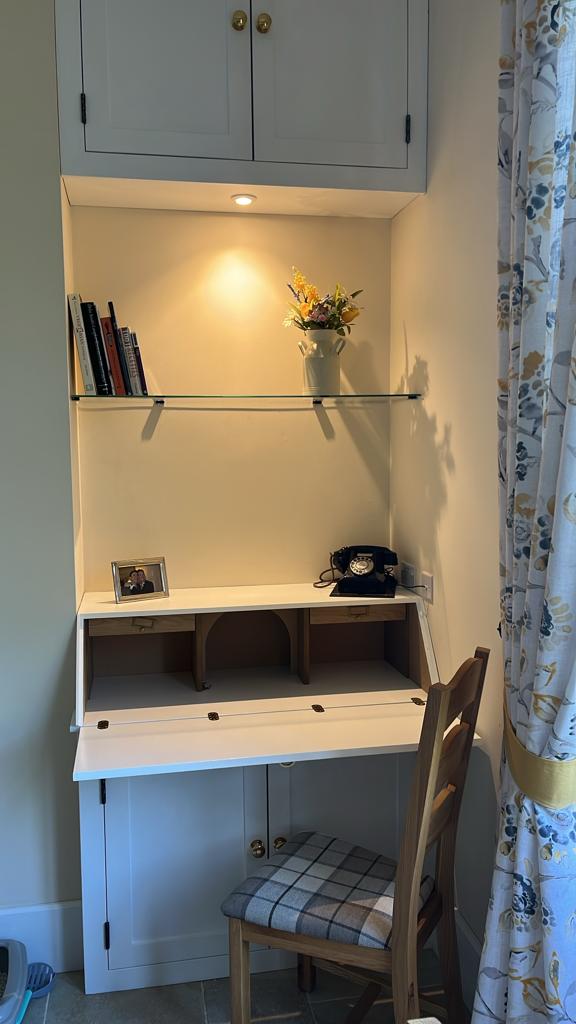
- A new cabinet and bureau unit built in the alcove. This had previously beed some basic wooden shelving that was next to the chimney/cooker range.
 The Old Vicarage B&B, Little Ouse