The stable block renovation has started and is, as was the house, demanding considerable attention. In its original format the stable consisted of a groud and first floor laid out in the following arrangement:
Victorian arrangement
- Ground floor: Cart house, tack room containing fireplace and staircase, stable and lastly the lean to.
- First floor: Upstairs room, landing, containing fireplace and hayloft.
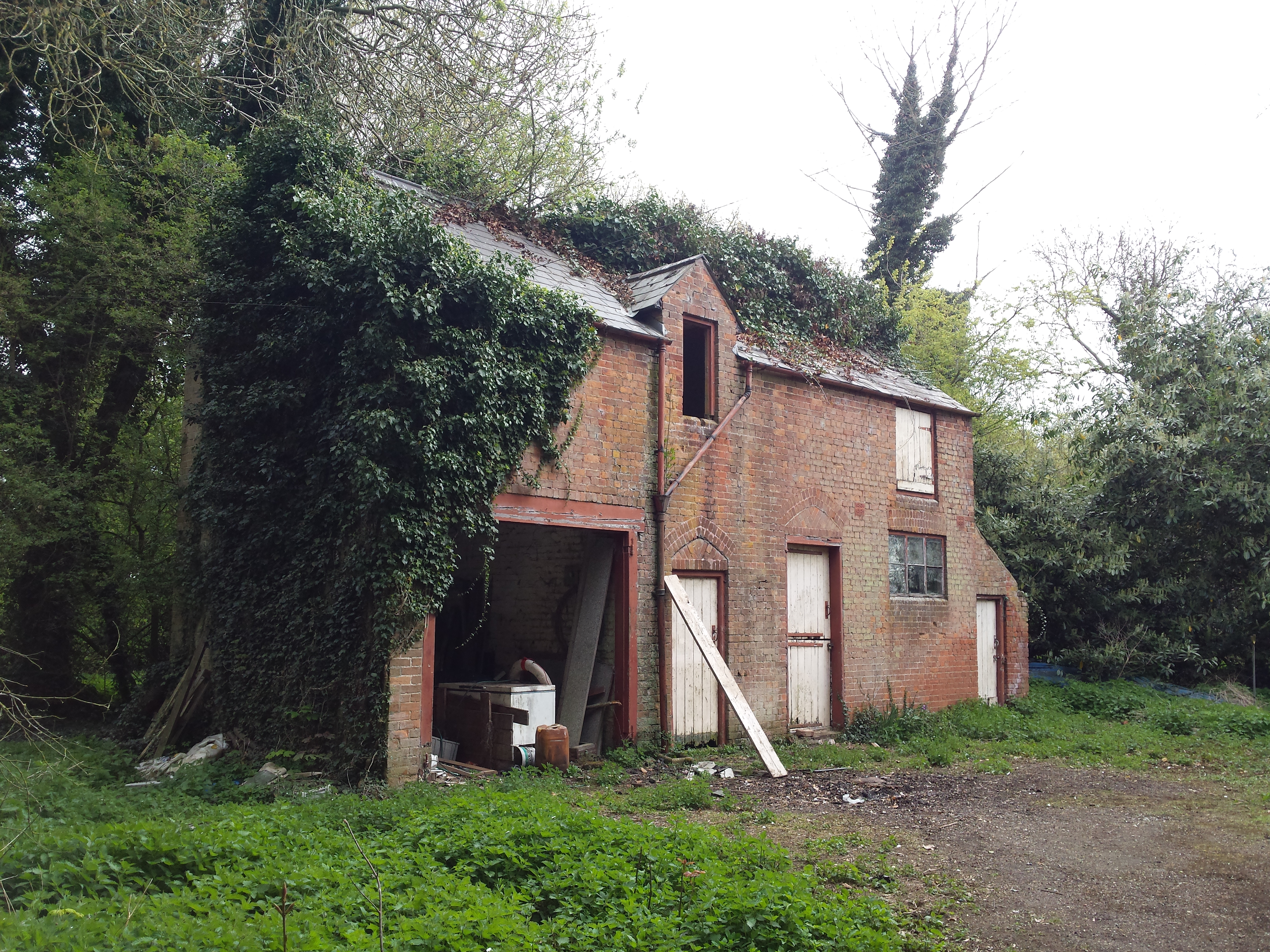
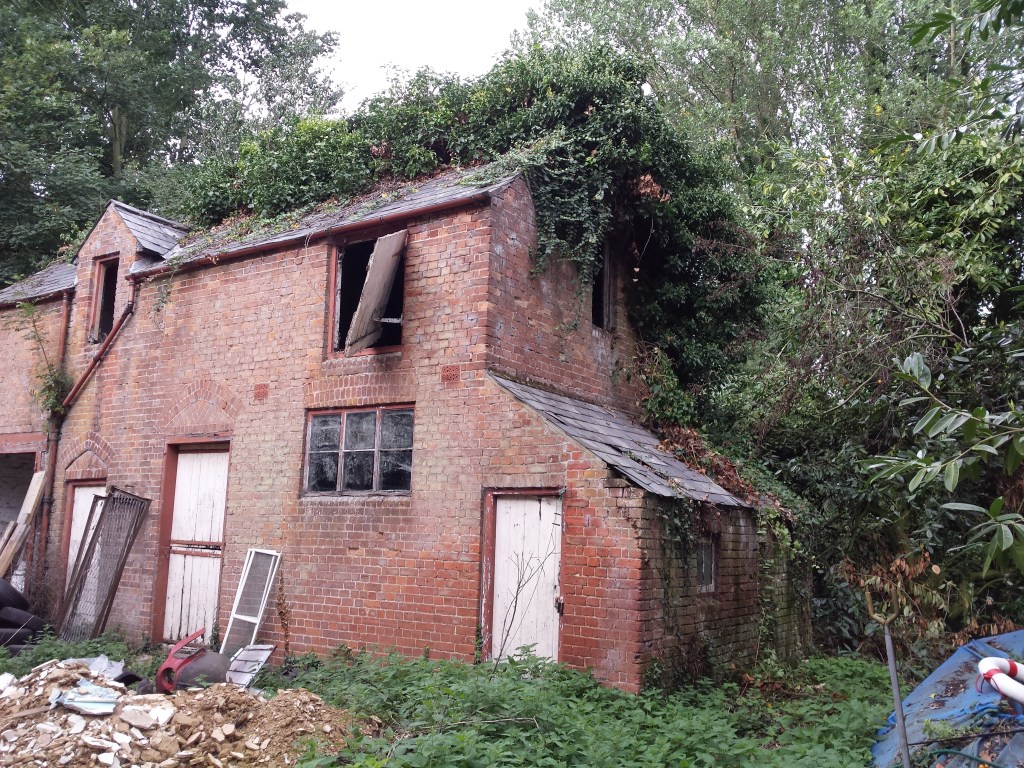
The hayloft hinges were rusted through. Opening the door resulted in the door nearly falling off.
The lean to structure on the side is also allowing water in.
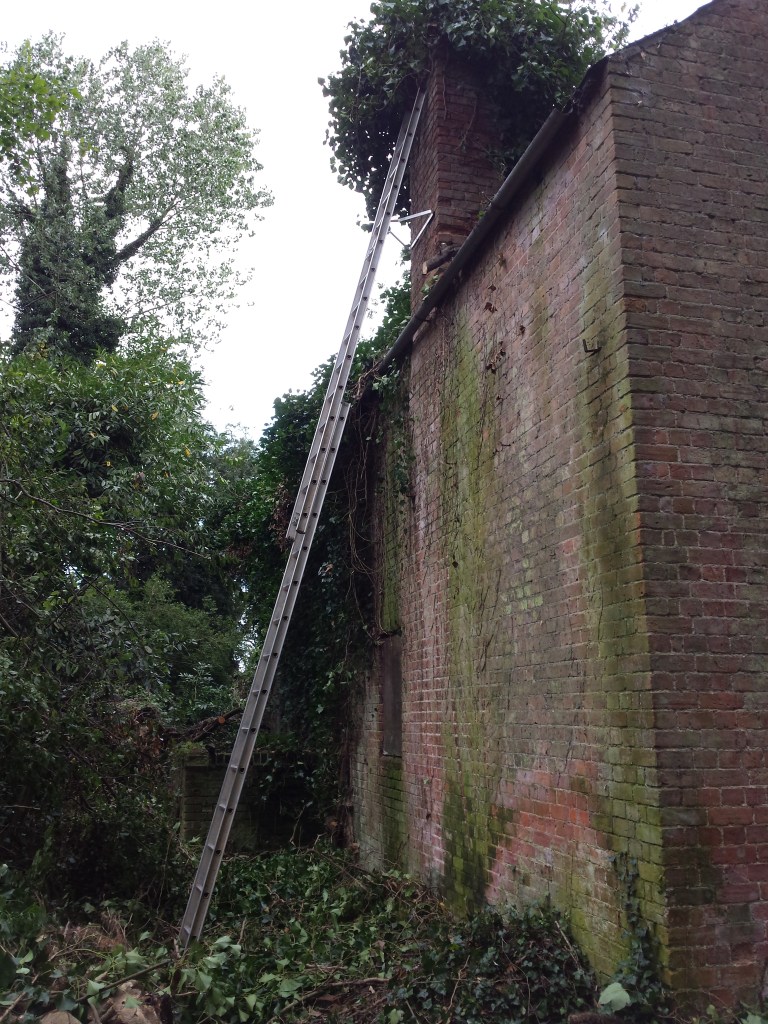
The back of the stable wasn’t any better. Several days of clearing ivy and fallen trees, we could now start to see the shape of the building. You can see a branch at the bottom of the chimney stack, quite a large to be growing through the roof! Needless to say, most of the chimney and slates came off as the ivy was brought down.
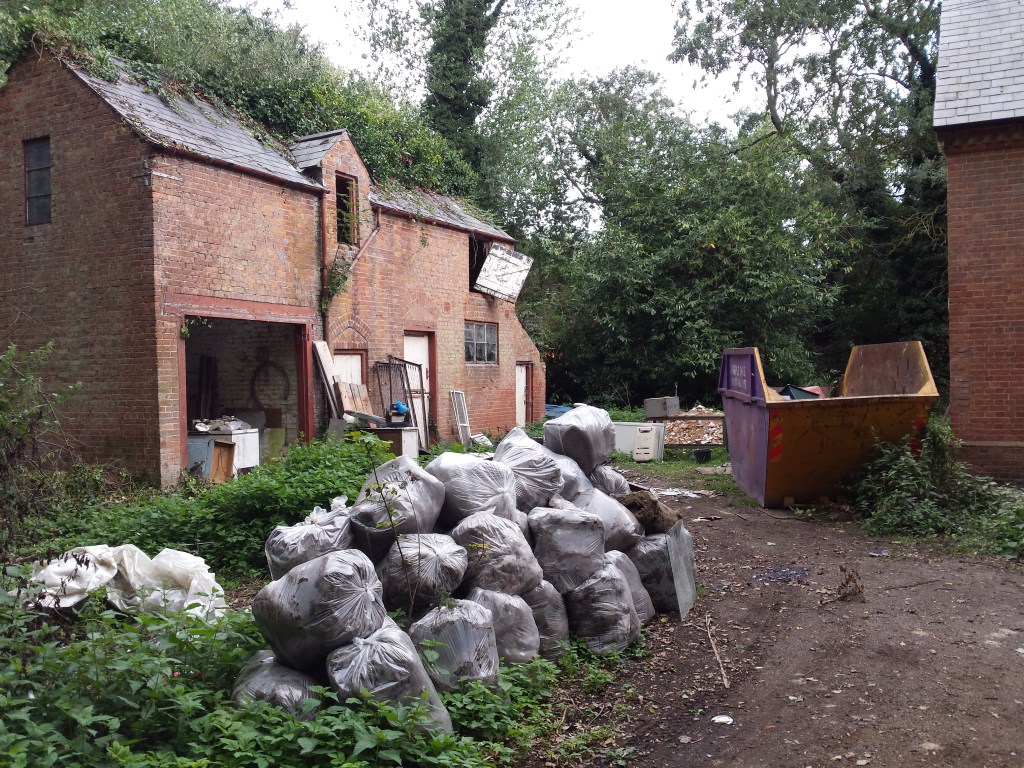
Starting the process of bagging and clearing before the work can commence
Renovation arrangement
Although we are setting out this building as a possible annex to the main house which could give at the minimum a further two bathroom and two bedroom arrangement with kitchen and sitting room downstairs. The building could equally be used as a studio, office, gymnasium. there is plenty of room to make single use or multi use.
Ground floor: Possible kitchen and staircase (the cart room and tack room are now one room). A new subfloor has been laid throughout. Which, though strong enough to act as a shed or garage floor, can be raised to the usual height if underfloor heating is required. The window at the back facing the vegetable garden has now been lengthened to Create a door, which is eminently practical and give direct access to the cottages own garden and also parking.
Going through from what would be the new kitchen, into the stable, this could quite easily be converted into the sitting room/diner for the cottage. Although the kitchen area is big enough to make a kitchen/diner if required.
The cottage has had its own fuse box and electric installed as well as water, electric and internet. In addition, there are two waste pipes installed at each of the cottage which are linked to the septic tank. these only need bathrooms to be installed and linked to them.
First floor: Bathroom leading to the upstairs landing and staircase. The hayloft has been transformed into a master bedroom.
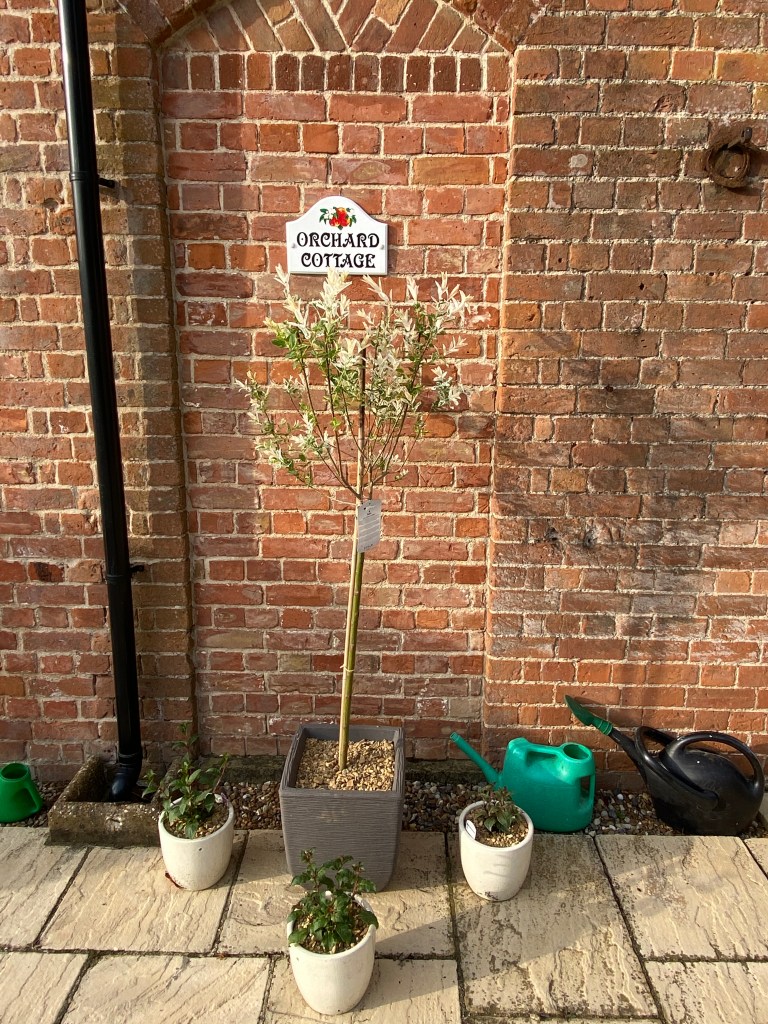
Orchard Cottage formerly the stables.
The recess where the sign is positioned used to be the doorway to the small tack room. You can see that although this has been bricked in, the arch and brick insert when the frame was removed were kept.
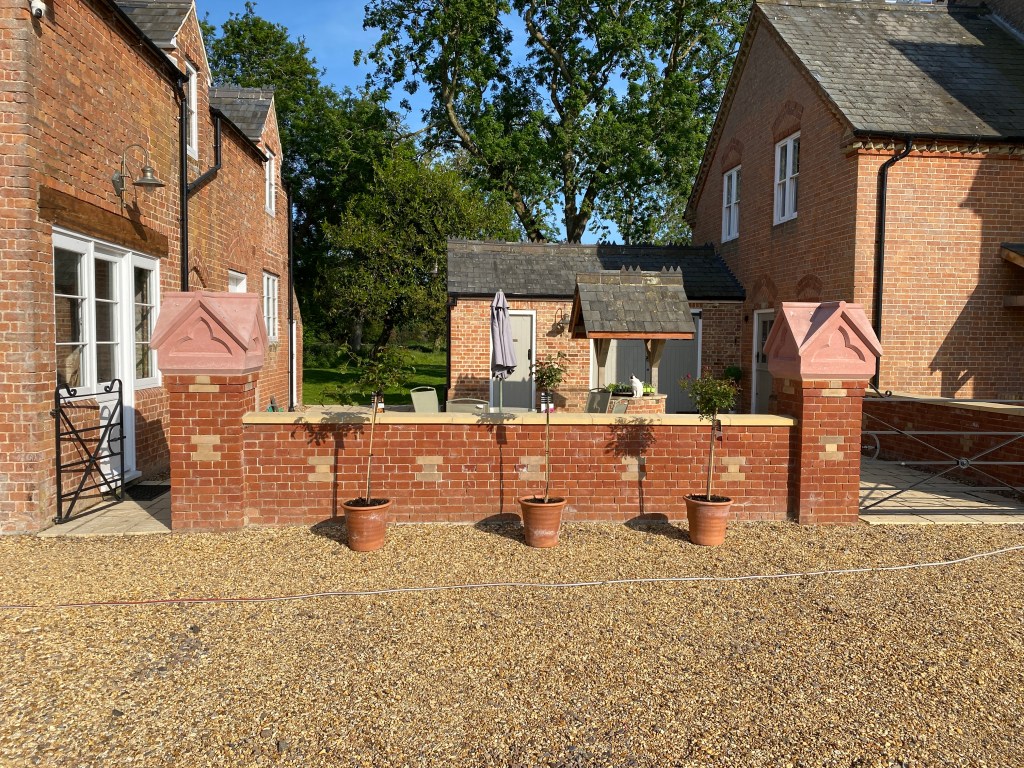
The outside shell of the building has now been completed with a new roof, windows, guttering and the well and courtyard reinstated.
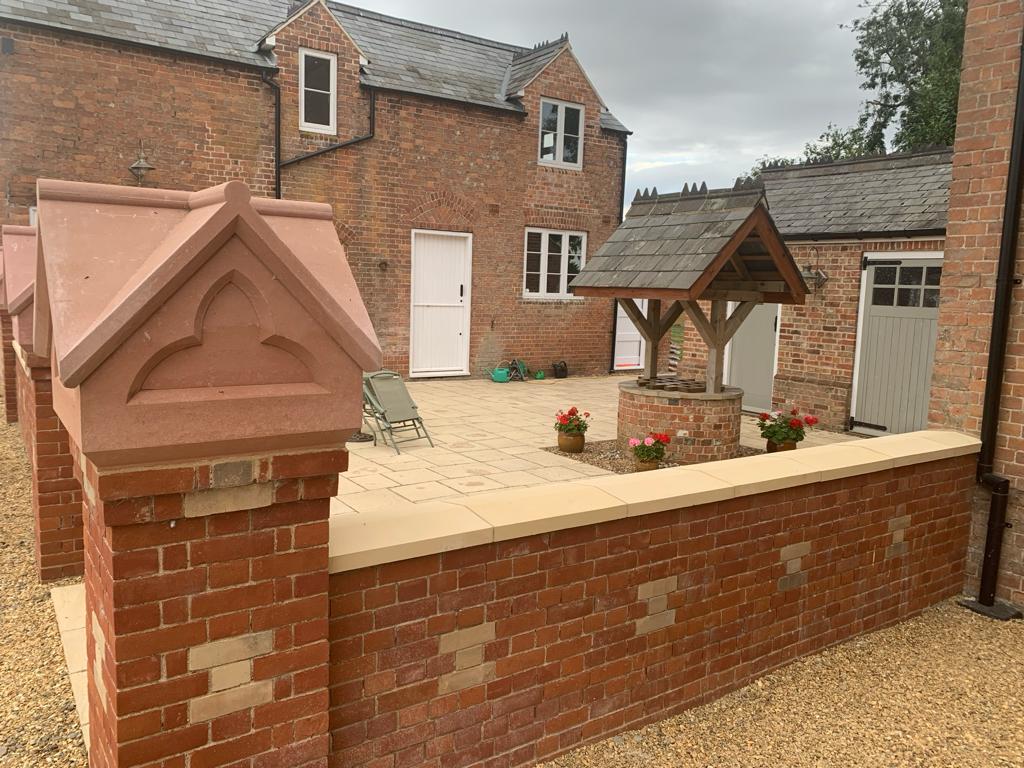
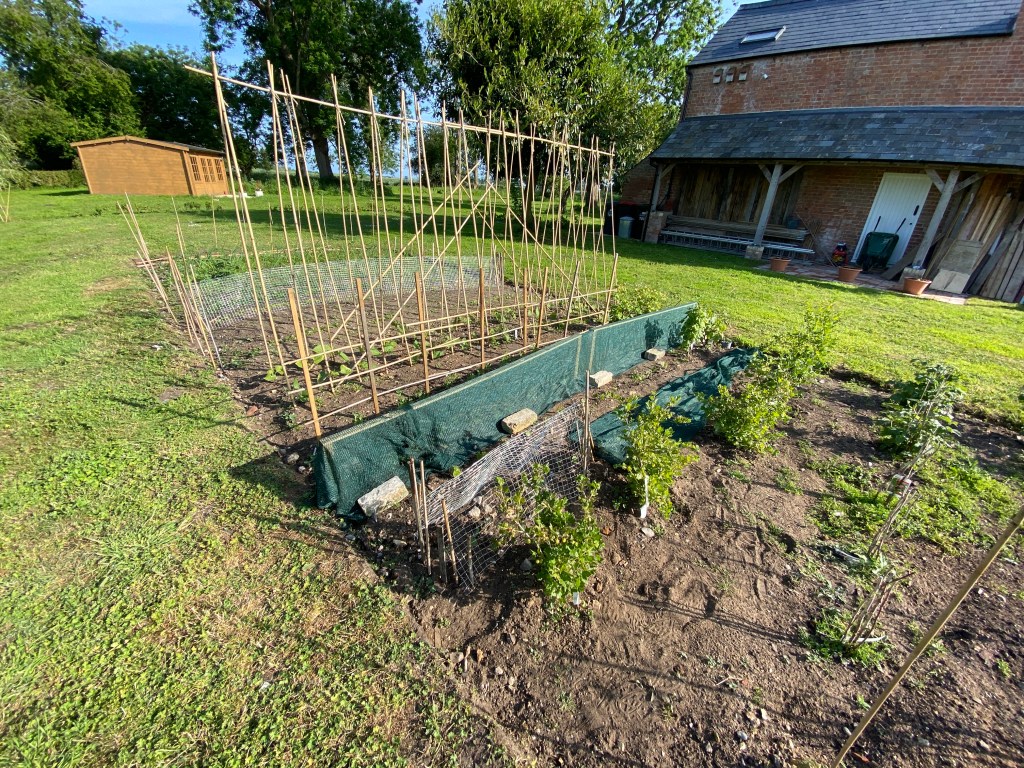
The back of the Stable (Orchard Cottage).
- A few bat boxes from the RSPB have been installed under the eaves to the left
- The porch is made from oak that was cut from a tree that fell in the garden and uses old slates from the house. Where possible we replace the main house which is higher with new slate when it is needed and recycle the old slate from the house to the lower buildings.
- The Victorian vegetable and fruit garden is starting to be created.
A view from the carpark of the finished stable block (Orchard Cottage).
The start of the renovation
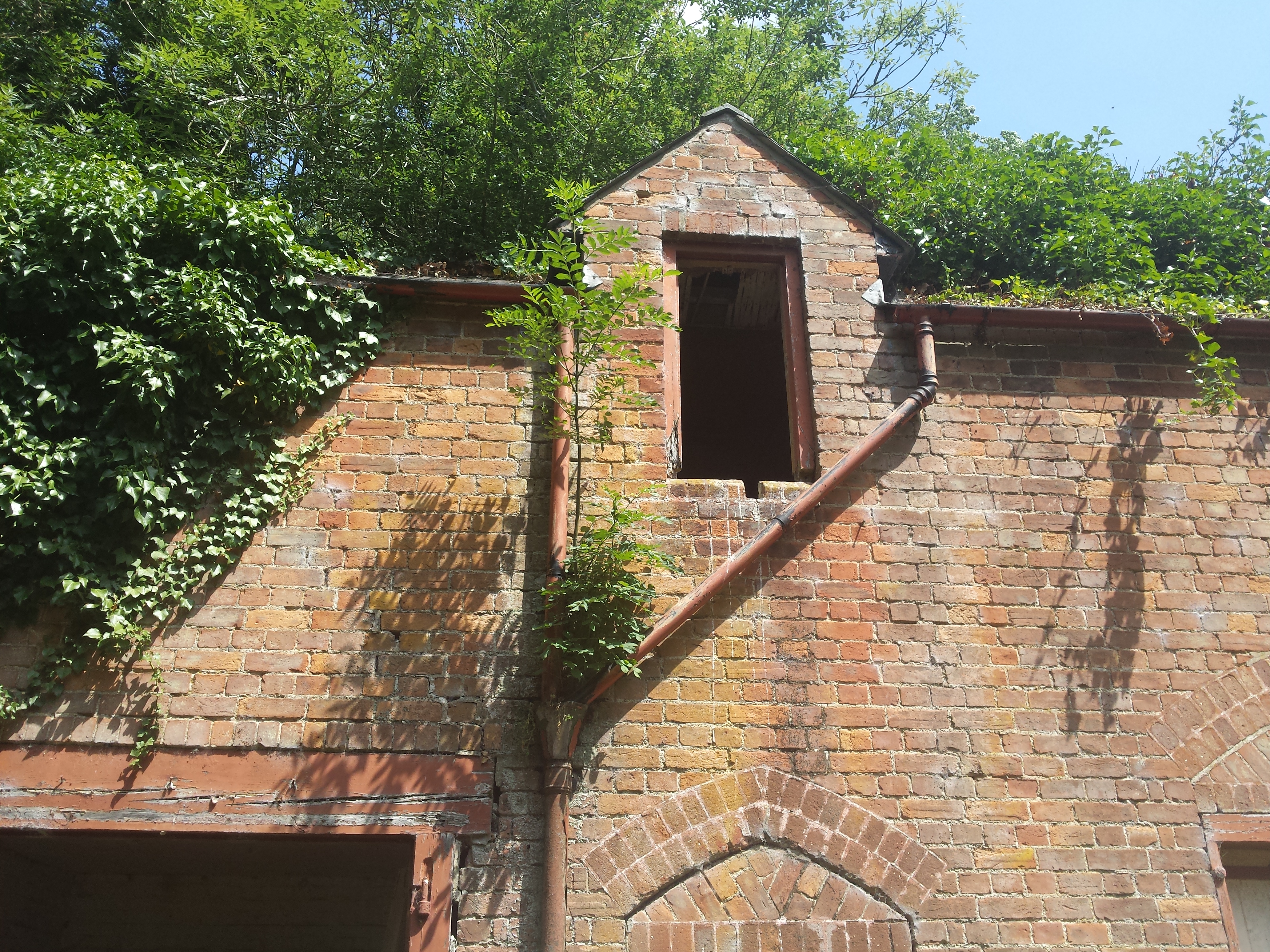
In the dormer you can see the ceiling is already coming down with water damage.
The gutters haven’t been cleaned out for several years. There is a tree growing out of the hopper in the centre of the picture.
The doors are missing on the cart shed at the side.
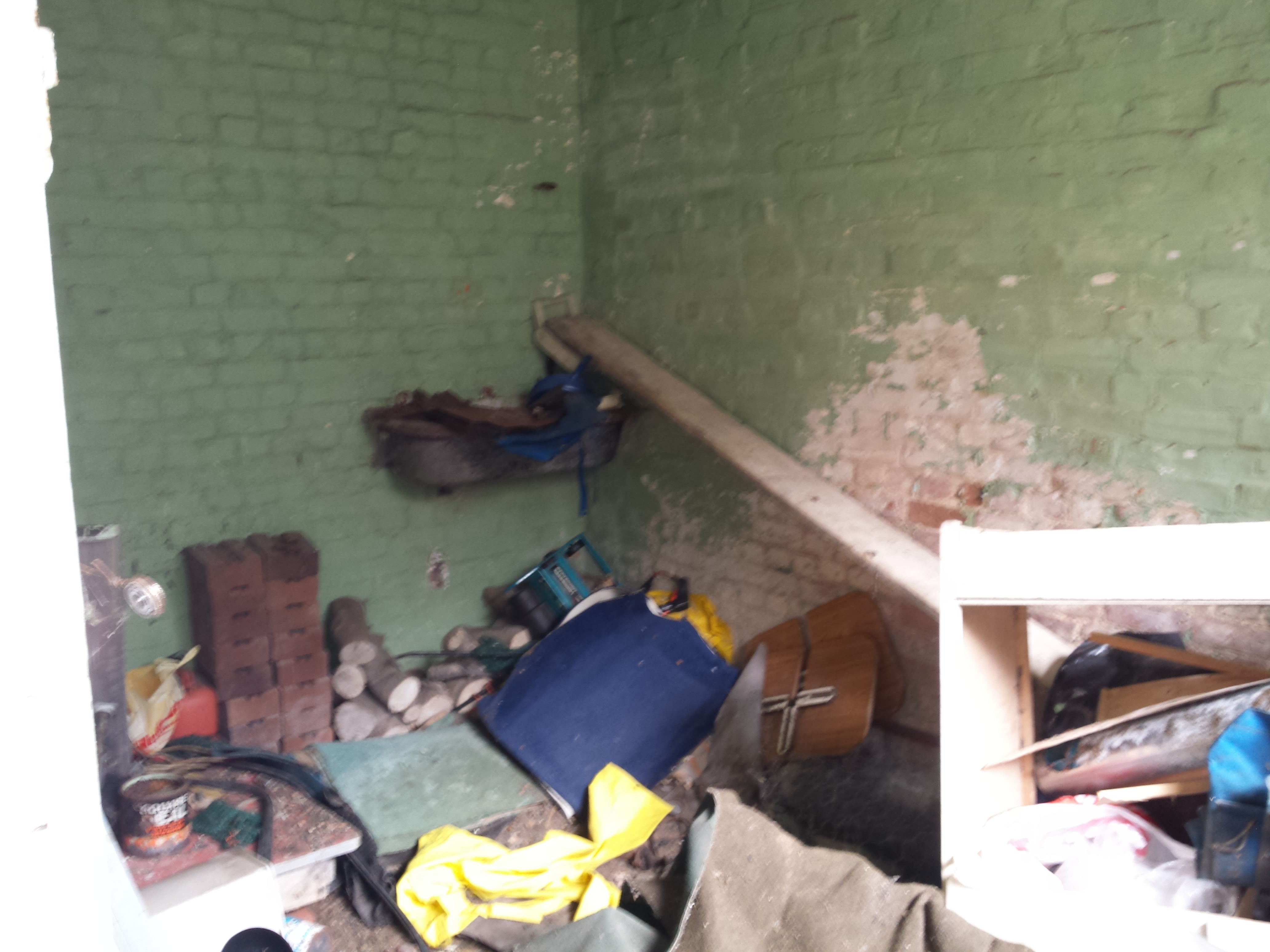
One of the horse stalls. The water trough was till fixed to the wall on this one. It has since been removed and is due to be repainted and will be used outside as a small trough under the outside tap.
In this picture you can see the water damage that has been coming through on the left-hand side.
The stall itself looks on the surface in good condition. Until you check the wood which is full of rot. It all had to come out.
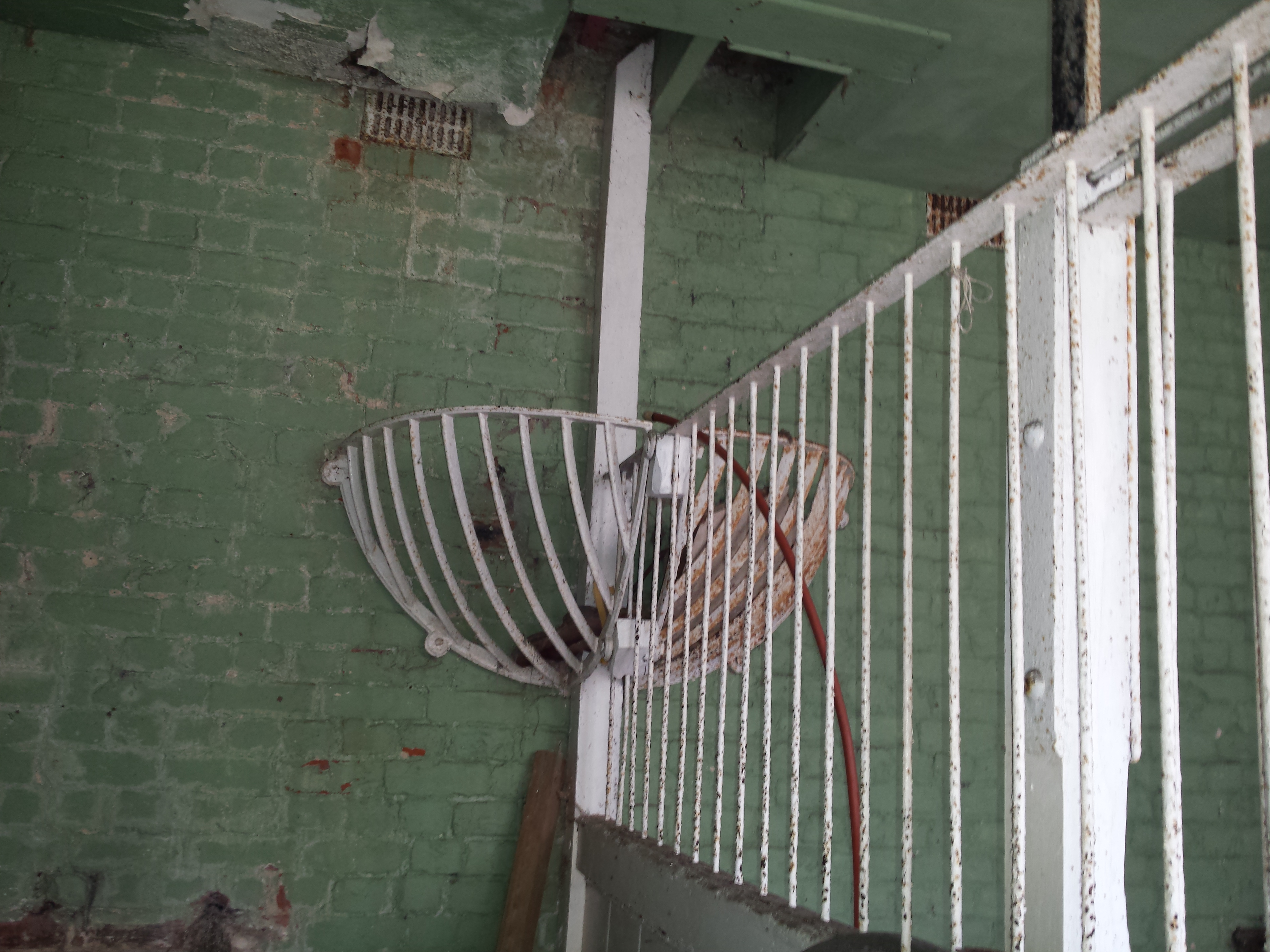
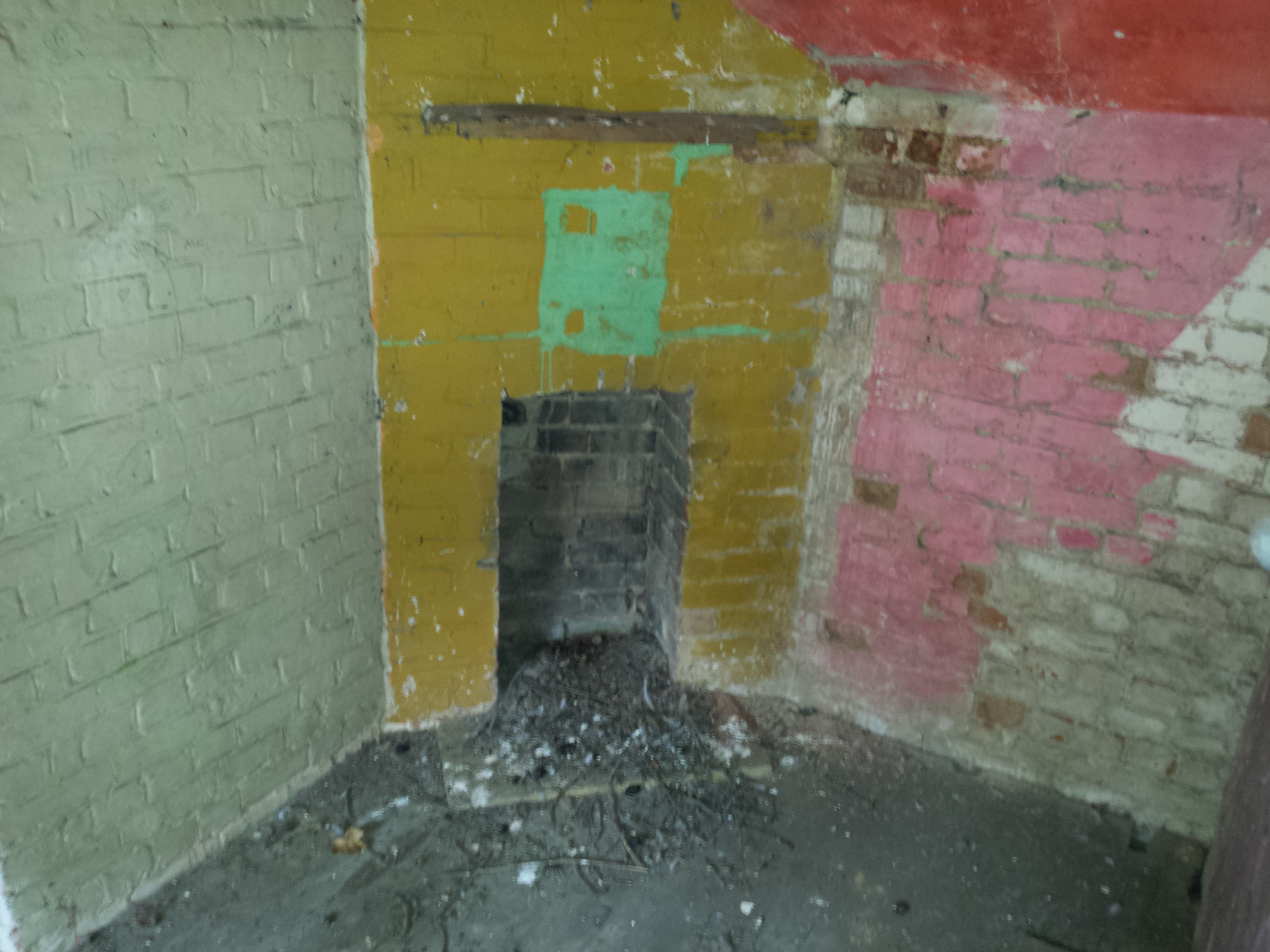
The chimney in the upstairs hallway.
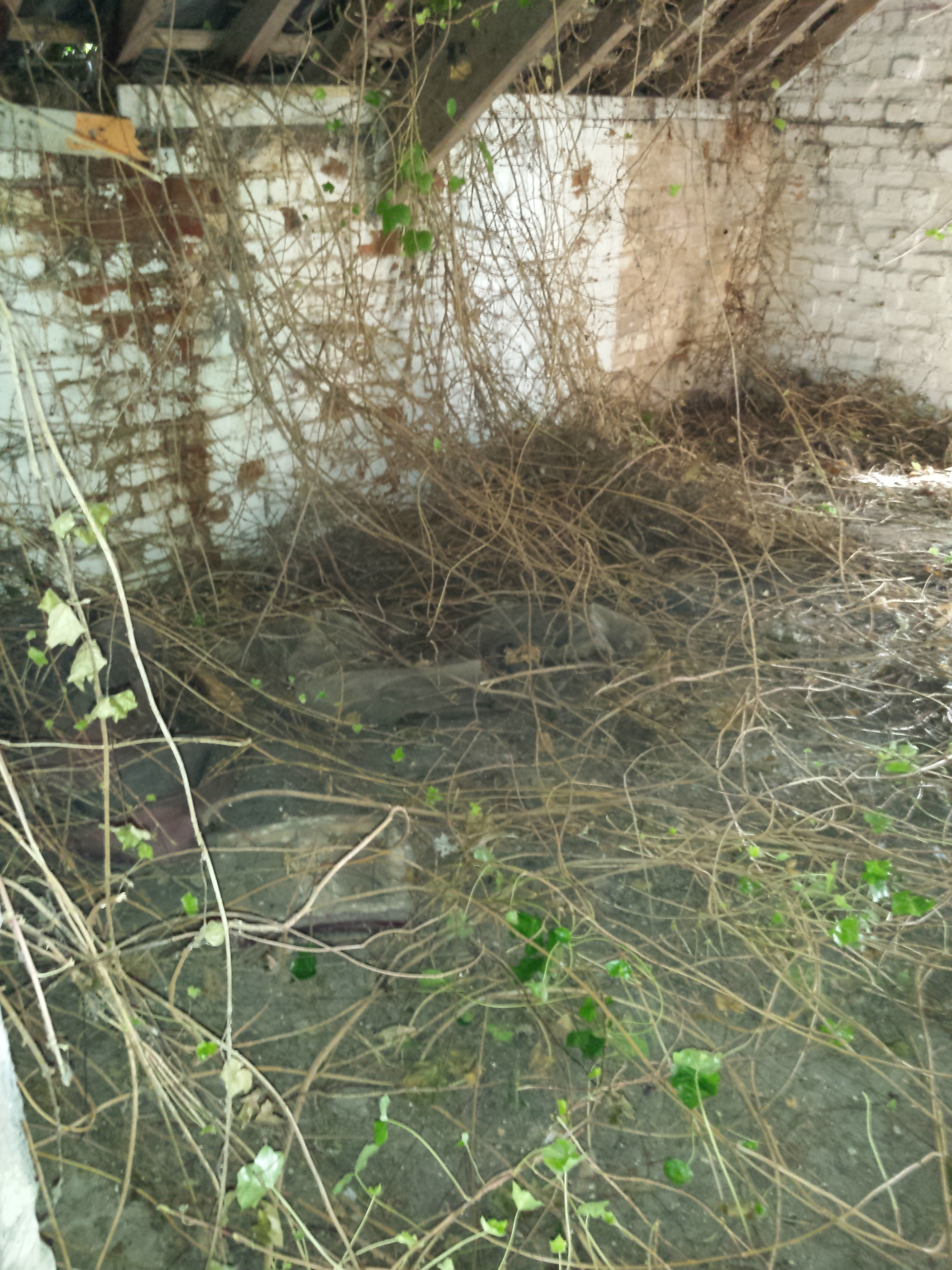
The hayloft with ivy ingress. By the time this picture was taken the ivy had been removed from the outside, so it it dying back.
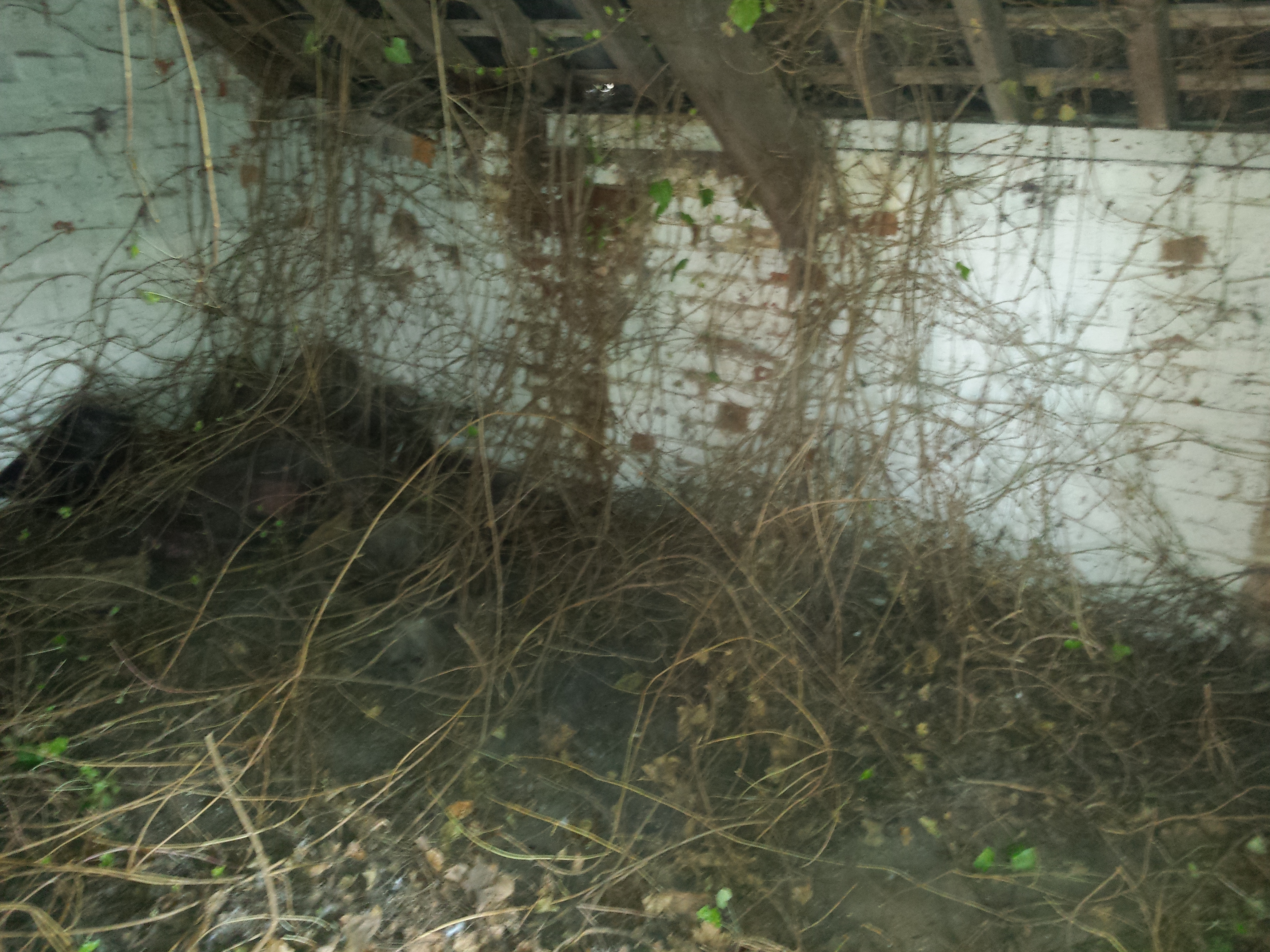
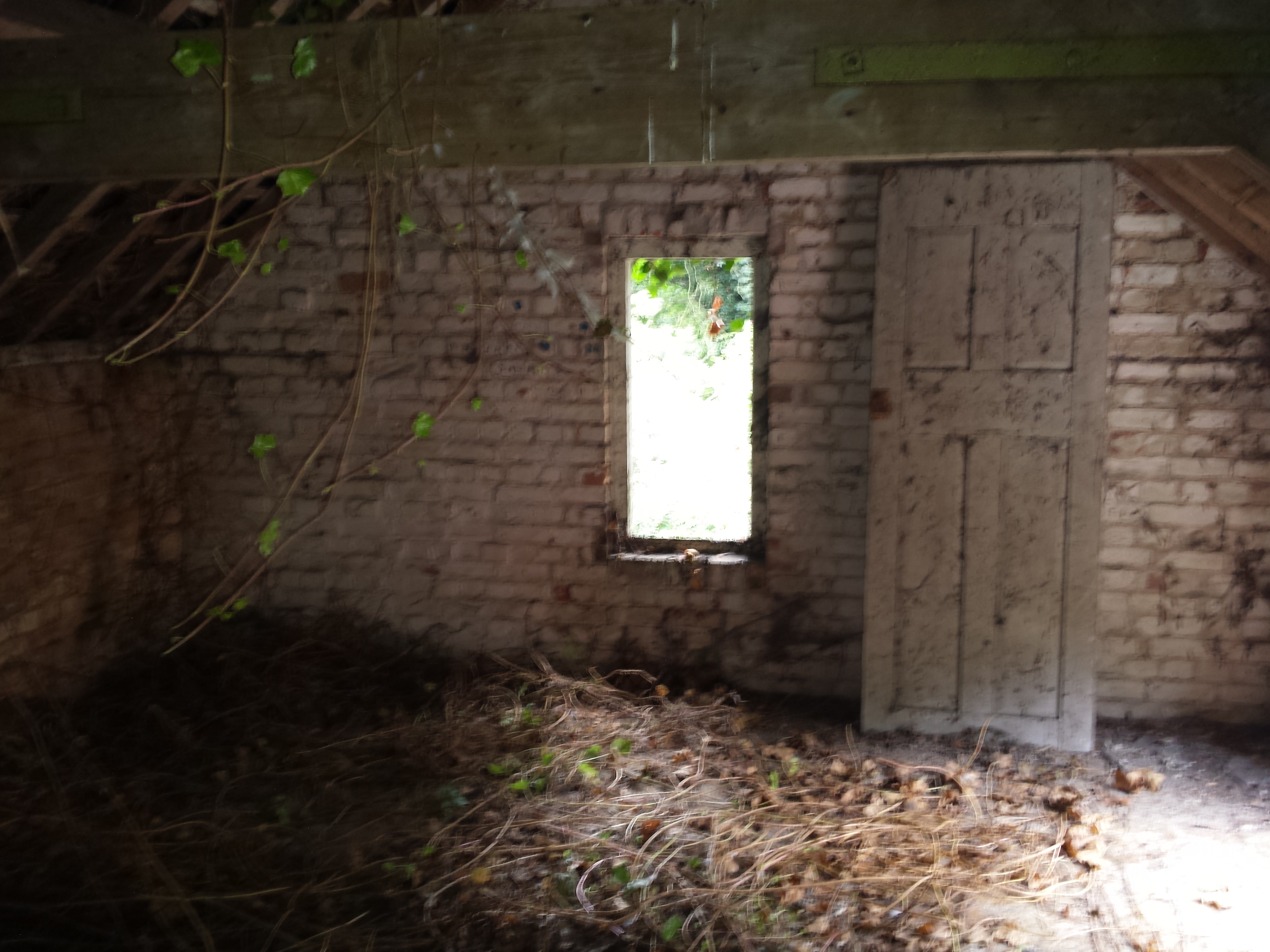
The hayloft – the window must have dropped out some years previous. You can see the ivy hanging down outside the window opening
If you look at the walls, you can see where the water has been running down the walls ad also the wooden footplate in one area starting to fall to bits.
 The Old Vicarage B&B, Little Ouse