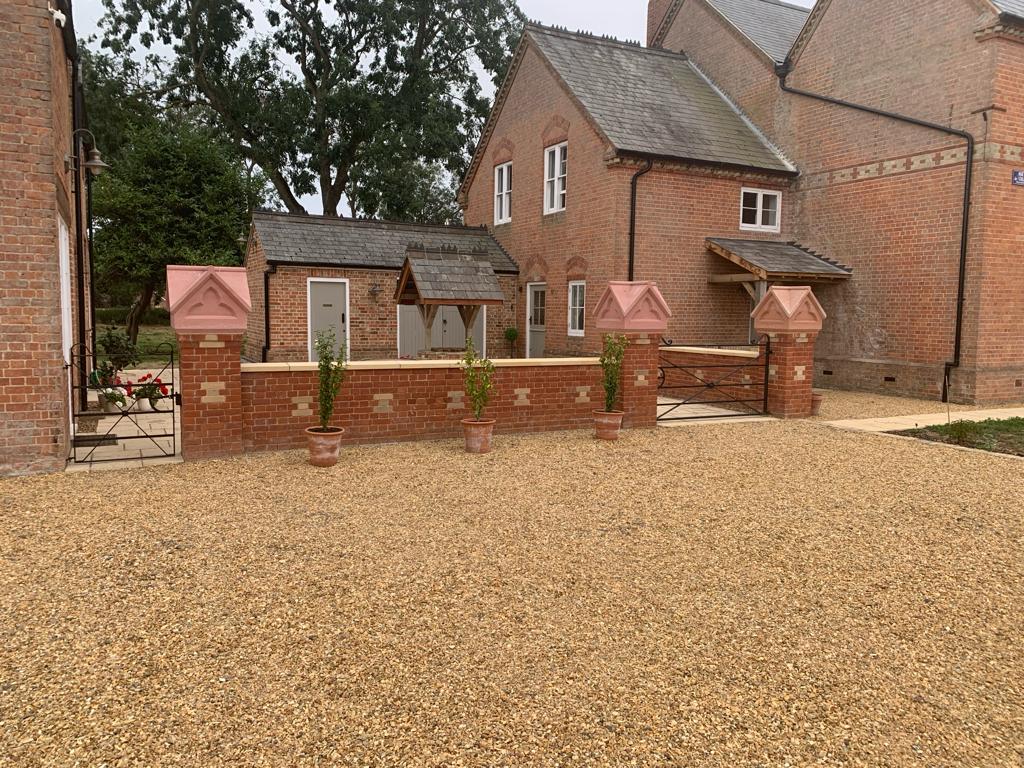
The stable yard sits to the side of the house and is flanked by the new kitchen (formerly the scullery and pantry) on one side. The boiler house, at the back reconstructed from the collapsed outbuildings. The lead step was still on the side of the house and the foundation was intact, so this has been rebuilt to the original height and footprint. The original layout had a wash house section for doing the laundry, with a chimney for heating the copper that had collapsed, an outside toilet a coal store and log store and shed. This has now been created as one large utility building. To the left of the boiler house is the stable block.
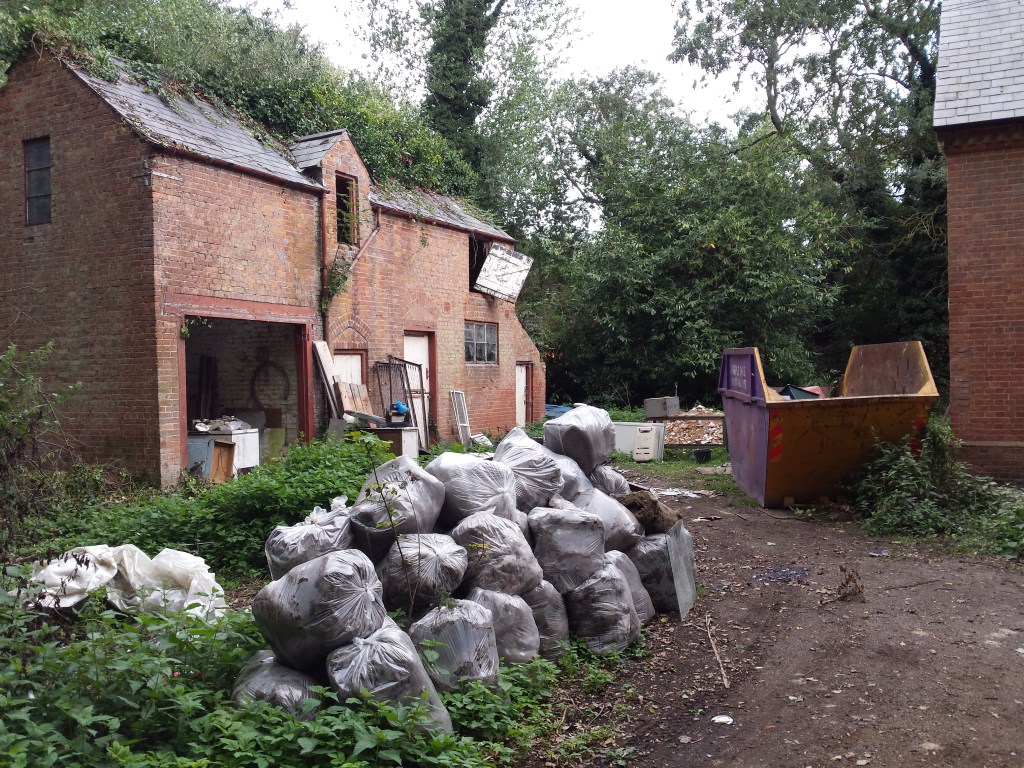
As can be seen the area was in a state of disrepair. Even the well had collapsed and a piece of board had been placed over the void. The brick cobbles had largely disappeared over the years and been covered by a thin layer of tarmac. This was removed and underneath, the last few remaining brick cobbles were found as well as the foundations of the stable yard wall. The tell tale sign that it had been there was a straight ridge line, just showing through the thin layer of tarmac that had been applied over this area.
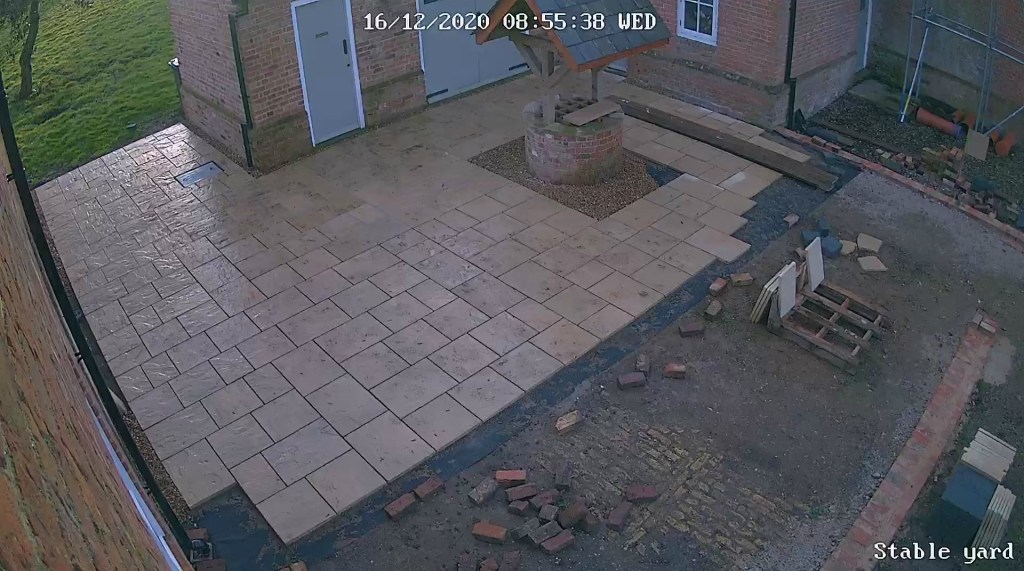
The recreation of the stable yard was well underway. The last remaining cobbles weren’t uncovered, until we started laying the slabs. However, as the new slabs match those in use around the house, It would have looked odd to change them here. The small patch of cobbles remaining can be seen in the picture.
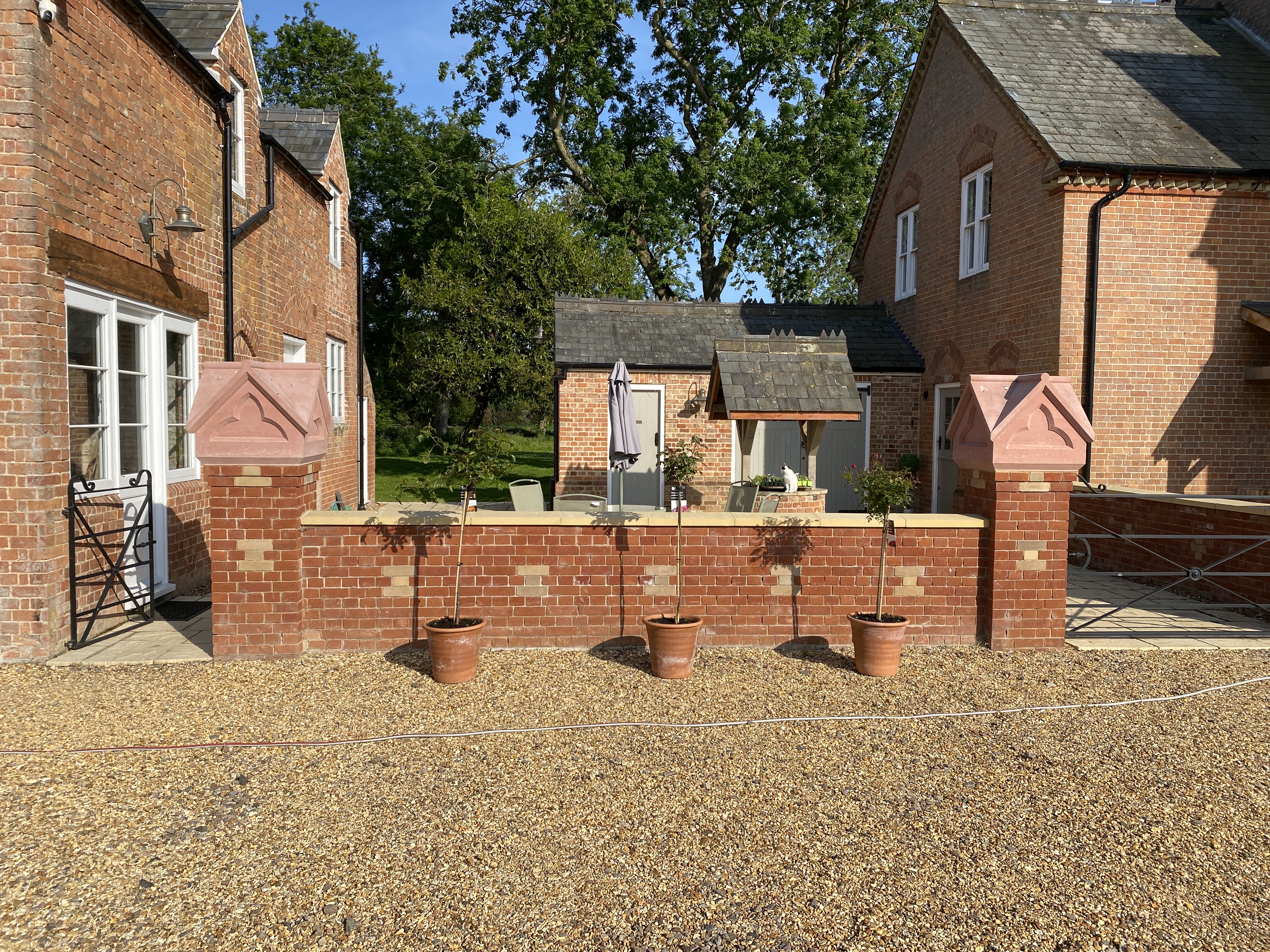
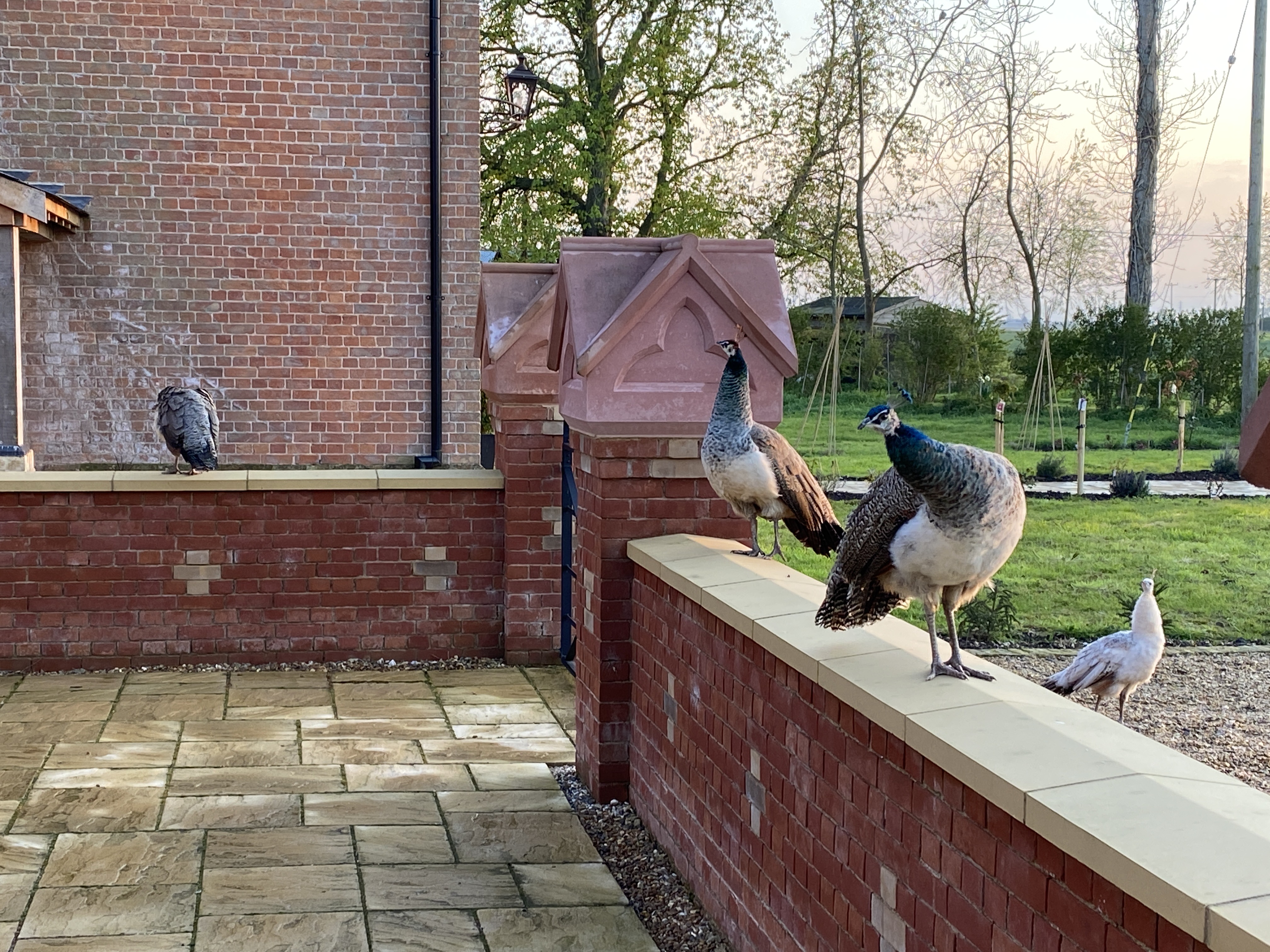
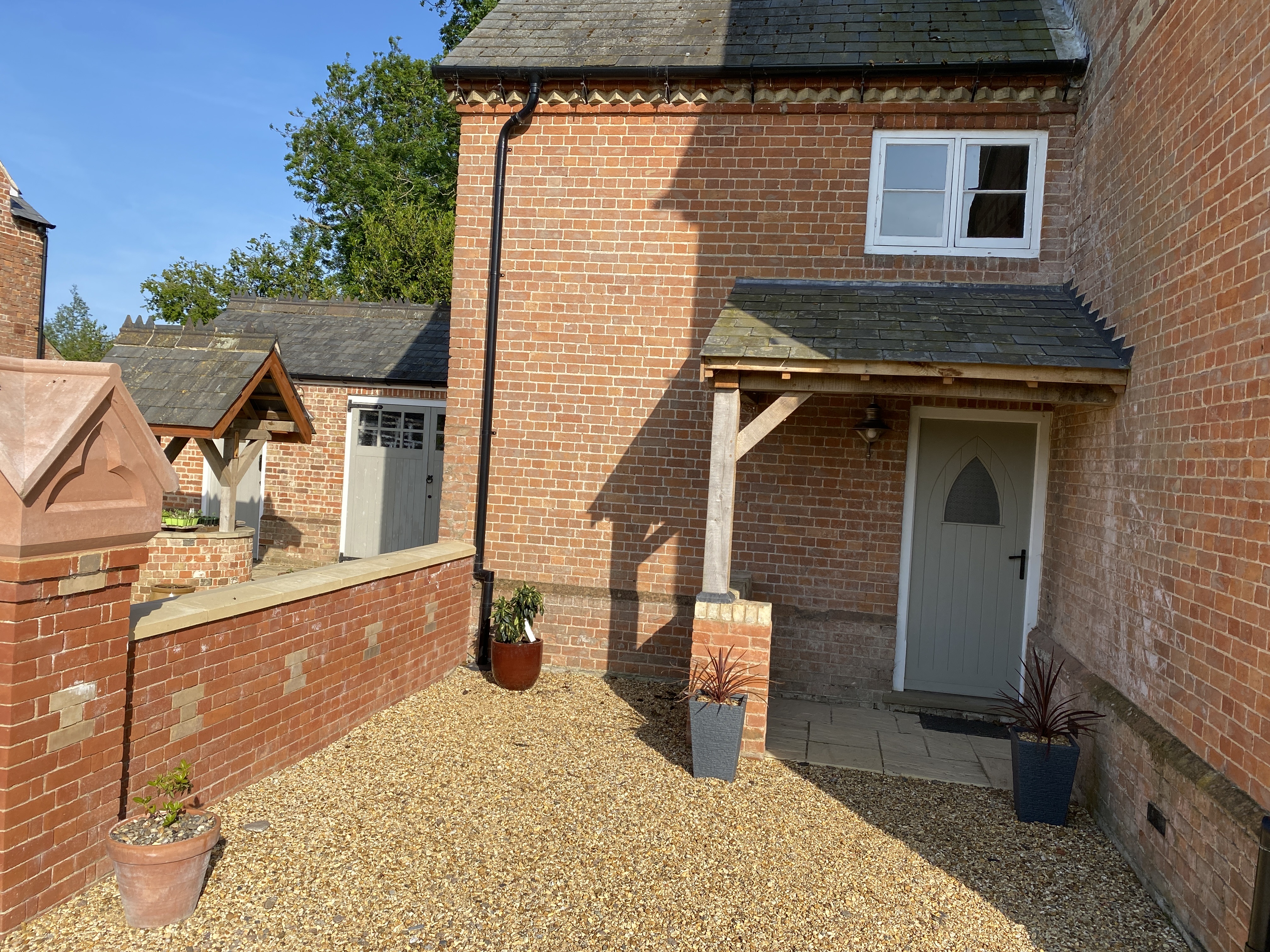
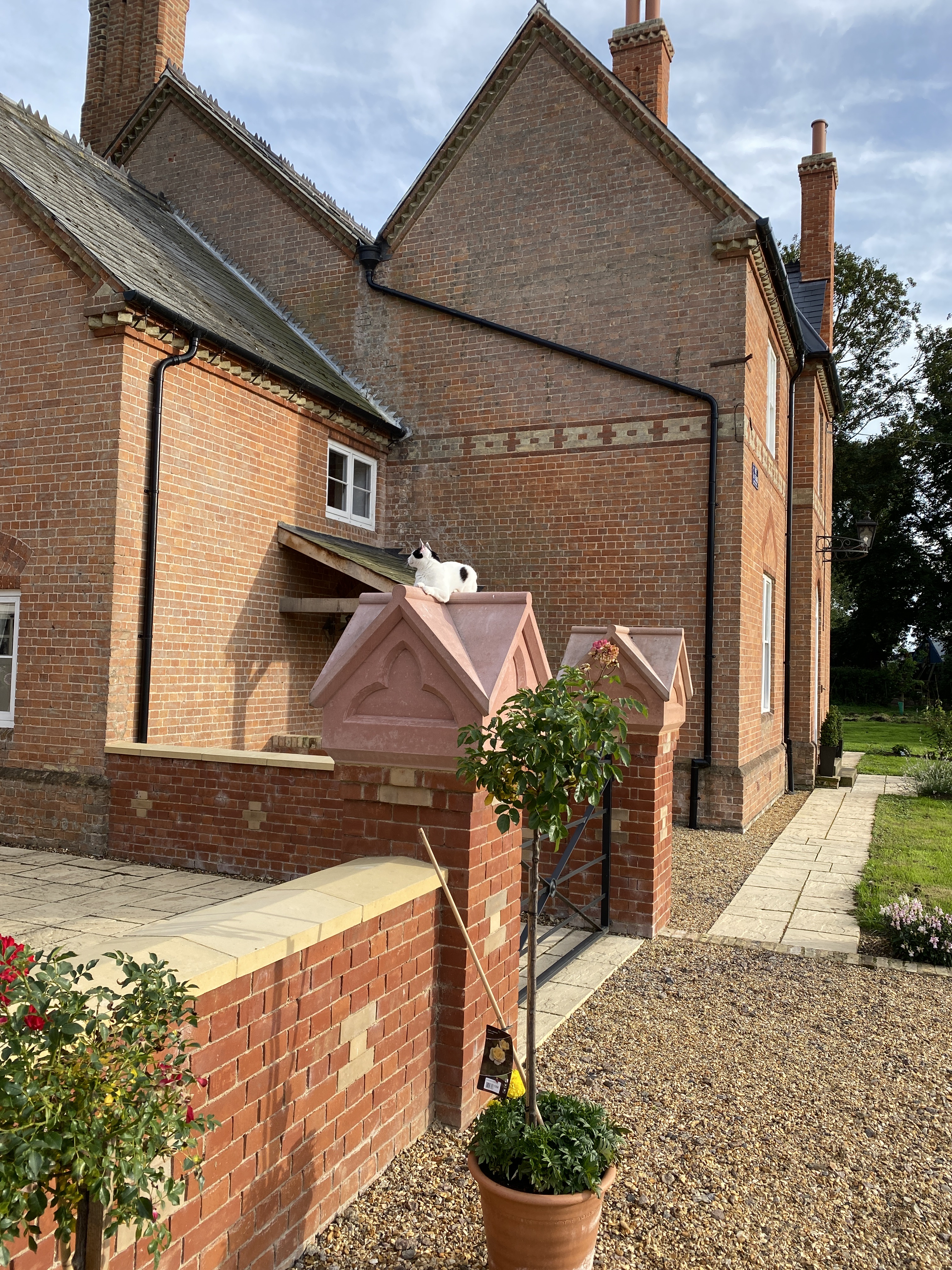
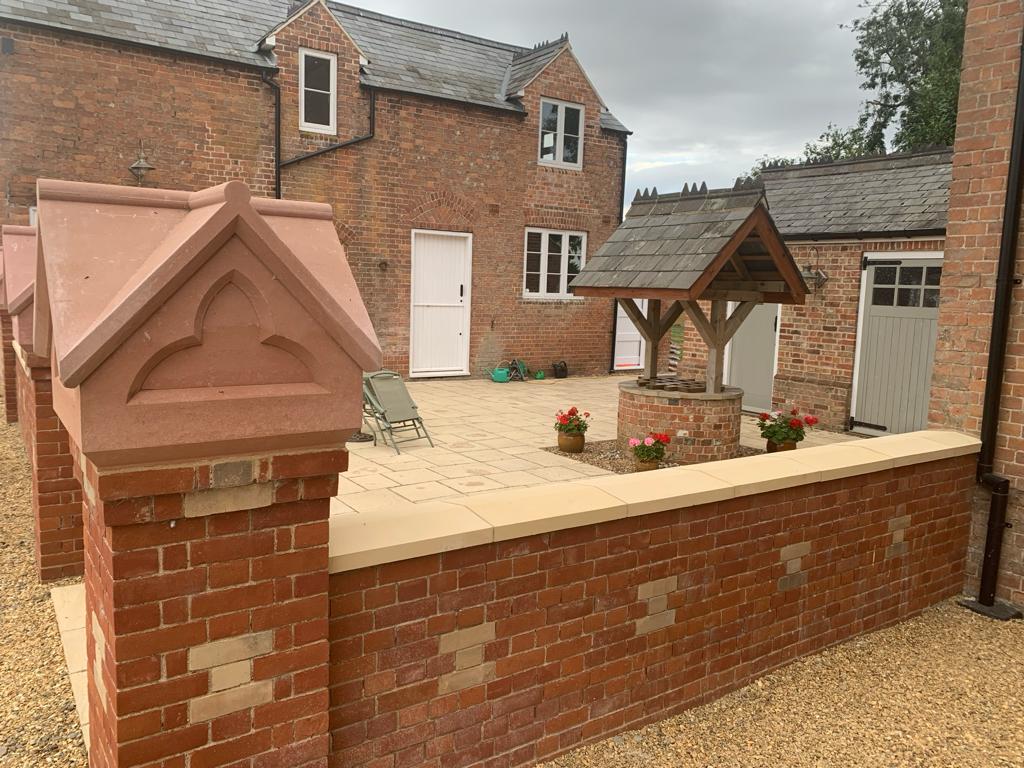
The original foundation of the stable yard wall was uncovered and can also be seen. This has been rebuilt. If you look at the side of the house you can see some brick repairs. This is probably because the original wall was around six foot in height. We have installed new pier caps to roughly the old height of the wall, but dropped the wall to a much lower height, which allows the stable yard to become a sun trap in the summer.
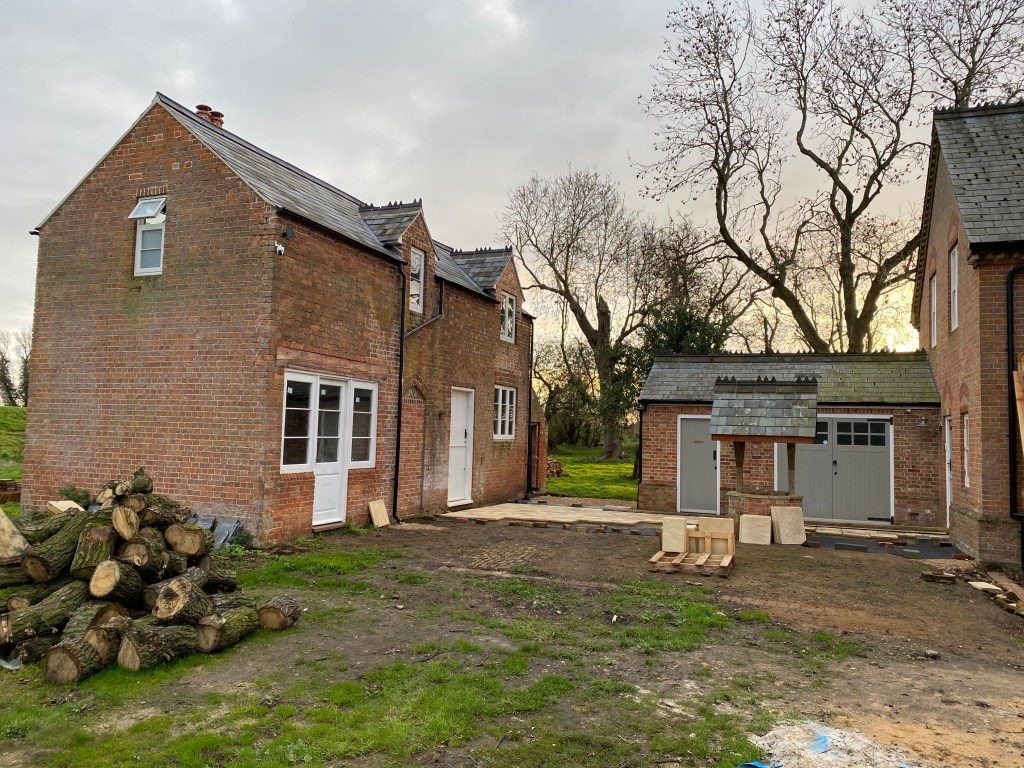
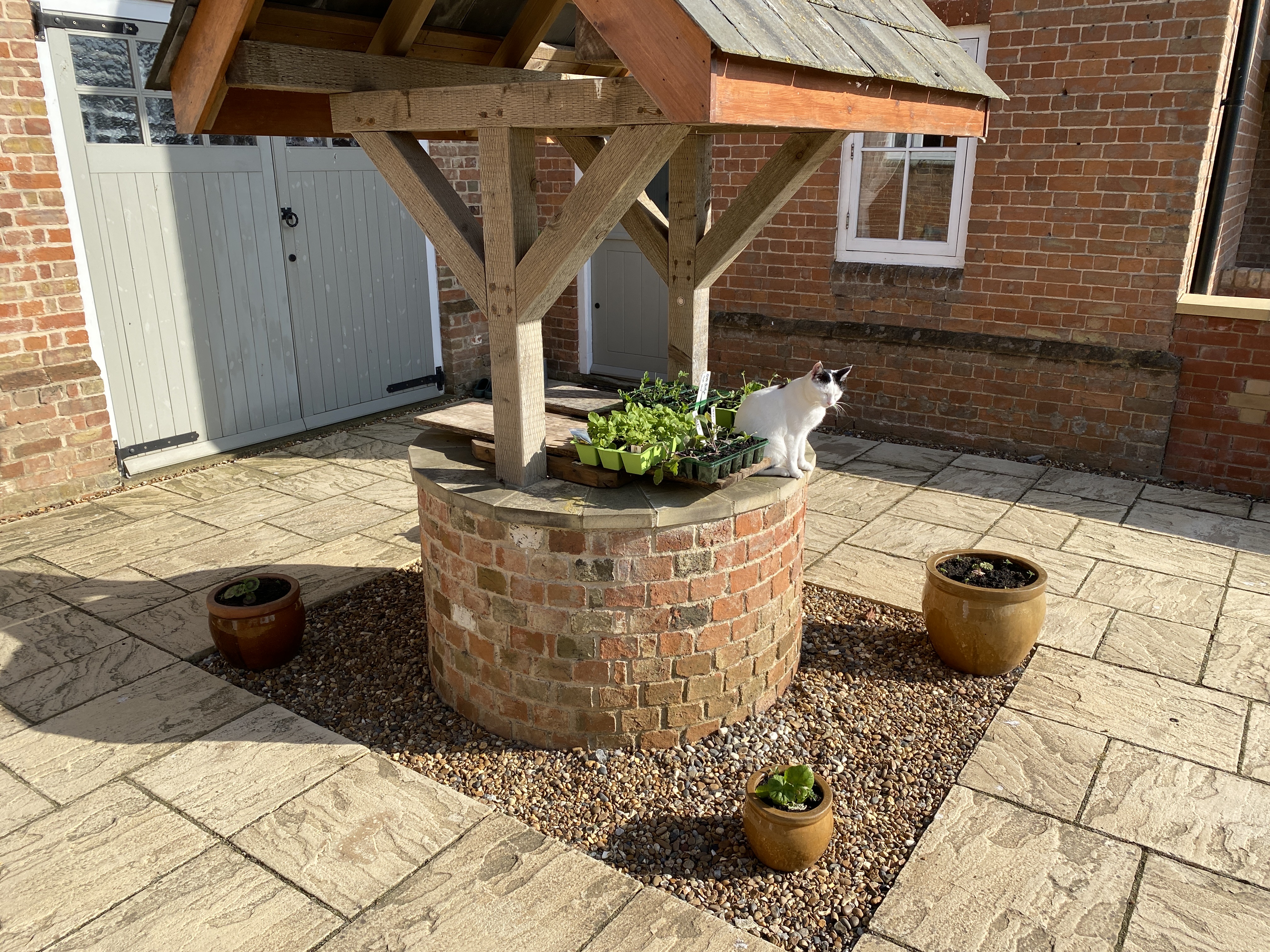
New Well built – The Well is still working. Therefore, rather than fill it in, as happens on many properties, a new top has been created on the old foundation. The bricks, slates and ridge tiles are all original reclaims, as work has progressed on the house. the limestone top was cut from a redundant fire surround that came with a fireplace bought to replace the broken wrought iron fireplace in the master bedroom.
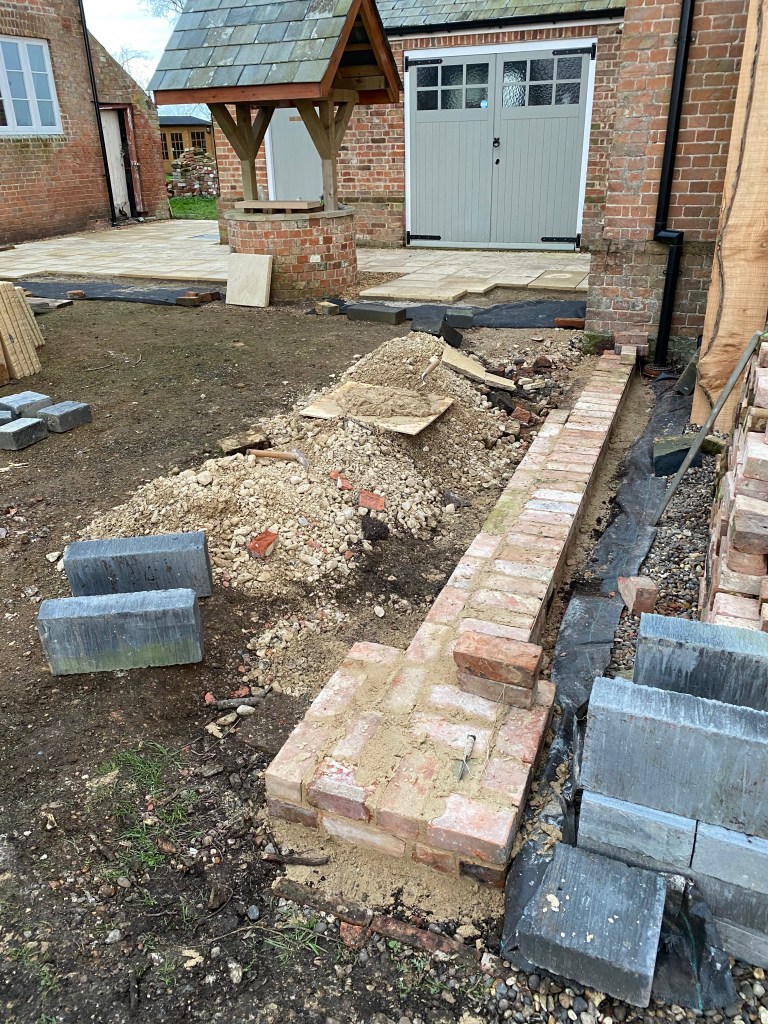
Rebuilding the stable walls – These are built on the original foundation of the old stable walls. It appears that when the cart house in the stable block was used as a garage, these walls may have been demolished. The walls originally were only two bricks thick. An additional brick has been added to the thickness for strength. The wall has been laid using lime mortar as per the house.
On the corner of the kitchen wall, you can see clearly the mark of where the old wall was and subsequently the height that wall was.
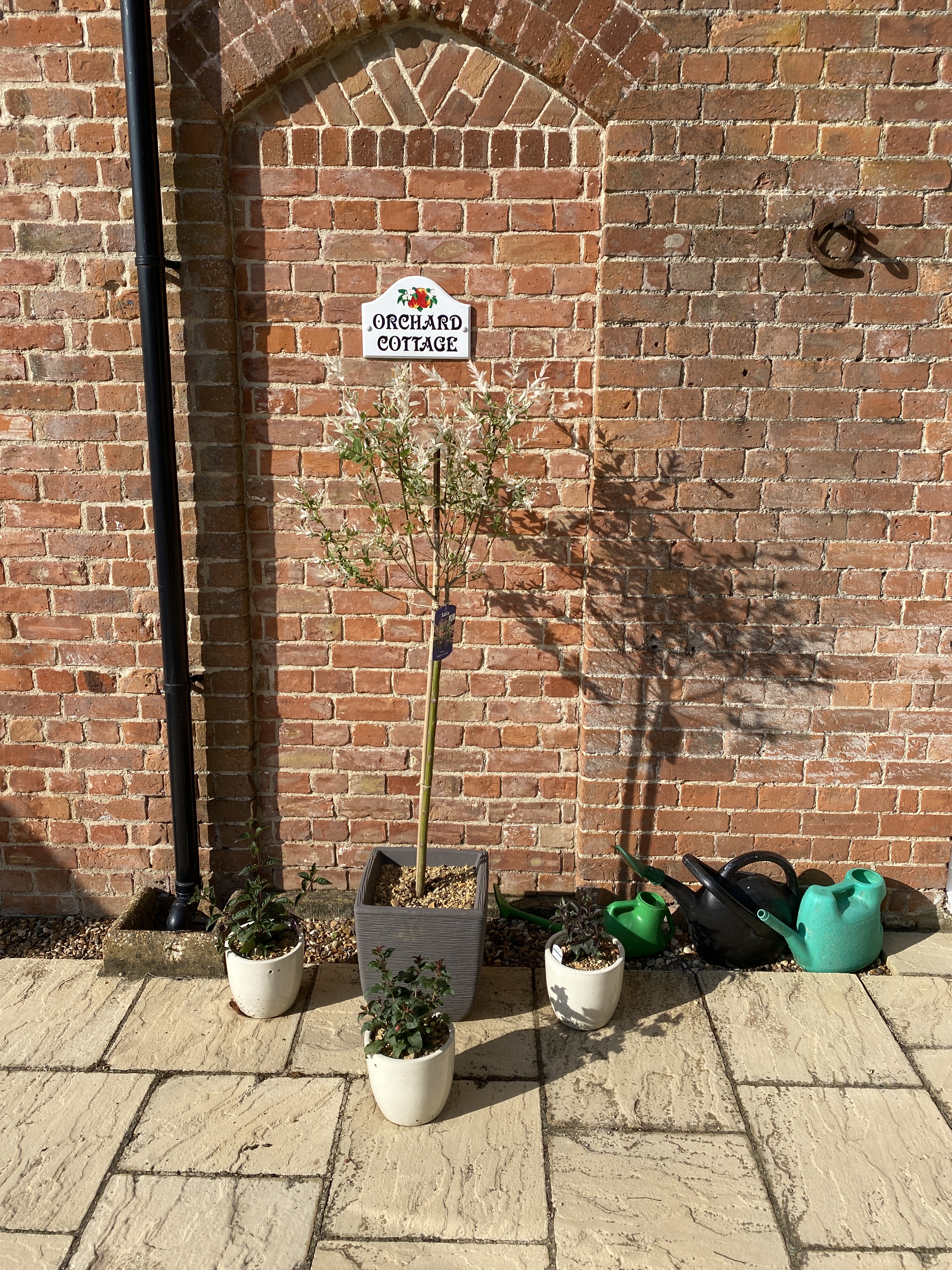
The drainage down pipe is new. There was no pipe on this wall. There was an original down pipe by the staff door, which had a hopper that connected the staff house and the main house butterfly roof. This was liable to overflowing in peak storm periods, if a few leaves got into it. Therefore, these were separated so each part of the house has its own downpipe to solve this issue.
New paving – the courtyard has been raised by four inches. A membrane has been placed over the last few brick cobbles and then Cotswold slabs have been laid. To point between the slabs a lighter colour sand was found, this has been mixed with both lime and cement. This mixture has the added bonus of setting hard, will not wash out and is a very good colour match. Around the edges a gravel edge has been laid as a run off for any excess water.
You can see the remnants of the last few original buff bricks from the stable yard that were revealed when the tarmac was removed.
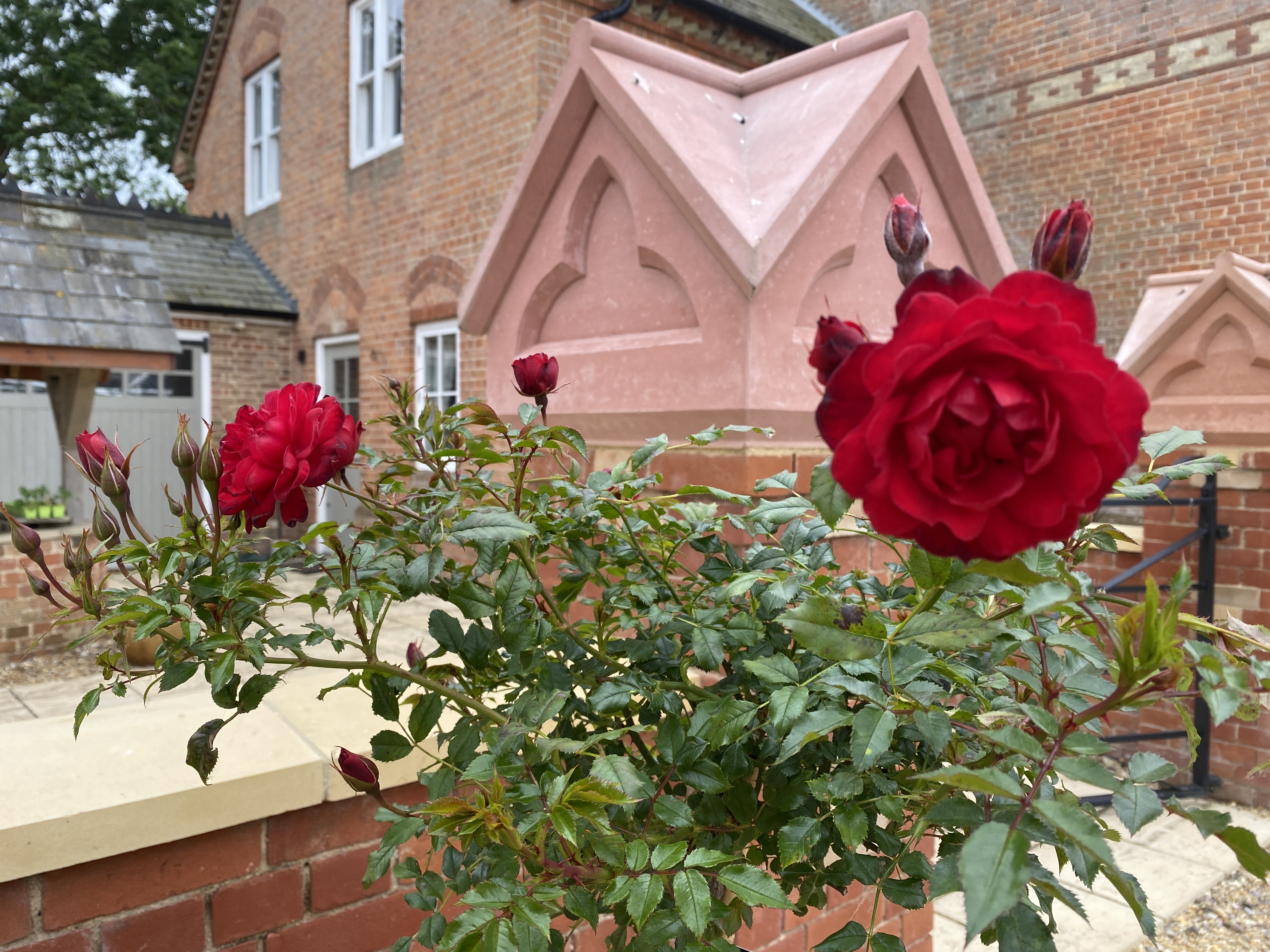
New gates – In addition a small, three foot and a larger seven foot iron gates have been added These have been made in a simple strap style and painted black. To hold the gates, brick piers have been made and gothic pier caps in a reddish stone made to complement the soft red brick of the building.
 The Old Vicarage B&B, Little Ouse