The vestibule is the small area of the hall after the front door, that has an internal door. When the house was built, the purpose was to prevent heat escaping from the main house when the large front door to the house was opened.
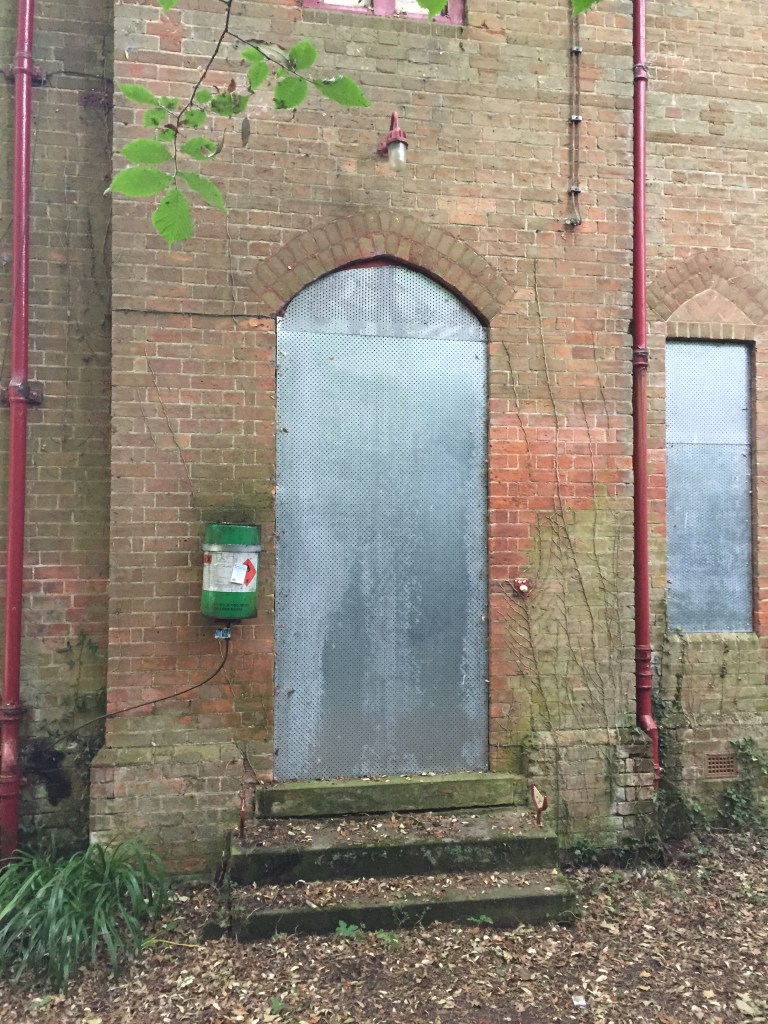
The front door and access to the Vestibule at the beginning of the renovation project.
If you look in later pictures you’ll see:
1 The small light above the doorway has now been replaced with a bow bracketed gothic lamp.
2) The bell pull to the right has been refurbished and is now working and has been taken back to its original brass finish.
3) The oil barrel strapped to the wall on the left has been removed, this was drop feeding a stove in the dining room and could only be described as a fire hazard.
4) The metal panel on the door has been removed.
5) The steps have been lifted and reseated. As they had sunk and were leaning forward.
6) There is now paving to the front door.
7) The guttering downpipes have been replaced with marine grade aluminium pipes.
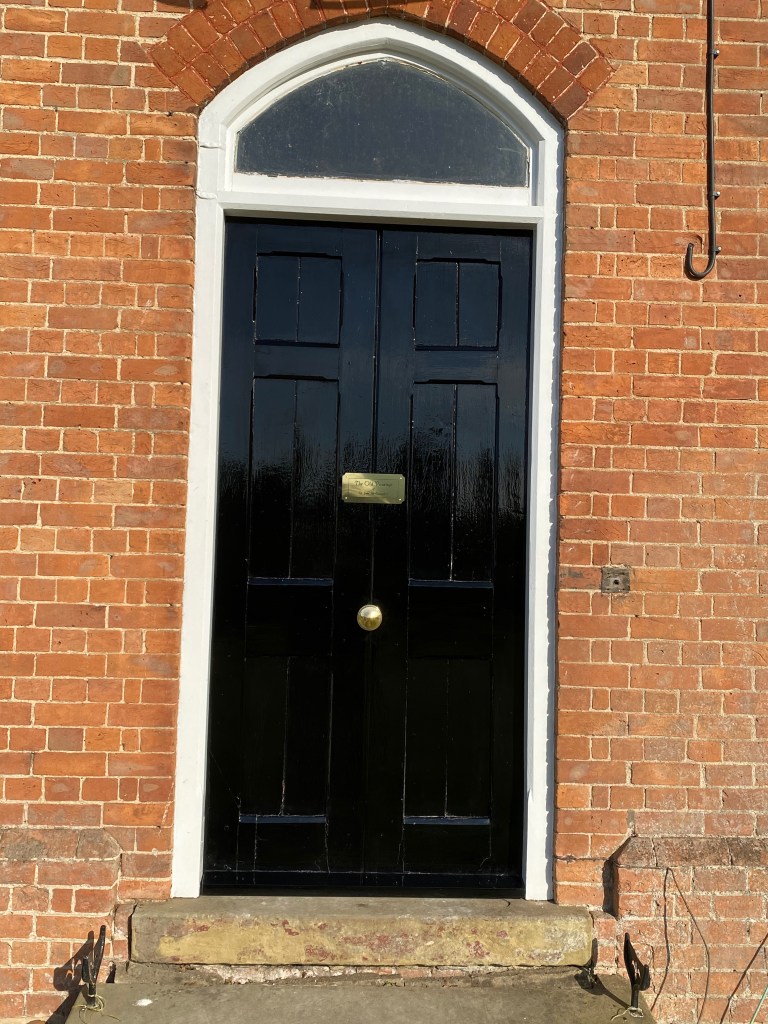
The front door with the metal removed and renovated:
- A brass panel has been placed on the front of the door after the letterbox was filled in.
- The original door knob was iron and was past its best. A replacement door know was ordered in France. This knob as per the original can be turned and is connected at the back to the rim lock.
- The steps have not yet been reseated in this picture. They have sunk to the left and are leaning forward. That has now been rectified.
- The brick work has been cleaned off.
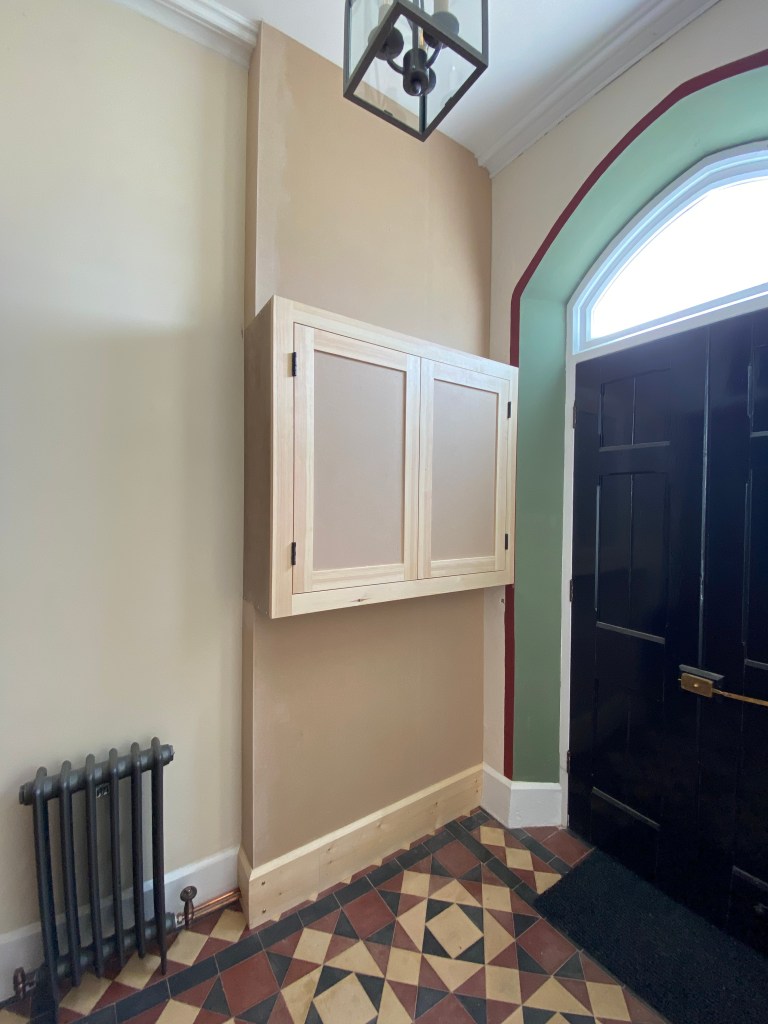
In the Vestibule looking at the new comms cabinet and front door. The purpose of this area is much the same today, to receive guests.
- As the fuse box, Internet and telephone cabling all entered the building through this area, a cupboard has been built to house all of this apparatus. A false wall can be see behind this to house all of the cabling.
- In the middle of the front door is the new brass mechanism which is linked to the external knob and the rim lock. When you twist the outside knob it pulls the rim lock mechanism to open the door.
- A reproduction radiator in gunmetal is shown to the left. All of the radiators in the house were replaced with this style
- The original Victorian geometric tile flooring is still present.
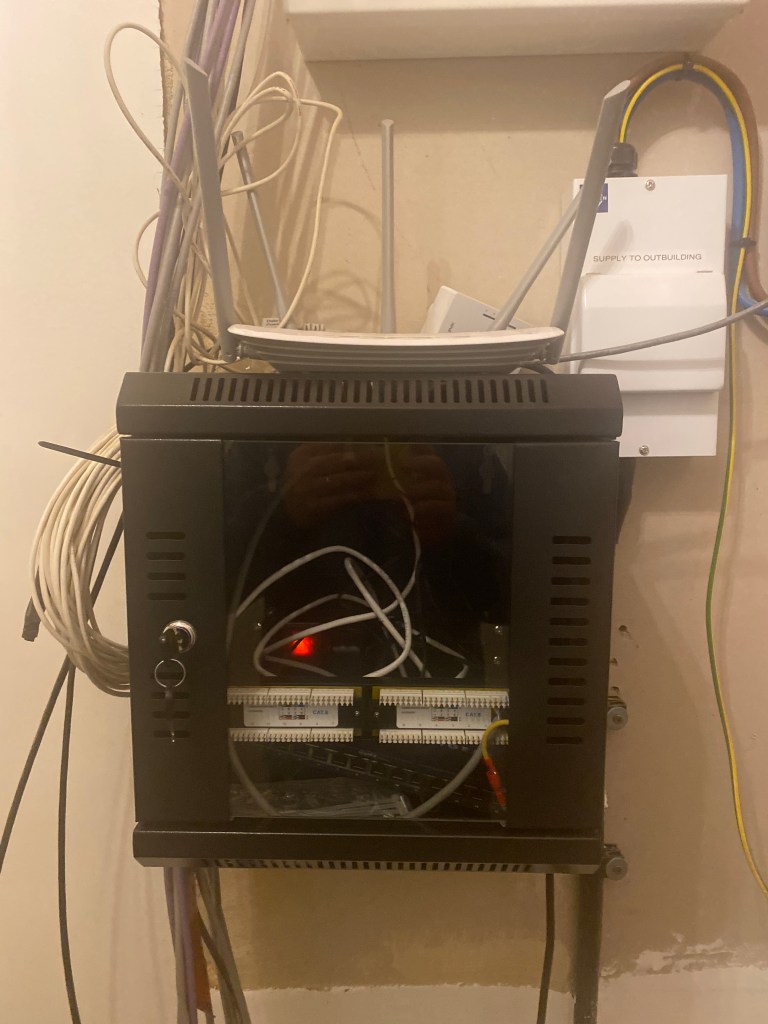
The comms cabinet has been installed in the new purpose built cupboard in the vestibule. An ethernet backbone has been run through the house and outbuildings. This means that each room has at least one internet connection. This usually connects the television, in some cases the mesh system (wifi extender) are connected to these, to ensure a strong wifi signal is present in all areas (no dead spots).
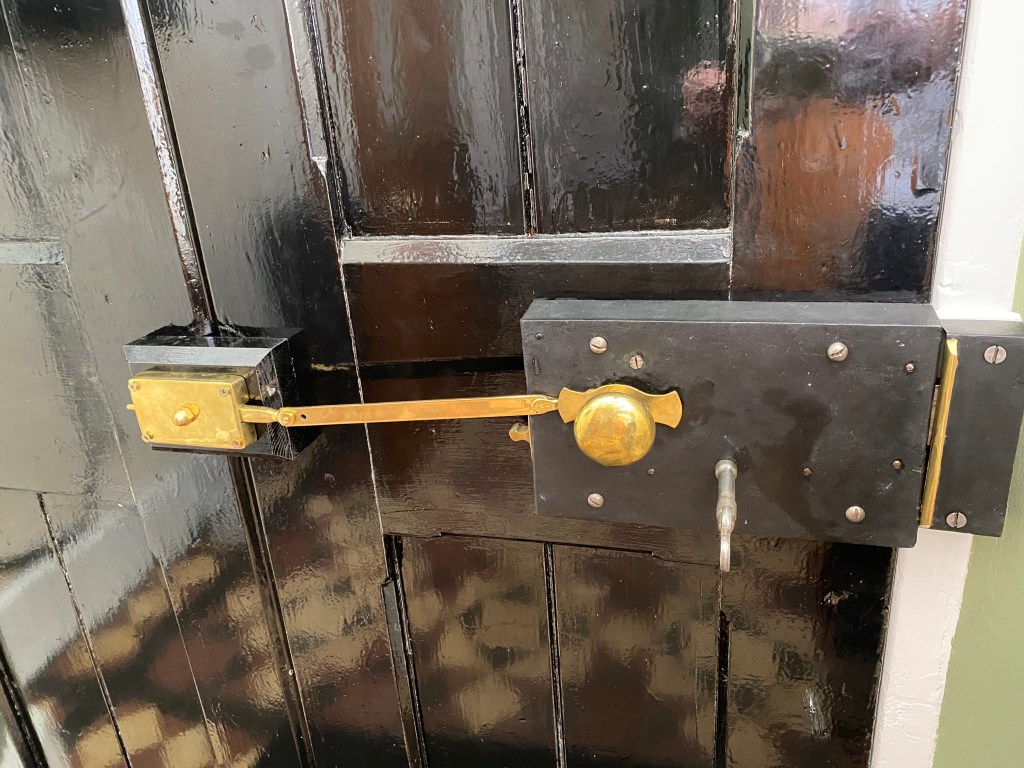
The lock back from the restorers and fitted. The brass bar and central brass door fitting are from France. The original English one was just a piece of chain.
To open the door you just twist the brass knob on the front of the door which pulls the bar, which in turn pulls the latch on the lock.
A view from the front door through the vestibule into the main hallway. Through the arch is the cloakroom and then downstairs WC.
The arch is new and matches those in other parts of the house. This used to be a doorway, to a very large downstairs toilet with a coat rack, which we have separated.
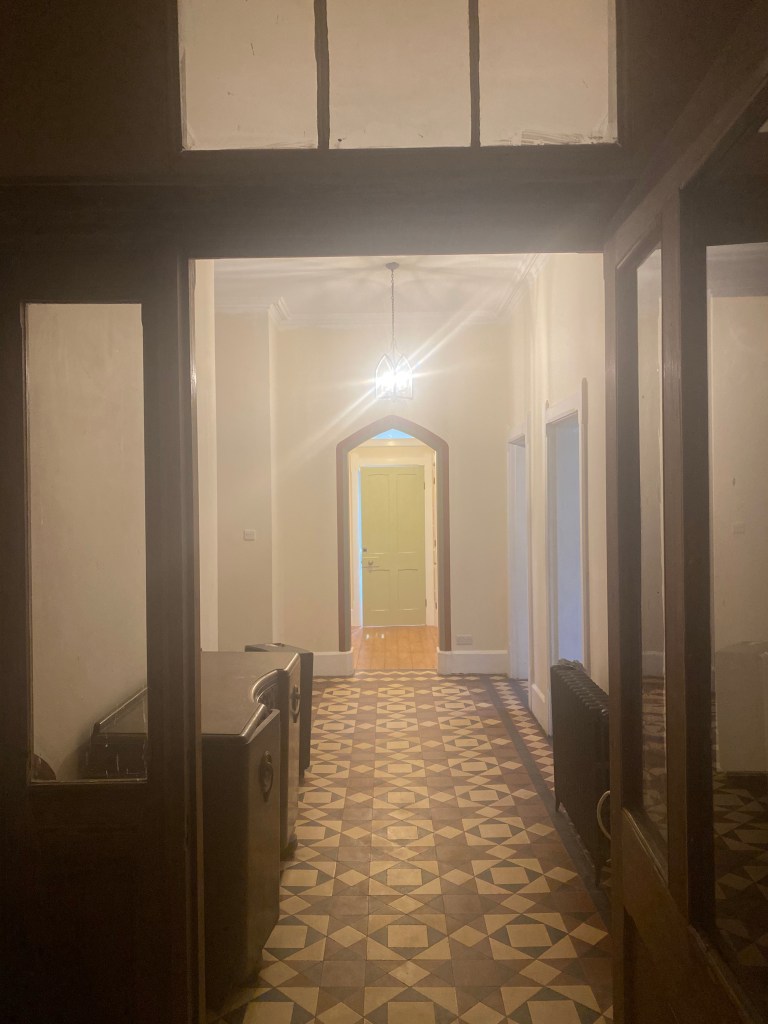
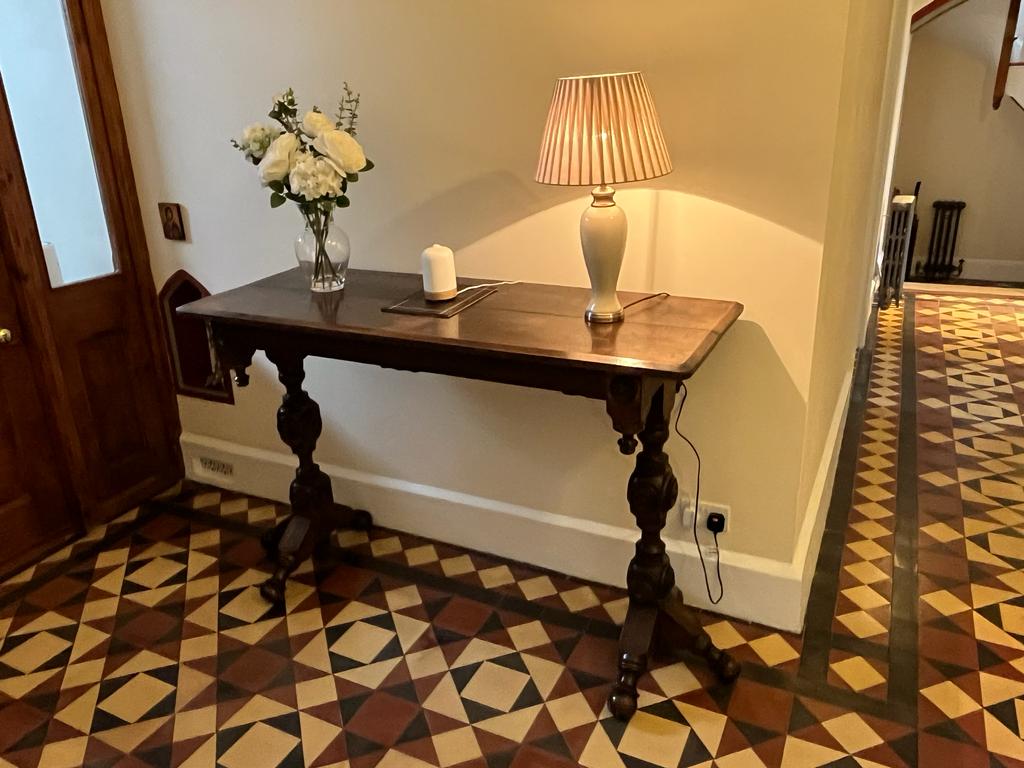
A later picture than the previous of the completed hallway.
- To the left of the hall table you can see a gothic arched niche. We asked Ely Cathedral why it was built into a Church of England Vicarage. They have said it is unusual and they have not seen one in a Vicarage hallway before.
- The hall table was sourced from an antique dealer in Surrey. Where by all accounts he had bought it from a castle liquidation sale in Scotland. By all accounts it was built by the local craftsmen.
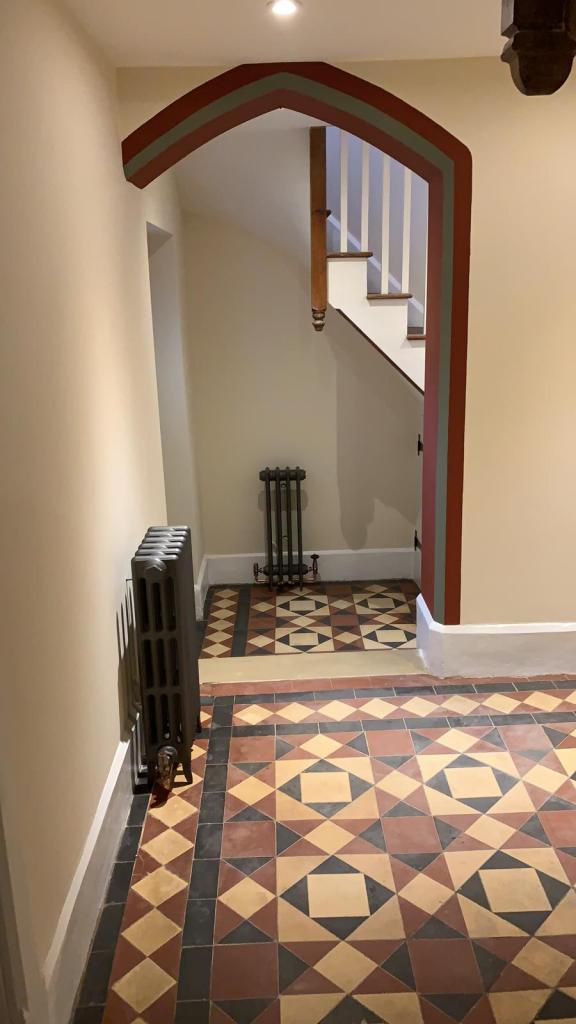
If you walk down the hallway in the main house, you see this arch which has an external doorway and also a staircase. This used to be the staff entrance and staircase.
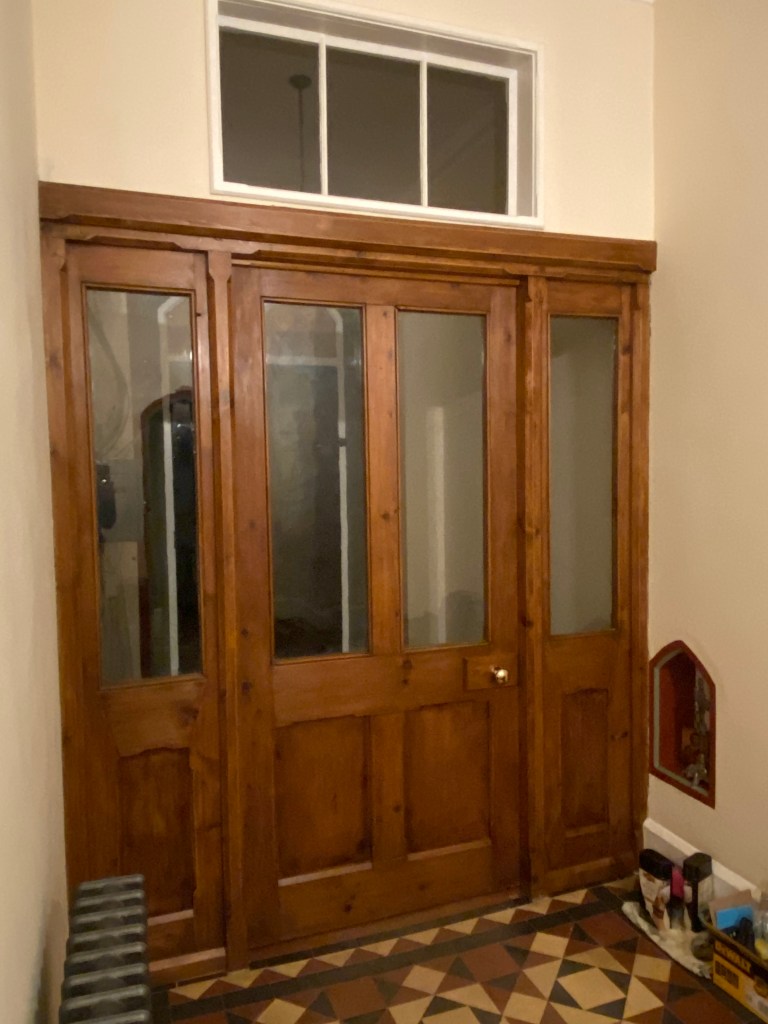
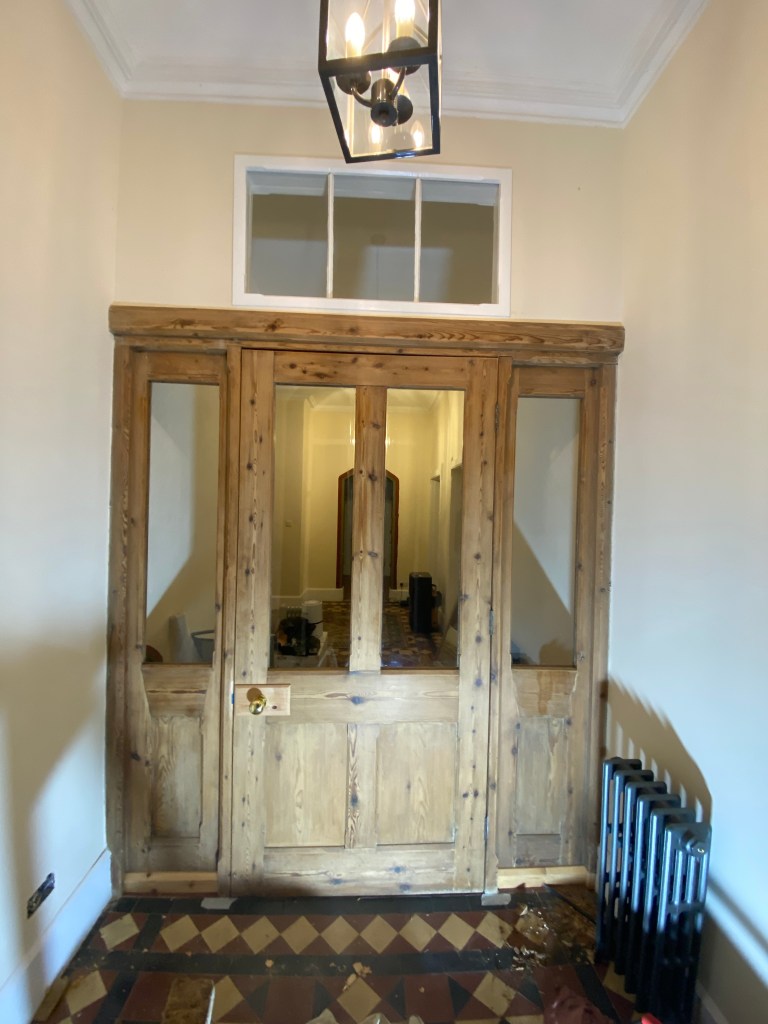
The internal doorway/partition to the vestibule. in this picture one hundred and sixty years of paint have been removed, repairs done to the door and frame and all new wood colour matched into the old wood and a light coat of varnish applied.
The door stripped and new wood inserted.
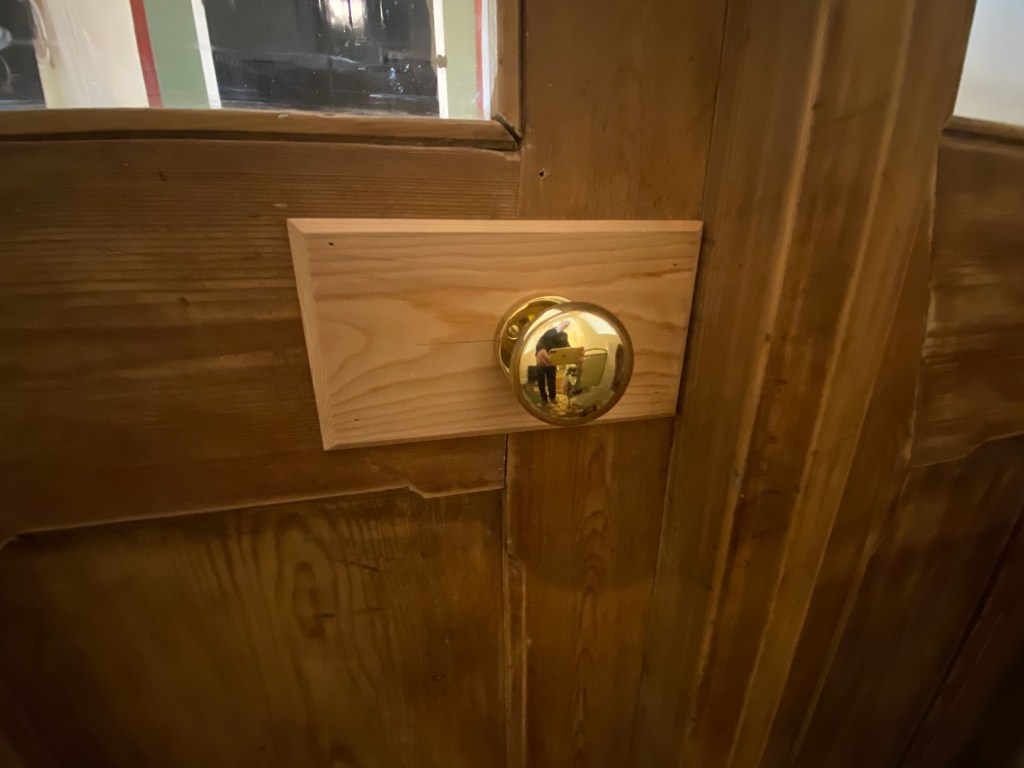
The panel where the knob is is new and you will see this on all the doors in the house. The old doors had had many handles and knobs fixed over the years. As a result there was not much wood left to fit the knobs to. This solution saves filling the door, which would be very noticeable and also makes a feature of this. Most people who see the finished result, believe it to be original to the house.
At the bottom you’ll see some new skirting on the door frame. One hundred and sixty years of mopping the floor had deteriorated the bottom panels.These skirtings were added and colour matched, no one so far has identified that they are additions.
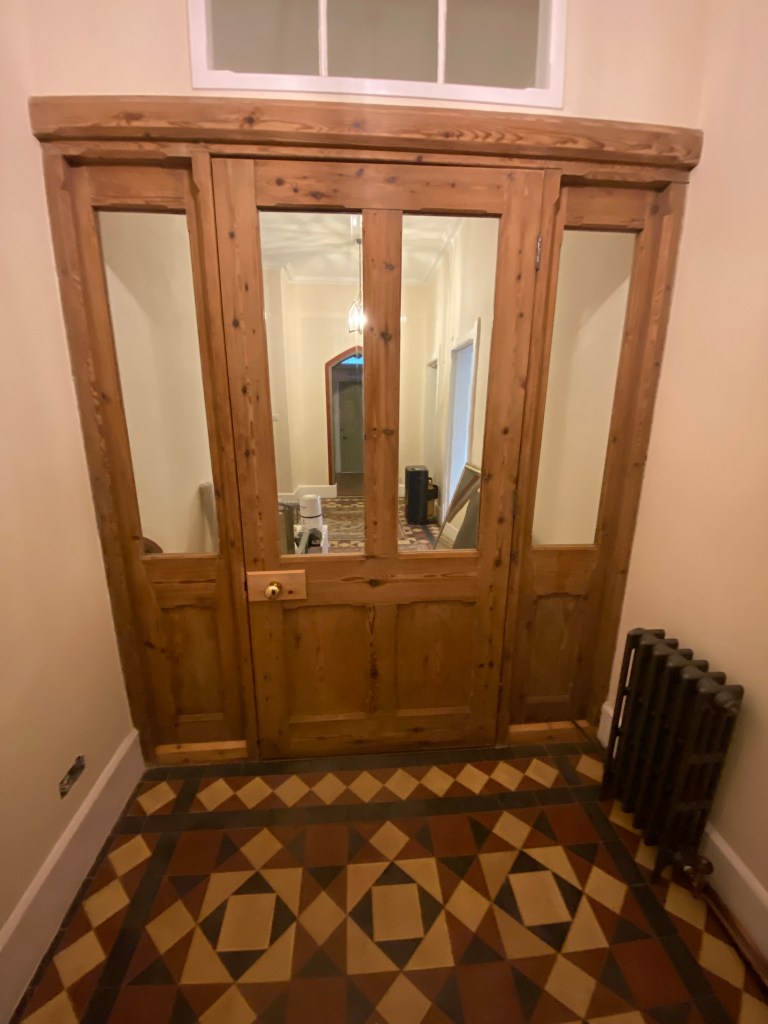
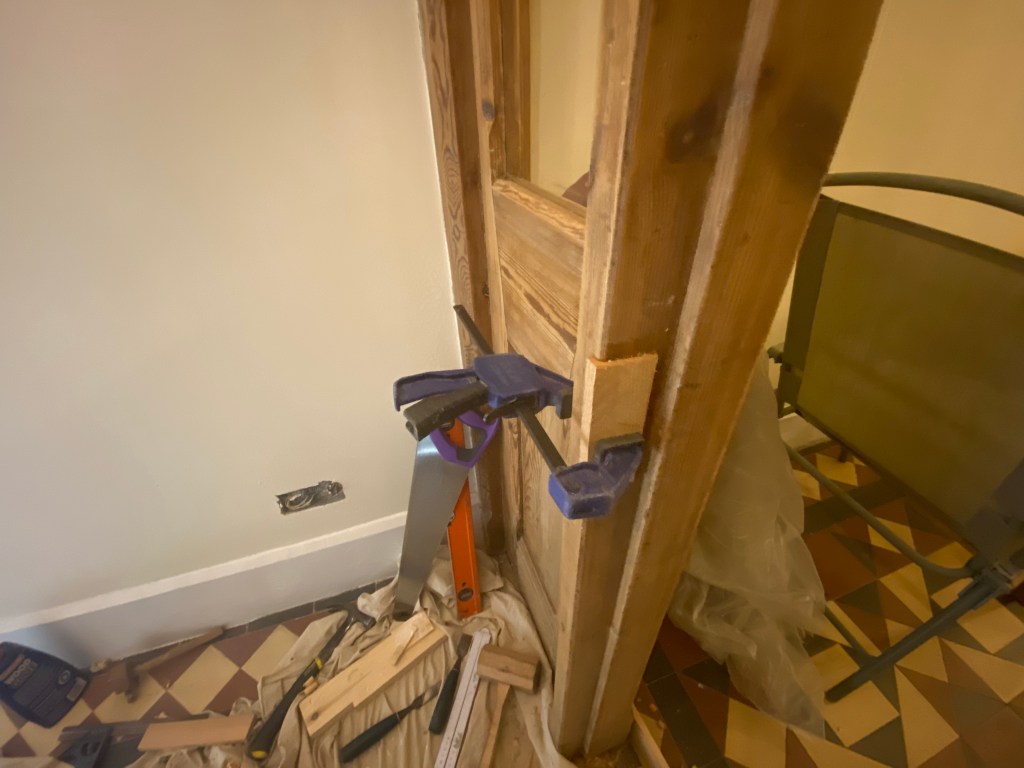
Repairing the frame.
Wood cut in and new metalwork in. Just waiting for a bit of filler and a colour match.
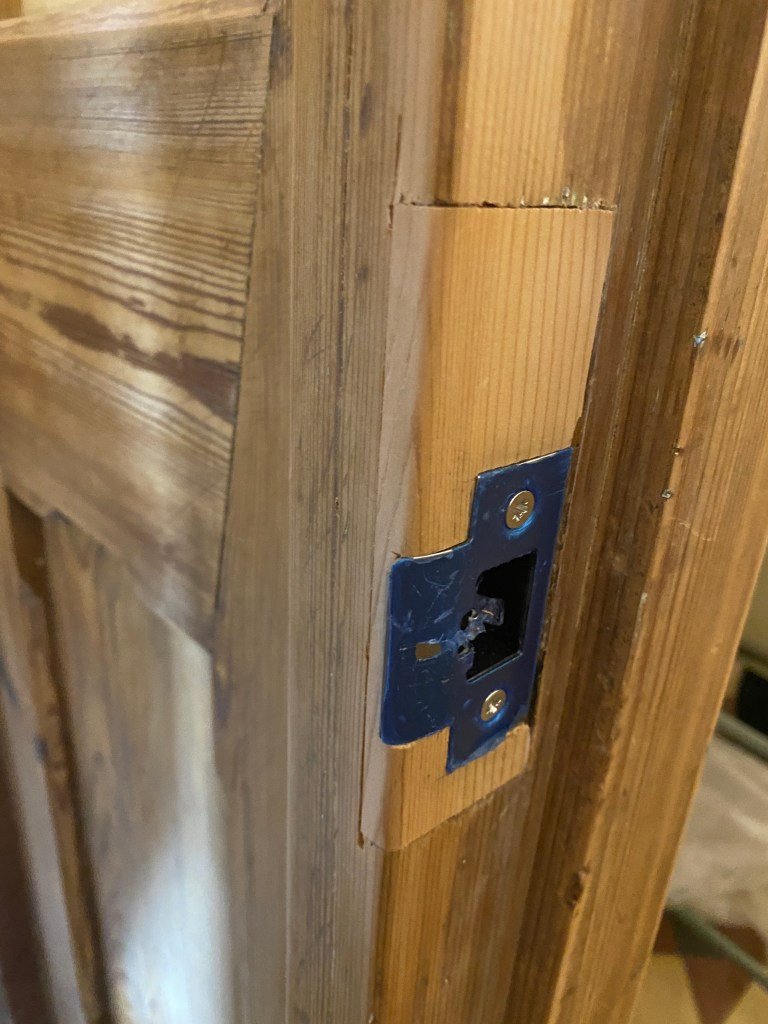
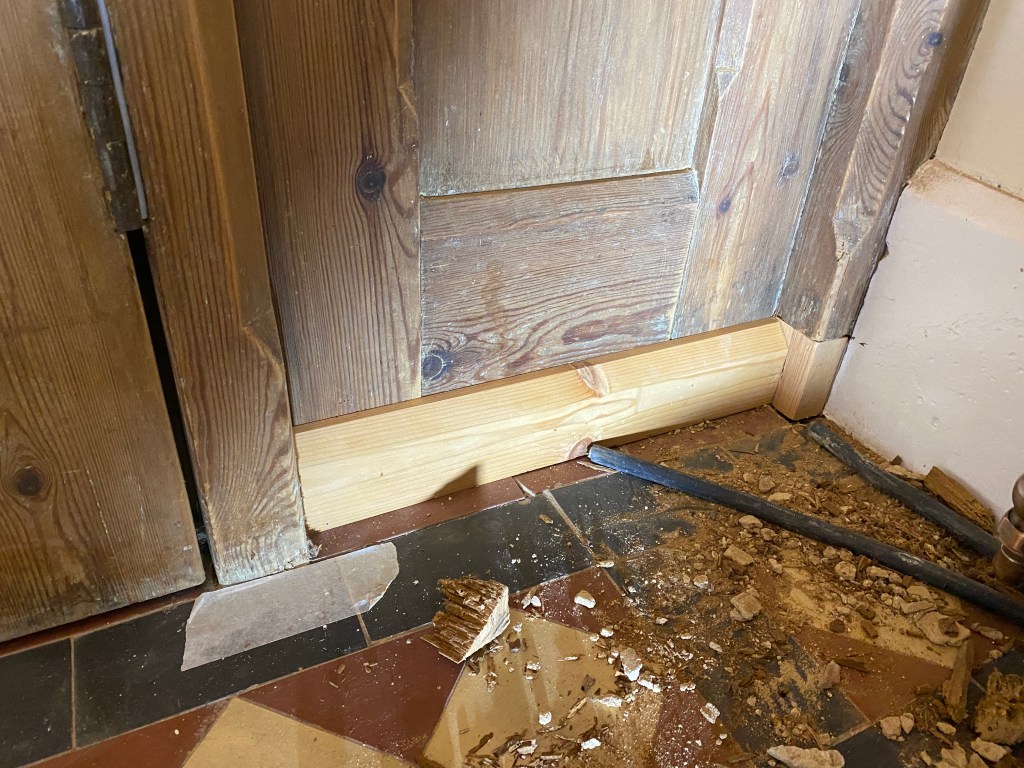
Replacing the damage and fronting up with a bit of skirting.
And the same for the other side to make it match.
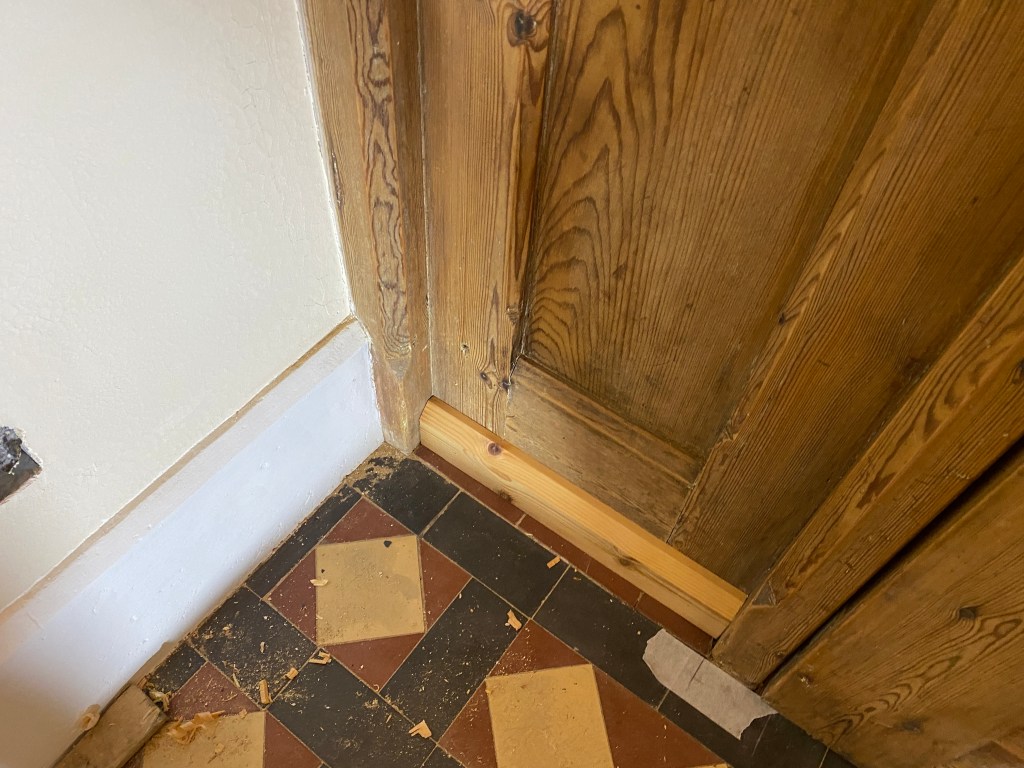
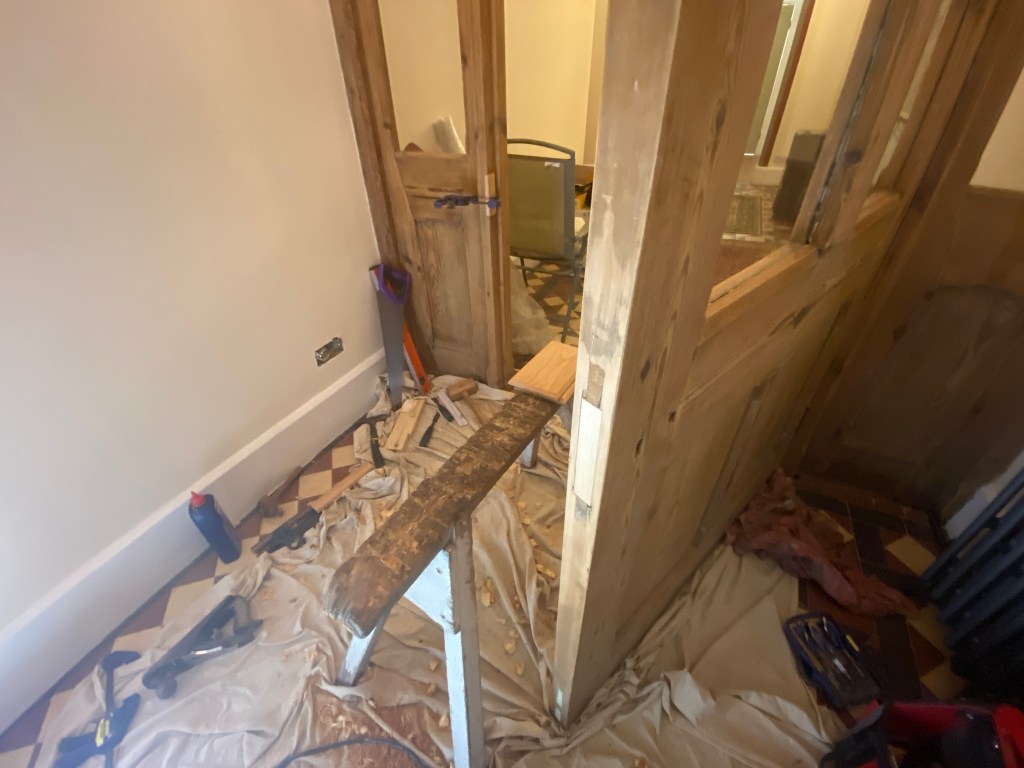
The door was block filled to allow the addition of a new smaller latch. At some point a modern lock had been fitted into this door. It wouldn’t have been original, as the age of this property, would have dictated rim locks. No old markings for a rim lock existed on this door.
In this picture you can see the chamfered panel on the saw horse, waiting to be fitted to the door
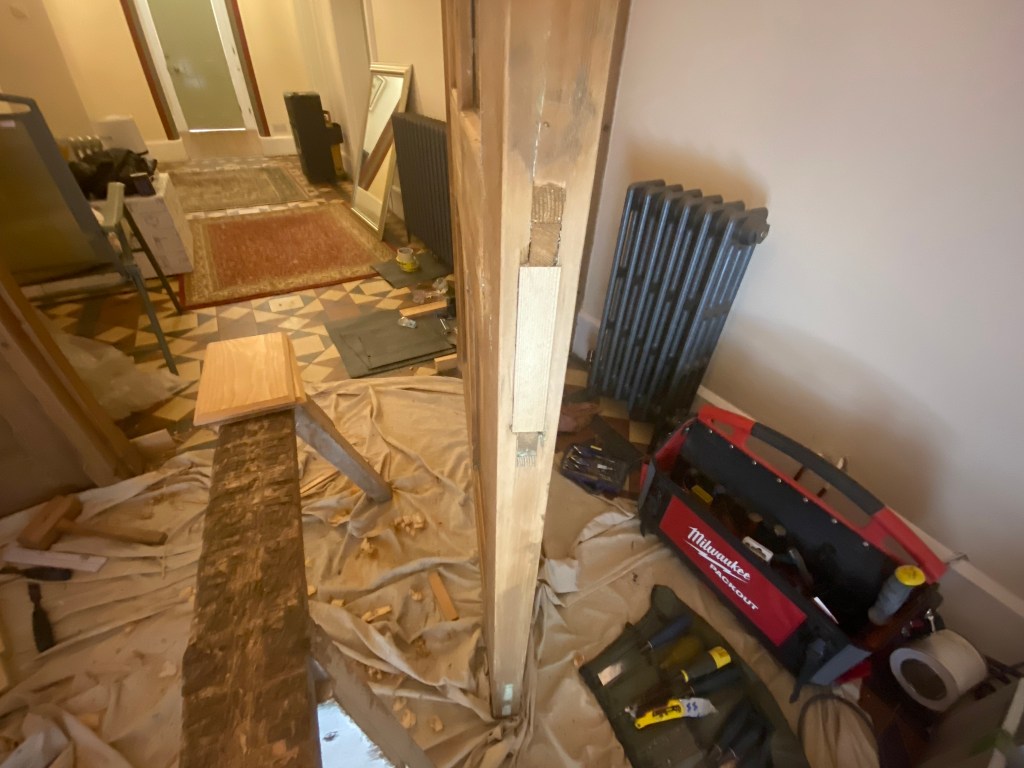
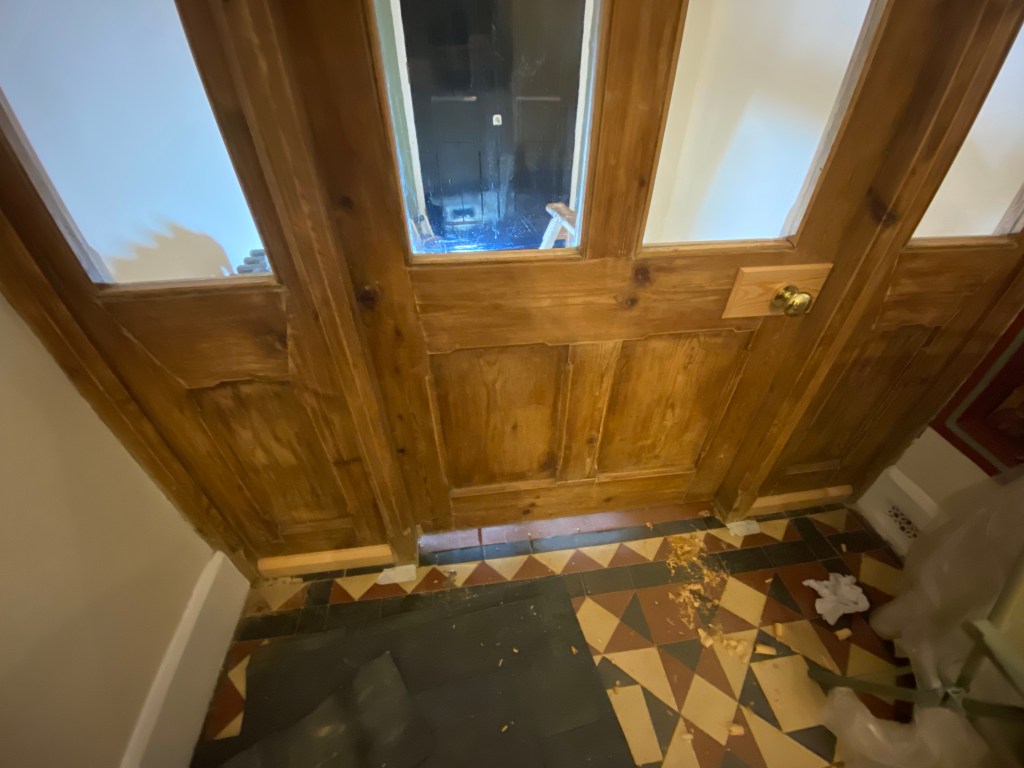
Nearly ready for colour matching and varnishing
The wood is probably a Scandinavian pine. Its colour has aged naturally and has the appearance of an olive wood.
 The Old Vicarage B&B, Little Ouse