The Victorian Kitchen Garden is situated behind the stable block. The plan for this is quite simple. A row of fruit trees (apples, pears, cherries, plums, apricots) has been planted, on the border by the drainage ditch to crate a small orchard. The remaining part of the kitchen garden, will be set out to a four bed rotation system. Much the same as the Victorian’s did it. Or indeed as we all used to do it, until a few years ago when chemical farming took over.
Within the four bed rotation, each bed will get varying sunlight during the day, due to shadow and other variables. This means that some crops will grow faster in certain parts of the beds. This is ideal, as it means that you can plant the same crop at the same time and prevent the cropping, by up to a month in the more sheltered areas. And still keep your crop rotation.
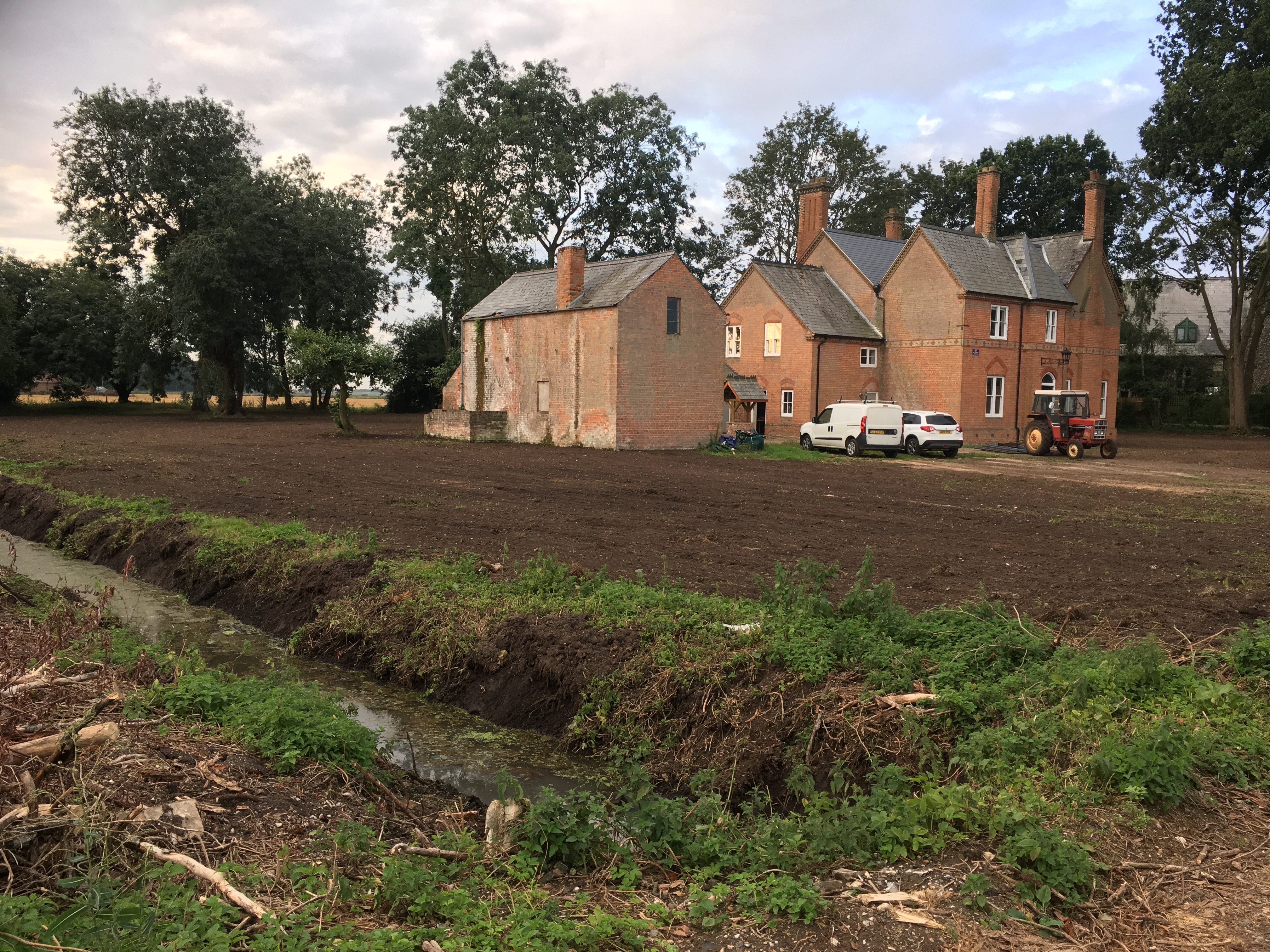
The victorian kitchen Garden, will eventually be enclosed on three sides, in an attempt to recreate a partial walled garden. In the following picture you can see the the back Wall of the stable block (not restored when this picture was taken) and the drainage ditch which form two of the borders of the kitchen garden.
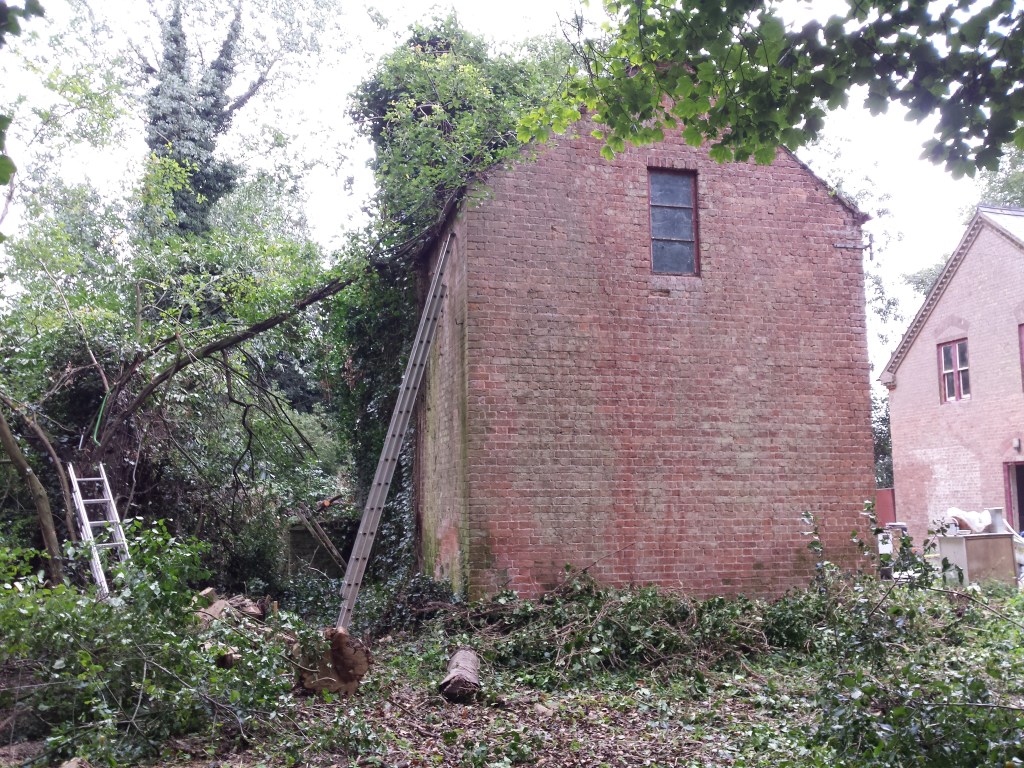
The side of the stable had just been stripped of ivy.
It took several weeks to free up the stable block. The ivy had penetrated the roof and the chimney. The top half of the chimney had to be totally rebuilt once the ivy was removed.
The main house has had a lot of work done on it. The stable has had its water ingres stabilised. Time to plan/level the garden!
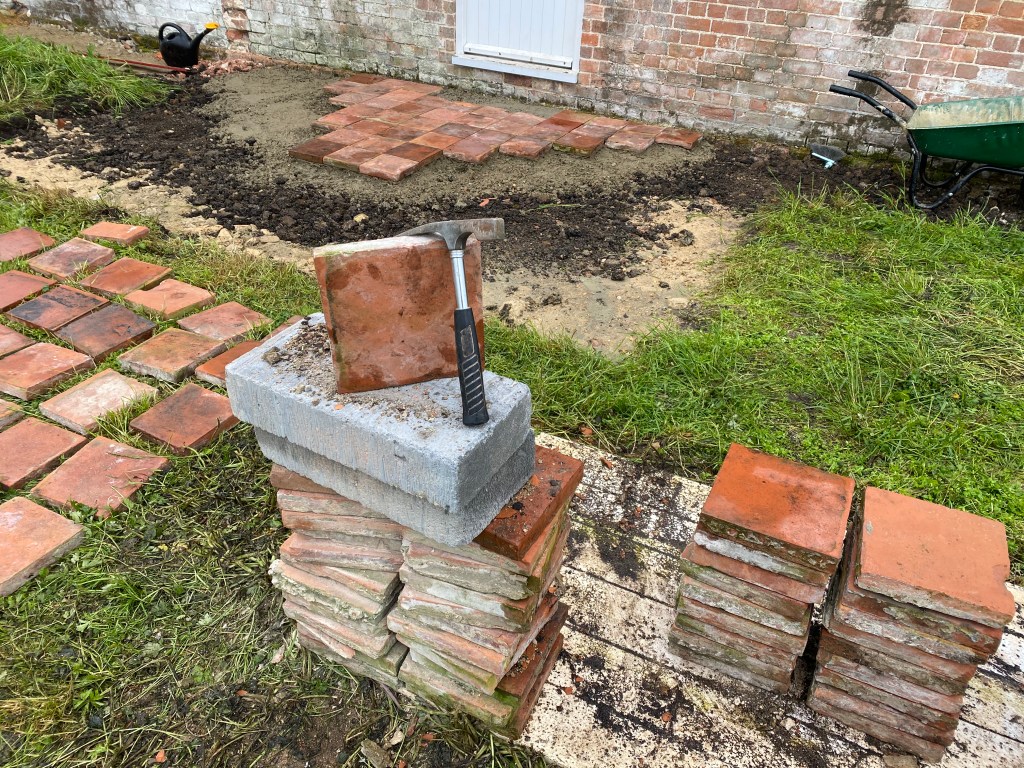
Reusing the old scullery and pantry tiles
Several changes to the stable block view into the Kitchen Garden. This wall really shows the marks of the ivy and water damage. Much of which has now be cleaned off.
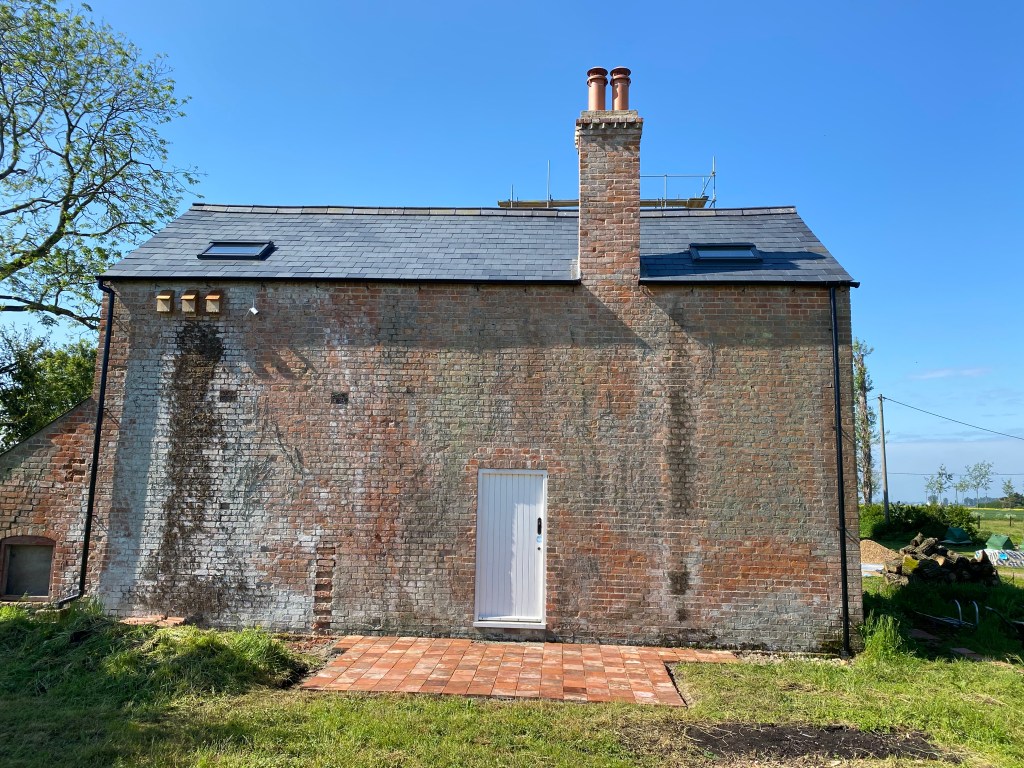
- The roof has been taken off, all the rot was repaired and the rear view replaced with new slate and veluxes.
- The chimney has has been rebuilt with a new crown and chimney pots.
- New guttering has been installed and drain-a-ways.
- The window has been replaced with a plank door.
- The small wall to the left has been removed. You can see the holes in the wall, to the left of the door that are in the process of being repaired.
- The old scullery and pantry tiles where possible were saved and are being laid as a patio area. This is not quite finished in this photo, the step and the left and right wings still need to be laid.
- Hidden things you can’t see:
- The electric conduit that runs to the back of the stable and connects to the new fuse box in the stable.
- Two connections to the new septic tank, one for the upstairs bathroom and one to the jacuzzi area.
- the new soak-a-way for the water from the guttering.
You’ll notice the watering can in the above picture. This is used to dampen the back of the slab before pressing into position. It will help it bond to the base.
The tiles had too have the old lime and in some cases concrete removed from them to allow them to be laid, butted up to each other. This was done mainly using the stone hammer. In the cases where concrete had been used a grinder with a diamond blade was used.
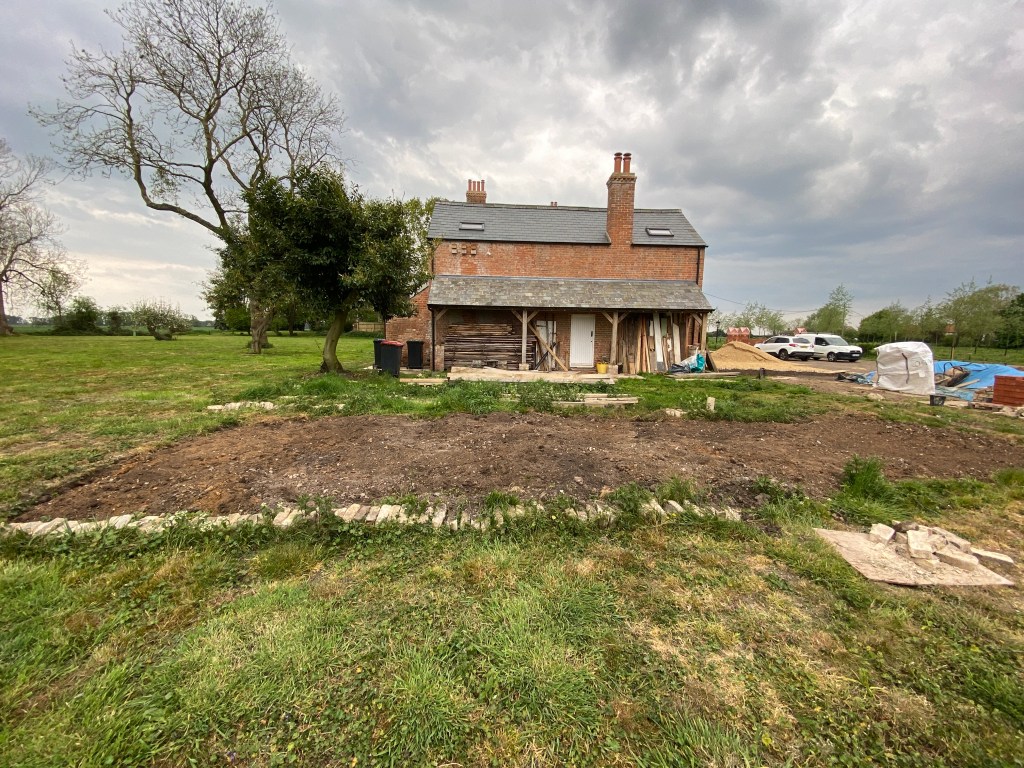
The new log store has been built in oak. The oak was cut from a tree in the garden that had fallen. The vegetable plots are in the process of being dug out.
The first planting of the kitchen garden
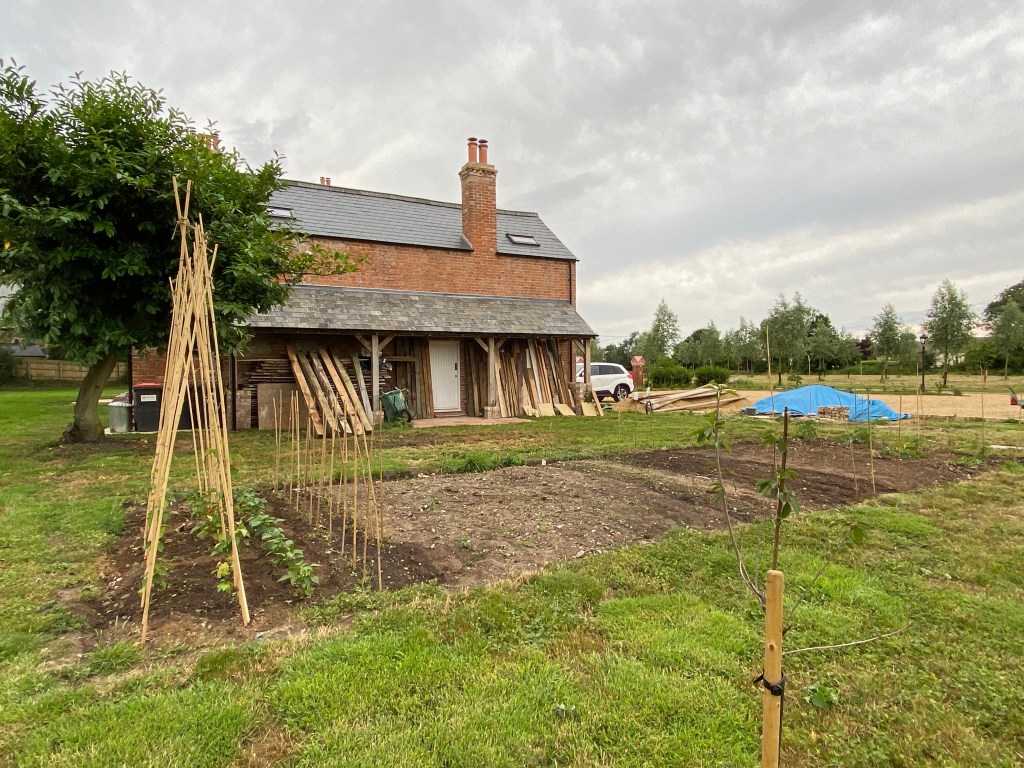
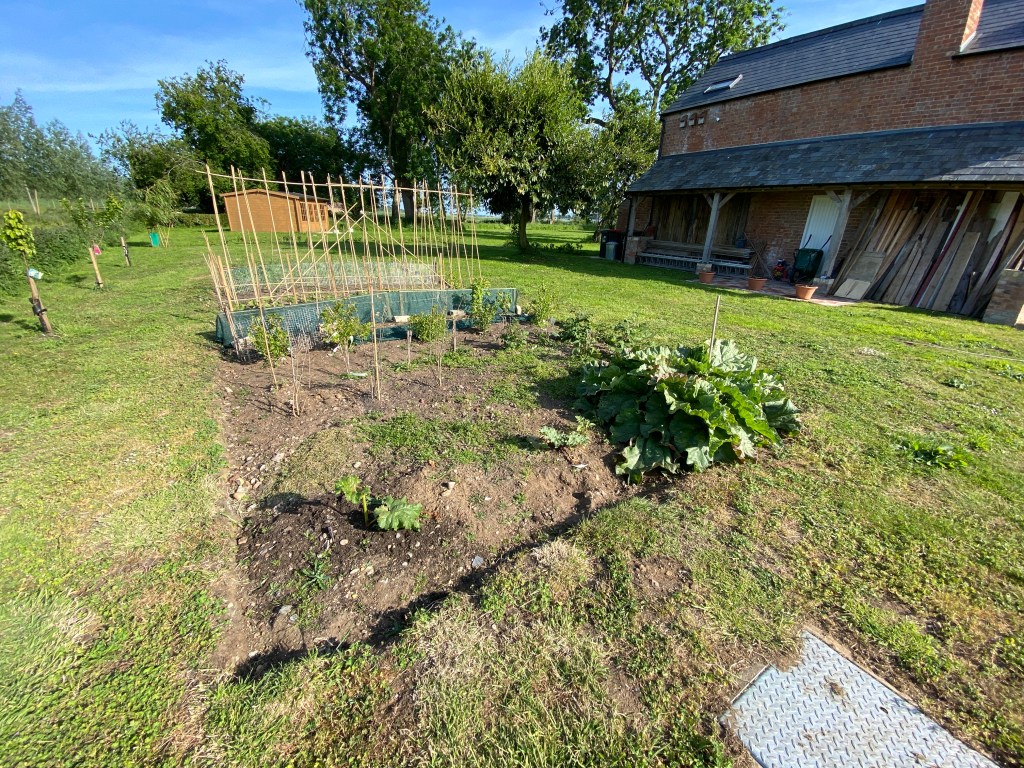
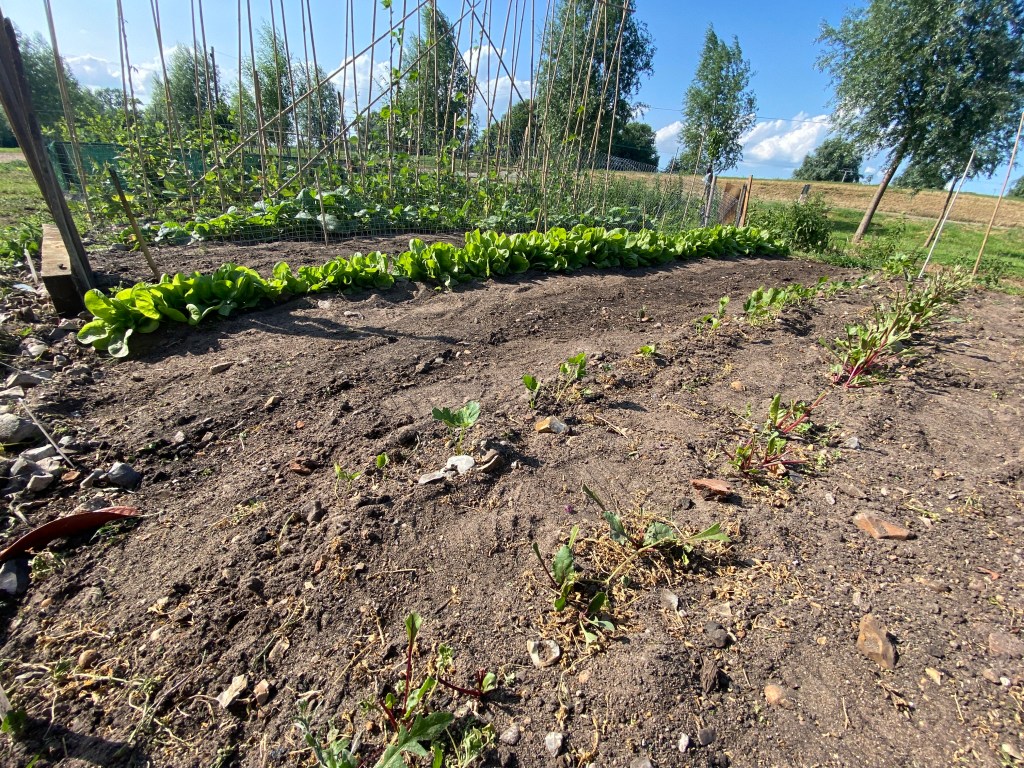
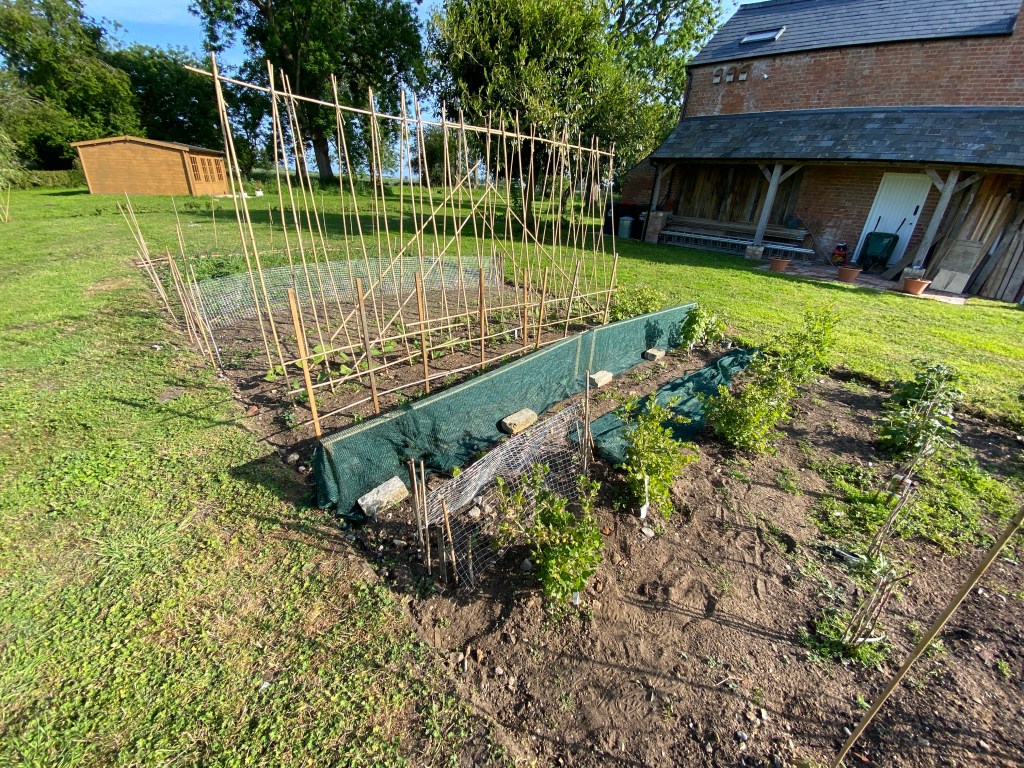
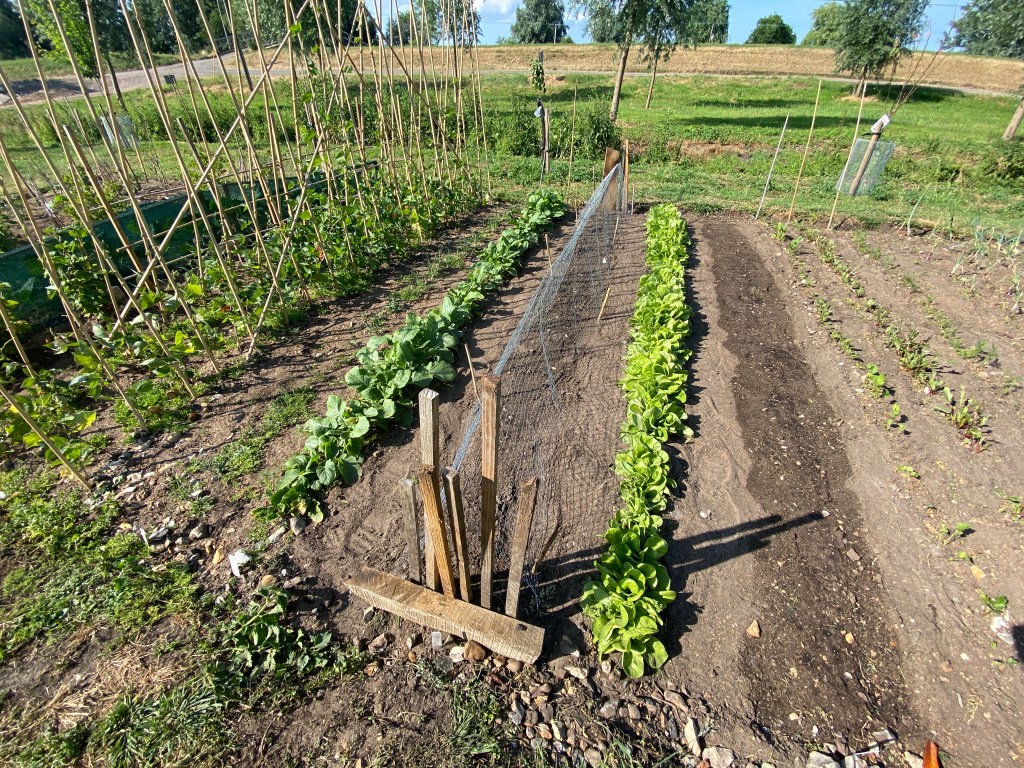
All plants have been planted unprotected this year to see what percentage succumb. The following so far is the tally:
- Runner beans – no damage
- French beans – no damage
- Peas – quite a lot of leaf damage from birds but surviving
- Cauliflower – rabbits and bird have taken 90% of the seedlings
- Cabbage – rabbit and birds have taken 90% of the seedlings
- Tomatoes – no damage
- Courgettes – no damage
- Onions – no damage
- Beetroot – still germinating planted really late
- Carrots – no damage at the moment. I have planted between the onions, just incase there are any root fly around.
- Radishes – no damage at the moment, just germinating.
The fruit bushes and rhubarb and fruit tress all seem to be doing well, though I expect the damage to happen once the fruit forms.
I’ll look at refining into a four bed Victorian kitchen garden arrangement at the end of the year.
 The Old Vicarage B&B, Little Ouse