The episode “The Fens” from the series A Wild Year was originally first broadcast on 10 July 2020, but it aired again on television this week on Sunday, 20 September 2026 (and early Monday, 21 September 2026) on BBC Four. It’s still on BBC IPlayer for a couple of weeks. Many of the areas shown are in easy reach from The Old Vicarage: Ely, Welney, Hilgay for the boat race where they throw flour bombs at the participants. The nature reserve famously known as the last original, undrained piece of East Anglian fenland Wicken Fen.
It covered conservation projects in the Cambridgeshire and East Anglian wetlands feature the introduction of large herbivores like Konik ponies and Asian water buffalo to manage and restore the natural habitat without heavy machinery. Additional conservation efforts highlighted include the successful breeding of common cranes at WWT Welney (a few miles from Little Ouse) and the migrating daily feeding circuits by local farms to support declining farmland bird species.
Whooper Swans: The episode features the winter arrival of thousands of migrating whooper swans. They fly in from their Arctic breeding grounds in Iceland to spend the winter in the flooded pastures of the Ouse Washes and the WWT Welney Wetland Centre.
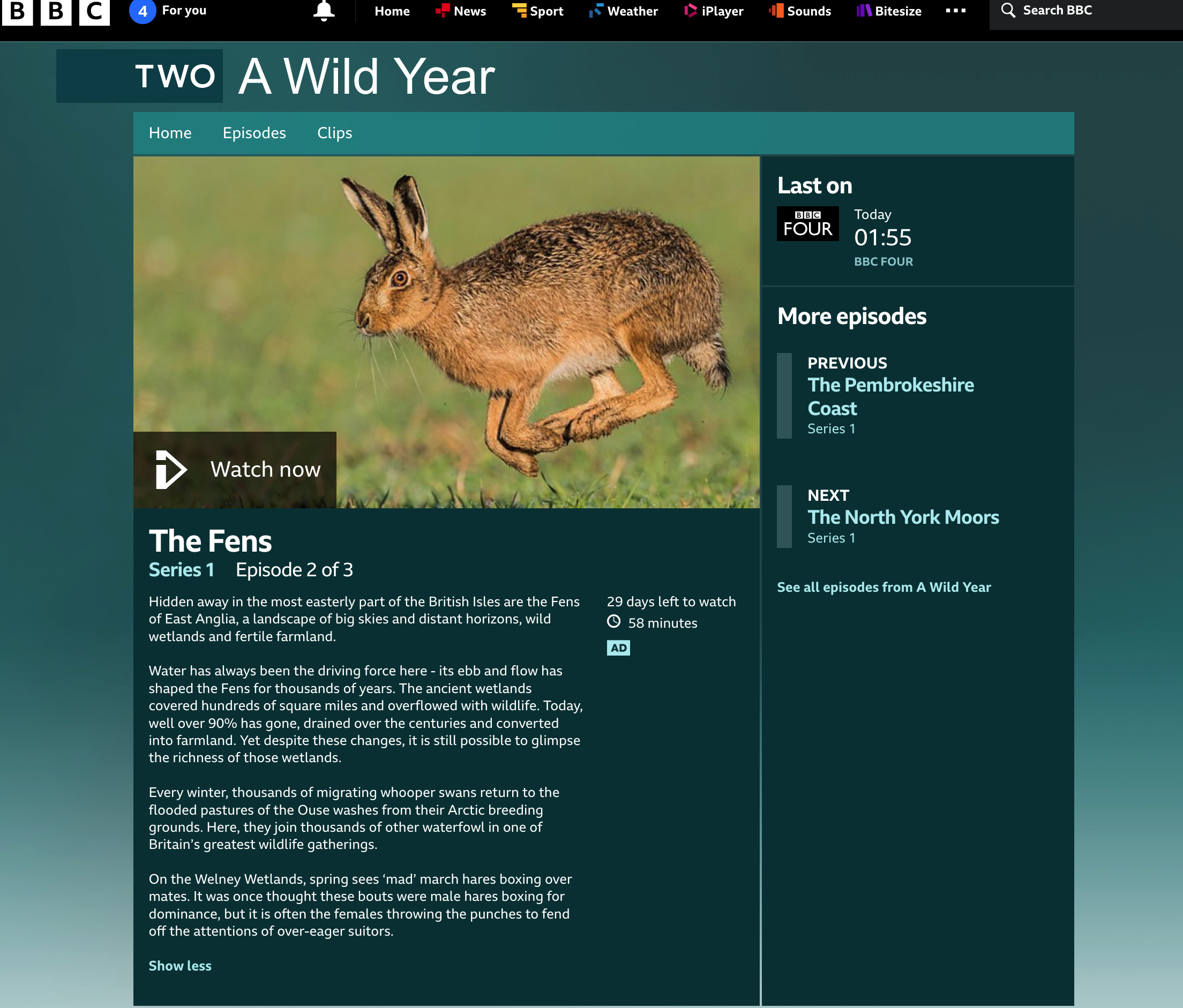
Boxing Brown Hares: Although traditionally called “March hares,” the episode shows how the open fenland of WWT Welney serves as a year-round haven for them. The film captures their famous spring boxing matches, clarifying a common myth: these bouts aren’t actually males fighting for dominance, but rather female hares throwing punches to fend off overly persistent male suitors.
Berwick’s Swans: While the large whooper swans dominate the main lagoons during the winter daytime feeding cycles, the episode also highlights the arrival of the smaller, shyer Bewick’s swans. These birds migrate even further—flying in from Arctic Russia—and tend to seek refuge in the more distant, quiet reaches of the reserve.


Leave a comment